Showing posts with label Friday's forgotten books. Show all posts

23 June 2014

Review: GREY MASK, Patricia Wentworth - audio book

  • first published 1928
  • #1 in the Miss Silver series
  • Narrated by: Diana Bishop
  • Length: 7 hrs and 34 mins 
  • Format: Unabridged
  • audio book from Audible.com
Synopsis (Publisher)

The first of the classic mysteries featuring governess-turned-detective Miss Silver, who investigates a deadly conspiratorial ring.

Charles Moray has come home to England to collect his inheritance. After four years wandering the jungles of India and South America, the hardy young man returns to the manor of his birth, where generations of Morays have lived and died. Strangely, he finds the house unlocked, and sees a light on in one of its abandoned rooms. Eavesdropping, he learns of a conspiracy to commit a fearsome crime.

Never one for the heroic, Charles’ first instinct is to let the police settle it. But then he hears her voice. Margaret, his long-lost love, is part of the gang. To unravel their diabolical plot, he contacts Miss Silver, a onetime governess who applies her reason to solve crimes and face the dangers of London’s underworld.

My Take

I've read this as part of the 2014 Vintage Mystery Challenge. I'm sure I have read a Miss Silver novel before, maybe even several (see these posts about forgotten books), but have not reviewed any on this blog, so a long time ago. Although the first in the Miss Silver series, this was far from Patricia Wentworth's first novel. There would eventually be over 30 titles in this series, which she kept publishing until 1961. However the second title in the series does not appear for another nine years.

It is probably inevitable that readers compare Miss Silver with Agatha Christie's Jane Marple, who made her first appearance in 1927. In contrast to Miss Marple, Miss Silver had had a previous career as a governess, and seems to be more experienced in the ways of the world, whereas Miss Marple is mainly experienced in village life. While Miss Silver appears to be attempting to be make a living as a private detective and sleuth, Miss Marple gets her cases from the things that happen around her.

Miss Silver does not appear to be as old as Miss Marple, but at the same time is rather more non-descript. Both are spinsters, and both seem rather small and harmless. Both do a lot of knitting. The author stresses how colourless and drab Miss Silver is. In fact the plot seems to bear that out for there are long passages between her appearances, and the reader could be forgiven for forgetting that she is "on the job" at all. But she has the knack of turning up when you least expect her, and she certainly is a shrewd observer. And in the long run it is Miss Silver who initiates the decisive action that brings everything to a satisfactory resolution and saves the day.

So how well has GREY MASK weathered? The plot is passable but I think perhaps the language of the novel is a bit dated. It seems set in a world of inheritances and a social structure that even by 1929 was rapidly disappearing.

My rating: 4.1

18 January 2014

Review: THE LATE MONSIEUR GALLET, Georges Simenon

  • Format Kindle: Amazon
  • File Size: 340 KB
  • Print Length: 176 pages
  • Publisher: Penguin (December 5, 2013)
    Originally published 1931
    Published as MAIGRET STONEWALLED 1963
  • Sold by: Amazon Digital Services, Inc.
  • Language: English
  • ASIN: B00GCVSOLS
Synopsis (Bloody Murder)


During a very hot Summer, the body is found of a commercial traveler in his hotel room in Sancerre. Shot in the face and then stabbed in the heart, the gunman seems to have got clean away after inflicting the fatal stabbing with the victim’s own knife as the poor man tried to fend off his attacker.

The victim was a regular visitor known as Clement but it quickly emerges that he was actually Émile Gallet. An outwardly conventional petit bourgeois living on the outskirts of Paris, he had in fact constructed an elaborate double life, which he had been leading for the best part of 18 years. He arranged for pre-written postcards to be sent to his haughty wife (of noble birth) from the various stops on his old route, faked letters from his old employer and even kept a false ledger of sales to make his wife believe that he really was still doing his old job. But perhaps all was well with his scheme as he had also started secretly receiving mail from a ‘Mr Jacob’, apparently demanding money.

My take

This is part of the Penguin Classics, a project to reprint the novels of Simenon in order of publication. THE LATE MONSIEUR GALLET is #2 in the series and I was surprised to find that Maigret is already 45 years old. He has spent half his life in various branches of the police and is now in the Paris Flying Squad.

Monsieur Gallet it seems has been leading a double life for the best part of twenty years, living under two names, with a wife and son under the name of Gallet. However he no longer has the job that Madame Gallet thinks he has, so how does he earn his money? In addition it seems that his death is somehow related to the hotel room he has been allocated.

If Monsieur Gallet has been murdered, then who committed the deed? There are plenty of suspects but none quite fits the bill. Gallet it seems may have been a crook.

The plot is convoluted as one expects of Simenon, and Maigret spends quite an amount of time away from home on this case.  He would prefer what he considers a "real murder", where motives and details are clearer.

I found the plot a little tangled and disappointing. I don't think Simenon needed to make it quite as complex as he did, although he made it so to accommodate a range of characters like Gallet's reprehensible son and his girlfriend.

My rating: 4.3

See also plot summary at  Trussel

I've also reviewed
4.4, MAIGRET & the MAN on the BOULEVARD
4.5, MAIGRET & THE HEADLESS CORPSE
4.3, PIETR THE LATVIAN

The recent decision by Penguin to republish fresh translations of all of Simenon's Maigret novels, in the original order of publication, provides a real opportunity for readers to catch up on titles that have been out of print for some time. Apparently the 75 novels will be published at the rate of one a month. There is even an accompanying 24 page brochure available giving biographical details about Simenon and the characters he created.

25 November 2013

Review: THE BIG SLEEP, Raymond Chandler

  • Format: Kindle (Amazon)
  • File Size: 311 KB
  • Print Length: 177 pages
  • Page Numbers Source ISBN: 1604445181
  • Publisher: Penguin; New Ed edition (July 7, 2005)
  • Sold by: Amazon Digital Services, Inc.
  • Language: English
  • ASIN: B002RI9AH2
  • originally published 1939
Synopsis (Amazon)

The Big Sleep is Raymond Chandler's most famous and popular novel of all

Los Angeles PI Philip Marlowe is working for the Sternwood family. Old man Sternwood, crippled and wheelchair-bound, is being given the squeeze by a blackmailer and he wants Marlowe to make the problem go away. But with Sternwood's two wild, devil-may-care daughters prowling LA's seedy backstreets, Marlowe's got his work cut out - and that's before he stumbles over the first corpse . . .

My Take

It is probably highly improper for a crime fiction addict to admit in public that she has never read any Raymond Chandler, or at least I don't think I have. Of course, I have heard of Philip Marlowe, the P.I. that Chandler created, the model for many P.Is for future generations of writers.

And so why hadn't I read THE BIG SLEEP before now? Probably because American noir has not really been my genre of choice, because I mainly read British, Australian, and translated crime fiction.

I can see how the gun-packing Marlowe is very different to sleuths created in Europe at approximately the same time. Poirot, Marple, and Maigret are altogether more cerebral with blood and guns rarely sighted. Many modern American sleuths are really just more modern versions of Marlowe, solving more modern murders.

To be quite honest though, I didn't find THE BIG SLEEP as captivating as I had expected. It felt a bit dated, although Chandler is a good model for characterisation and descriptive prose. It probably still should be regarded as essential reading for crime fiction students, especially those who are interested in the history of the genre. But then again I have managed pretty well without, haven't I?

My rating: 4.2


Philip Marlowe (Fantastic Fiction)
1. The Big Sleep (1939)
2. Farewell, My Lovely (1940)
3. The High Window (1942)
4. The Lady in the Lake (1943)
5. The Little Sister (1949)
6. The Long Goodbye (1953)
7. Playback (1958)
8. Poodle Springs (1989) (with Robert B Parker)
The Simple Art of Murder (1950)

18 November 2013

Review: PIETR THE LATVIAN, Georges Simenon


  • Format: Kindle (Amazon) - read an extract at this site
  • File Size: 537 KB
  • Print Length: 176 pages
  • Publisher: Penguin (November 7, 2013) - originally published in 1931
  • translation into English by David Bellos.
  • Sold by: Amazon Digital Services, Inc.
  • Language: English
  • ASIN: B00EZEC0TG

My Take

The recent decision by Penguin to republish fresh translations of all of Simenon's Maigret novels, in the original order of publication, provides a real opportunity for readers to catch up on titles that have been out of print for some time. Apparently the 75 novels will be published at the rate of one a month. There is even an accompanying 24 page brochure available giving biographical details about Simenon and the characters he created.

I've been a Simenon reader for decades and could not pass up the opportunity to read, on my Kindle, the very first of the Maigret titles.

Maigret comes over as a mountain of a man, with enormous energy, and the ability to push himself to the limits of human endurance.
    Inevitably Maigret was a hostile presence in the Majestic. He constituted a kind of foreign body that the hotel's atmosphere could not assimilate.

    Not that he looked like a cartoon policeman. He didn't have a moustache and he didn't wear heavy boots. His clothes were well cut and made of fairly light worsted. He shaved every day and looked after his hands.


    But his frame was proletarian. He was a big, bony man. His firm muscles filled out his jacket and quickly pulled all his trousers out of shape.


    He had a way of imposing himself just by standing there. His assertive presence had often irked many of his own colleagues.
In many ways PIETR THE LATVIAN gave a good idea of the style that readers could expect in future novels, as well a structure that makes the reader work hard to follow the plot lines.It introduces both Maigret and the long suffering Madame Maigret who at one stage cooks meals for three days without knowing whether her husband will be home to eat them, indeed not knowing what he is up to.

In his exploration of international crime rings that manipulate world-wide economies Simenon shared similar concerns to his contemporary Agatha Christie who was also convinced of the control of world economies and politics by evil forces.

My rating: 4.3

Another review to check:
Mrs Peabody Investigates

15 November 2013

Forgotten Book: THE CAVALIER CASE, Antonia Fraser

My pick this week for Pattinase's Friday's Forgotten Books comes from books that I read in 1991.

#7 in Antonia Fraser's Jemima Shore mysteries, published in 1990, THE CAVALIER CASE combines love of history with her ability to write engaging mysteries. I was a history teacher at the time, loved English history, and just becoming addicted to crime fiction, so this fitted the bill for me.

Synopsis (Fantastic Fiction)

Publisher's Weekly

In her seventh Jemima Shore novel, Fraser deftly brings together her two previously separate fortes, history and mystery. In an unusual premise, long-dead viscount and Cavalier poet Decimus Meredith repeatedly exits his portrait on the wall to haunt his 20th-century heirs.

The contemporary viscount, suave and manipulative ladies' man and tennis star ''Handsome Dan'' Meredith, has unconventional visions about keeping up expensive Lackland Court. Dan would model its grounds into very different kinds of courts, where he and his fashionable friends would serve tennis balls and be served ''designer drinks'' between matches.

Shore, a TV commentator, agrees to create a program about ghosts in country houses at the same time that she falls in love with a portrait she has been lent, which, coincidentally, features Decimus Meredith. Meanwhile, preparations for a costumed Cavalier Celebration at Lackland Court are upset by a death, a startling discovery and an attack by the resident ghost. Jemima's clearheaded sleuthing sorts out the many suspects, some of whom fit historical roles in the family history.

8 November 2013

Forgotten Book: THE CHILL by Ross Macdonald

This week's Friday's Forgotten Books hosted by Pattinase is featuring the work of Ross MacDonald.

In 1995 the Mystery Writers of America published a list entitled The Top 100 Mystery Novels of All Time.
Ross Macdonald: The Chill (1963) was listed at #91. (See the complete list here)

THE CHILL was published in 1963 (50 years ago)

Synopsis (Google Books)

Private detective Lew Archer has better things to do than take on an investigation for Alex Kincaid, a young man claiming that his new bride, Dolly, has gone missing.

Snapped by a hotel photographer on the day of their wedding, the beautiful girl vanished only hours after and Alex has heard nothing since.

But when Archer begins digging, he finds evidence that links Dolly to brutal murders that span two decades, and a terrible secret.

Click on the cover to the right to read the first few pages.


1 November 2013

Forgotten Book: DEATH OF A HOLLOW MAN, Caroline Graham

My pick this week for Pattinase's Friday's Forgotten Books comes from books that I read in 1991.

It is DEATH OF A HOLLOW MAN by Caroline Graham, #2 in her Chief Inspector Barnaby series, published in 1989.

Synopsis (Fantastic Fiction)

A visit to a Causton Amateur Dramatic Society production is not Detective Chief Inspector Tom Barnaby's idea of good entertainment, but loyalty to his wife prevails. And when the leading man takes his role too much to heart in a gruesome final act, Tom finds his professional skills are called upon.

The first in this series THE KILLINGS AT BADGER'S DRIFT was featured in my Forgotten Books post in August 2011, and was also listed at #80 by the British Crime Writer's Association in their The Top 100 Crime Novels of All Time is a list published in 1990.

You might like to take this advice also - never visit Midsomer during a Festival!

25 October 2013

Forgotten Book: NO MAN'S LAND, Reginald Hill

My plan this year for my contributions to Friday's Forgotten Books hosted by Pattinase is to feature books I read 20 years ago - in 1993- from the records I have in my "little green book", which I started in 1975.
In 1993 I read 111 books and was pretty well addicted to crime fiction by then.

I read NO MAN'S LAND, published in 1985, at about this time in October 1993.
It is one of Reginald Hill's historical stand-alone novels, not a Dalziel and Pascoe for which he is better known.
For me it would have had the twin marks of history and thriller.

Synopsis (Amazon)

Set in the aftermath of the Battle of Somme, 1916, this offbeat, intriguing tale is based upon the legend of armed and dangerous Allied deserters who supposedly roamed the ruined countryside, "no man's land," that existed between the British and German lines.

Known to the British as Viney's Volunteers, the deserters are commanded by Arthur Aloysius Viney, an Australian army sergeant gone mad. Viney's chief British nemesis is Captain Jack Denial, commander of the military police and peacetime Scotland Yard detective.

Viney, it seems, is responsible for the death of Denial's lover, an Army nurse. By the author of several well-received mystery novels, this present work is carefully researched and thoughtfully written. Its strengths include vivid background detail, an intricate but believable plot, and solid development of innumerable major and minor characters. 


18 October 2013

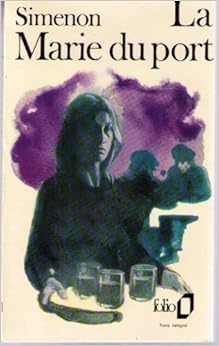
Forgotten Book: GIRL IN WAITING, Georges Simenon

My plan this year for my contributions to Friday's Forgotten Books hosted by Pattinase is to feature books I read 20 years ago - in 1993- from the records I have in my "little green book", which I started in 1975.
In 1993 I read 111 books and was pretty well addicted to crime fiction by then.

This week Friday's Forgotten Books is being hosted by George Kelley. 

My choice is Georges Simenon's GIRL IN WAITING aka CHIT OF A GIRL, originally published in 1938?. An English version (cover to the right) was published in Pan paperback in 1957. I read this book in October 1993.

A problem I have struck before with the early Simenon novels is that it is so hard to find a synopsis. The books are often out of print and have been for some time. It seems from what I have found that the publication may have contained two stories.

How is your French? Check a listing here.

The following synopsis (gleaned from Trove) actually comes from a review in Australia's Sydney Morning Herald in 1949.

Synopsis

CHIT OF A GIRL, by Georges Simenon. Trans, by Geoffrey Sainsbury.

The title story is Richardson's "Pamela, or Virtue Re- warded," in a modern French setting. Its companion piece, "Justice," is a crime story with a satiric flavour. Both are-very satisfying examples of Simenon's peculiar talent.

The Chit is Marie Le Flem, waitress in the cafe at the fishing village of Port-eñ-Bessin. Chateard, once a fisherman, now cafe and cinema owner at Cherbourg, first saw her when he drove her elder sister, Odile, his mistress, to her father's funeral. He was strongly attracted by her

Odile "was plump, pink and tender, with a delicate skin, decile and easy-going." - Marie was "hardly formed ... lean haunches .and hardly any bust She did not bother about other people .. . . looked at them sideways, and what she thought of them she kept to herself."

Chatelard's ardour and exasperation increase as Marie's apparent aversion grows. His brusque technique, successful with other women, fails here and the snaring of Don Juan is achieved amid the smiles and admiration' of the Port.

"Justice" Petit Louis, swindler and souteneur helped Gene and the Marseilles gang in a post-office job, but offended them by blabbing to Constance Ropiquet, on whom he was living in Nice. Returning after two- days' precautionary absence from her flat he found her murdered.


11 October 2013

Forgotten Book: CHILDREN OF THE WIND, Kate Wilhelm

My plan this year for my contributions to Friday's Forgotten Books hosted by Pattinase is to feature books I read 20 years ago - in 1993- from the records I have in my "little green book", which I started in 1975.
In 1993 I read 111 books and was pretty well addicted to crime fiction by then

Kate Wilhelm is an author that I read in 1993, but I doubt that I have read any more although she continues to write, and some of her more recent offerings appear to fit the crime fiction genre.

In October 1993 I read CHILDREN OF THE WIND, which is not really crime fiction.

Synopsis from Amazon, where it is now available for Kindle

This collection assembles in one volume five works by Kate Wilhelm, masterful fantasist and one of science fiction's premier storytellers:
In 'Children of the Wind', identical twins J-1 and J-2 play subtle games with their parents' lives. Are the boys just precocious, or are they far more strange - and powerful? 'The Gorgon Field' finds Charlie and Constance caught in a mystery of mystical proportions in the Arizona desert. 'A Brother to Dragons, a Companion of Owls' depicts a future in which survival may not be merely enough - it may be too much, whilst 'The Blue Ladies' studies a disabled woman's abilities to share his vision. 'The Girl Who Fell Into the Sky', winner of the Nebula Award for best novelette, weaves a dreamy tale of love, death and an old piano amid the Kansas plains.
These five tales present luminous, absorbing visions of the world as it could be and as it is.

However, more recent titles like  THE PRICE OF SILENCE and SKELETONS do appear to be crime fiction.

See Kate Wilhelm's site.
Amazon links to her Barbara Holloway novels.

About Kate Wilhelm
Kate Wilhelm’s first novel was a mystery, published in 1963. She has recently returned to writing mysteries with her Barbara Holloway novels. Over the span of her career, her writing has crossed over the genres of Science Fiction, Speculative Fiction, fantasy and magical realism; psychological suspense, mimetic, comic, and family sagas, a multimedia stage production, and radio plays. Her works have been adapted for television and movies in the United States, England, and Germany. Wilhelm’s novels and stories have been translated to more than a dozen languages. She has contributed to Quark, Orbit, Magazine of Fantasy and Science Fiction, Locus, Amazing Stories, Asimov’s Science Fiction, Ellery Queen’s Mystery Magazine, Fantastic, Omni, Alfred Hitchcock’s Mystery Magazine, Redbook, and Cosmopolitan.

4 October 2013

Review: MASTER OF THE MOOR, Ruth Rendell - audio book

  • this edition available from Audible, narrated by Michael Bryant
  • Unabridged
  • Length: 7 hours 6 mins
  • originally published 1982 
Synopsis (Audible)

The bleak expanse of Vangmoor was a dark, forbidding place. One victim had been found there, blonde, her face disfigured, her head shorn close to the scalp - killed without motive or mercy.

Then a second woman went missing on the moor, and a sense of utter dread gripped the fifty local men who searched for her. Someone watched them in that treacherous place. Was he a killer? Or was he merely angry that a killer had usurped him? For he, and only he, was the Master of the Moor.

From Wikipedia

Columnist Stephen Walby, known as the Voice of Vangmoor, often goes on long walks through the countryside that lies outside his window. However, events take on a sinister turn when he stumbles across the body of a young woman, whose face has been badly disfigured and her hair shaven.

After another corpse surfaces he finds himself under suspicion from the local police, and when he then goes on to discover that his wife has been having an affair, tragedy ensues..

My Take

This is a Ruth Rendell stand-alone published in 1982, before she began publishing this style of book under the pseudonym of Barbara Vine.

Like his grandfather before him, Stephen Walby has an obsession with Vangmoor. It came as a surprise to me that Stephen is a relatively young man, only in his early twenties. I thought Rendell made him seem much older than he is. He also seems to have the knack of turning up in the wrong place at the wrong time, eventually giving the police no alternative to taking him in for questioning, regarding him as a "person of interest" in the Vangmoor murder cases.

The story takes a savage twist about half way through, when Stephen reacts violently upon finding out that his wife has been having an affair. Is Stephen Walby a dormant psychotic? His comfortable world is constantly under challenge. The strings that anchor Stephen to reality are snapped when a childhood friend reappears.

And just when the reader thinks they have it all worked out, the book takes another twist, one that you could not have predicted, as the Master of the Moor claims his final victim.

Another of the characteristics of these early Rendell stand-alones, by comparison with the Wexford series, is that they are relatively short books. According to Amazon, it is only 218 pages long. For example THE VAULT, one of the later Wexfords, is more than 60 pages longer, as are many of her later books.

My rating: 4.6

I have reviewed the following Barbara Vine novels
THE BIRTHDAY PRESENT
4.8, A DARK ADAPTED EYE

And these by Ruth Rendell
FROM DOON WITH DEATH
PORTOBELLO
4.7, THE MONSTER IN THE BOX
4.5, A NEW LEASE OF DEATH
4.6, THE VAULT
4.6, THE BEST MAN TO DIE
4.5, A SIGHT FOR SORE EYES
4.5, THE SAINT ZITA SOCIETY  

3 October 2013

Review: Miss Marple short stories: The Solving Six, Agatha Christie

I have already reviewed the six short stories that I am going to talk about here in my review of the short story collection called THE THIRTEEN PROBLEMS.

But when I read those I hadn't really understood that the first 6 stories in the collection were the first appearance of Miss Marple, and that when they were published in the USA some of them were re-titled to reflect their connection to "The Solving Six".

These six stories were all published 1927-1928 whereas Jane Marple's first appearance in a novel was in MURDER IN THE VICARAGE in 1930. The stories have recently been individually republished as e-books by Harper Collins, and it is these that I have read most recently.

Illustration by Gilbert Wilkinson of Miss Marple
(December 1927 issue of The Royal Magazine)
A group of friends are meeting at the house of Miss Marple in St Mary Mead. As well as the old lady herself, there is her nephew - the writer Raymond West - the artist Joyce Lemprière, Sir Henry Clithering (a former Scotland Yard commissioner), a clergyman called Dr. Pender, and Mr Petherick, a solicitor.

The conversation turns to unsolved mysteries; Raymond, Joyce, Pender, and Petherick all claim that their professions are ideal for solving crimes. Joyce suggests that they form a club; every Tuesday night, a member of the group must tell of a real mystery, and the others will attempt to solve it. Sir Henry agrees to participate, and Miss Marple brightly volunteers herself to round out the group.

At first only Sir Henry Clithering seems to have any intimation that Jane Marple might be the best sleuth amongst them.

The connecting thread of the 6 stories is laid out in The Tuesday Night Club, first published in the UK in December 1927, and in the USA as The Solving Six in 2 June 1928.

After the Tuesday Night Club is set up, the first story comes from Sir Henry Clithering.

Sir Henry, until recently Commissioner of Scotland Yard, tells a tale about tinned lobster that caused a fatal case of food poisoning.

~~~~~~~~~~~~~~~~~~~~~~~~ 
 The second story The Idol House of Astarte was first published in the UK in January 1928 and in the USA as The Solving Six and the Evil Hour in 9 June 1928.

The story, told by the clergyman Dr Pender is a strange and tragic experience from his youth.

Years ago, a murder was committed on the night of a costume party thrown by Sir Richard Haydon, a man who was a rival of his cousin Eliot for the affections of the lovely Diana Ashley. Sir Richard’s estate contained the grove of Astarte, which held a mysterious stone summer house. The summer house was rumoured to have been the site of numerous sacred rites in years long past, and in a surprise act, Diana enacted the role of Astarte, startling Sir Richard who stumbled and fell. When the others reached him body, he was found dead of a knife wound to the heart.                                      ~~~~~~~~~~~~~~~~~~~~

Ingots of Gold, first published in the UK in February 1928, and in the USA in 16 June 1928 as The Solving Six and the Golden Grave, comes from Raymond West.

Raymond West approaches the Tuesday Night Club after his visit to John Newman, a friend who is searching for the Spanish ship Otranto which was shipwrecked off the coast of Cornwall. When John Newman disappears for days, upon his return he claims that he had been abducted by the thieves who had stripped the Otranto of its gold, and that the local pub landlord had worked with them.

~~~~~~~~~~~~~~~~~~~

The Blood-Stained Pavement was first published in the UK in March 1928 and in the USA as Drip! Drip! 23 June 1928.

I found it interesting that The Solving Six has disappeared from the US title.

The story is told by Joyce Lempriere. It is something that happened five years before and has haunted her ever since. She was vacationing at a small inn on the Cornish coast. She was painting a picture of the front of the inn, including details of wet bathing suits drying on the balcony of Denis and Margery Dacre, when she realised she had included blood stains on the pavement. A few days later Margery is found having drowned and the Club are called to solve the mystery.
                                                 ~~~~~~~~~~~~~~~~~~~~~~~~~~~

 Motive v. Opportunity was first published in the UK in April 1928 and first appeared in the USA as Where's the Catch? on 30 June 1928. Again The Solving Six link is missing.

Attorney Mr Petherick relates an incident involving the late Simon Clode, a wealthy client. Obsessed by his granddaughter’s death, despite the presence of his young niece and nephew, Clode turns to spiritualist Eurydice Spragg to contact his granddaughter in the afterlife. Clode then decided to write a new will, leaving Eurydice as the benefactor excluding his family. To everyone’s surprise, when the envelope containing the will is opened, the paper is blank.
                                                 ~~~~~~~~~~~~~~~~~~~


The final story is Miss Marple's.
The Thumb Mark of St. Peter was first published in the UK in May 1928 and then in the USA as The Thumb-Mark of St. Peter on 7 July 1928.

Fifteen years ago, Miss Marple’s niece, Mabel Denman was accused of murdering her husband. Mabel’s marriage had been an unhappy one, as Geoffrey had been abusive and violent. Can Miss Marple clear her niece’s name and reveal the true perpetrator?
~~~~~~~~~~~~~~~~~

So here are 6 very early Miss Marple stories. You can pick them up individually from Amazon or Harper Collins for your e-reader or look for a copy of THE THIRTEEN PROBLEMS.

Well worth the hunt.

You might like to check The Thirteen Problems on Wikipedia.

My rating: 4.5.

27 September 2013

Forgotten Book: B is for Burglar, Sue Grafton

My plan this year for my contributions to Friday's Forgotten Books hosted by Pattinase is to feature books I read 20 years ago - in 1993- from the records I have in my "little green book", which I started in 1975.
In 1993 I read 111 books and was pretty well addicted to crime fiction by then.

In my reading 20 years ago I began reading a number of series that I have kept up with ever since.
That was certainly the case with last week's book, Reginald Hill's BONES AND SILENCE.

And it was certainly the case with this week's choice. Sue Grafton had quite recently begun her "alphabet" series, and, rather obviously, B is for BURGLAR was #2 in the series, published in 1985. By 1993 she was up to J.

News this week comes that Grafton has now published W IS FOR WASTED.
So at 73 years of age Grafton as 3 letters to go, if she is to finish the series.


Synopsis of B IS FOR BURGLAR (Amazon)

Business was slow, and there was nothing about Beverly Danziger to cause Kinsey concern. She was looking for her sister. She paid up front. And if it seemed a lot of money for a routine job, Kinsey wasn't going to argue.

She kicked herself later for the things she didn't see. But by then she was in danger, and money was the last thing on her mind...

20 September 2013

Forgotten Book: BONES AND SILENCE, Reginald Hill

My plan this year for my contributions to Friday's Forgotten Books hosted by Pattinase is to feature books I read 20 years ago - in 1993- from the records I have in my "little green book", which I started in 1975.
In 1993 I read 111 books and was pretty well addicted to crime fiction by then.

BONES AND SILENCE, which I read just on 20 years ago, is #11 in Hill's Dalziel and Pascoe series.

The series began with  A CLUBBABLE WOMAN published in 1970.
BONES AND SILENCE was published in 1990.

Just recently a local TV station has been doing re-runs of the Dalziel & Pascoe series and this one was shown.

It is a bit reminiscent of Alfred Hitchcok's Rear Window although of course Andy Dalziel is anything but immobilised.
Just recently I read TRUST YOUR EYES by Linwood Barclay which visits the "observed murder" aspect from a different angle.
And of course there is also Agatha Christie's 4.50 FROM PADDINGTON (aka WHAT MRS MCGILLICUDDY SAW, MURDER SHE SAID)

Synopsis (Fantastic Fiction)

When Detective Superintendent Andy Dalziel witnesses a bizarre murder across the street from his own back garden, he is quite sure who the culprit is. After all, he's got to believe what he sees with his own eyes. But what exactly does he see? And is he mistaken? Peter Pascoe thinks so.

Dalziel senses the doubters around him, which only strengthens his resolve. To make matters worse, he's being pestered by an anonymous letter-writer, threatening suicide. Worse still, Pascoe seems intent on reminding him of the fact. Meanwhile, the effervescent Eileen Chung is directing the Mystery Plays. And who does she have in mind for God? Daziel, of course. He shouldn't have too much difficulty acting the part...

13 September 2013

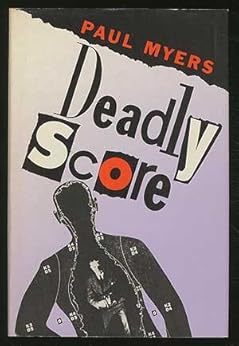
Forgotten Book: DEADLY SCORE, Paul Myers

My plan this year for my contributions to Friday's Forgotten Books hosted by Pattinase  is to feature books I read 20 years ago - in 1993- from the records I have in my "little green book", which I started in 1975.
In 1993 I read 111 books and was pretty well addicted to crime fiction by then.

I read DEADLY SCORE just on 20 years ago.
It was published in 1988, #5 in Myers' Mark Holland series.
There were 6 novels in the series, published over 5 years, and since then Myers appears to have disappeared off the fiction writing landscape. [I believe he is a Canadian musician and writer who was part of a band called the Gravelberrys, although this could be another Paul Myers.]

1. Deadly Variations (1985)
2. Deadly Cadenza (1986)
3. Deadly Aria (1987)
4. Deadly Sonata (1987)
5. Deadly Score (1988)
6. Deadly Crescendo (1989)

Synopsis (Reed Publishing)

Since 1976, former spy Mark Holland has been managing classical musicians on tour. Ten years later in Tokyo, another agent, shot and dying, entrusts him with a message and Mark suspects that the games being played by his former bosses and international competitors are dirtier than before. 

Conferring with former colleagues in America and England, Holland intuits a sordid conspiracy in the making. He has no facts, however, as he leaves for Berlin to confer with a client, the renowned conductor Konstantin Steigel. Hoping to secretly buy recently discovered Gustave Mahler scores, Steigel asks Holland to handle the deal in East Berlin. Tense events reach a horrifying climax, with Holland seized and tortured, released only after an "arrangement" between British and Soviet agencies. 

He is traveling again, out to settle the "deadly score," as the author, a classical record producer, ends the story on a note of quivering suspense.  


6 September 2013

Forgotten Book: THE GREEN MILL MURDER, Kerry Greenwood

My plan this year for my contributions to Friday's Forgotten Books hosted by Pattinase  is to feature books I read 20 years ago - in 1993- from the records I have in my "little green book", which I started in 1975.
In 1993 I read 111 books and was pretty well addicted to crime fiction by then.

Kerry Greenwood, recently given Australian Sisters in Crime Inaugural Lifetime Achievement Award, is now well known, even outside Australia, for her Phryne Fisher series.  THE GREEN MILL MURDER is #5 in the series. The title was published in 1993.

The original books are available on Amazon in paperback and for Kindle.

Synopsis (publisher)

Dancing divinely through the murder and mayhem of her fifth adventure, the elegant Phryne Fisher remains unflappable.

Gorgeous in her sparkling lobelia-coloured georgette dress, delighted by her dancing skill, pleased with her partner and warmed by the admiring regard of the banjo player, Miss Phryne Fisher had thought of tonight as a promising evening at the hottest dancehall in town, the Green Mill.

But that was before death broke in. In jazz-mad 1920s Melbourne, Phryne finds there are hidden perils in dancing the night away like murder, blackmail and young men who vanish.

Phryne Fisher's fifth adventure leads to smoke-filled clubs, a dashingly handsome band leader, some fancy flying indeed across the Australian Alps and a most unexpected tryst with a gentle stranger.

Independent, wealthy, spirited and possessed of an uninhibited style that makes every one move out of her way and stand gawking a full five minutes after she walks by Phryne Fisher is a woman who gets what she wants and has the good sense to enjoy every minute of it!' Davina Bartlett, Geelong Times

A reminder too to Australian readers that the second Phryne Fisher series (6 episodes newly written) begins on the ABC tonight, Friday 6 September

Phryne Fisher
1. Cocaine Blues (1989)
     aka Death by Misadventure
2. Flying Too High (1990)
3. Murder on the Ballarat Train (1991)
4. Death at Victoria Dock (1992)
5. The Green Mill Murder (1993)
6. Blood and Circuses (1994)
7. Ruddy Gore (1995)
8. Urn Burial (1996)
9. Raisins and Almonds (1997)
10. Death Before Wicket (1999)
11. Away with the Fairies (2001)
12. Murder in Montparnasse (2002)
13. The Castlemaine Murders (2003)
14. Queen of the Flowers (2004)
15. Death By Water (2005)
16. Murder in the Dark (2006)
17. Murder on a Midsummer Night (2008)
18. Dead Man's Chest (2010)
19. Unnatural Habits (2012)
20. Murder & Mendelssohn (2013)

30 August 2013

Forgotten Book: A MIND TO MURDER, P.D. James

My plan this year for my contributions to Friday's Forgotten Books hosted by Pattinase   is to feature books I read 20 years ago - in 1993- from the records I have in my "little green book", which I started in 1975.
In 1993 I read 111 books and was pretty well addicted to crime fiction by then.

My choice today was published just 50 years ago in 1963, #2 in the Inspector Dalgliesh series. I read it just 20 years ago yesterday.

Synopsis (Fantastic Fiction).

When the administrative head of the Steen Psychiatric Clinic is found dead with a chisel in her heart, Superintendent Adam Dalgliesh of Scotland Yard is called in to investigate. Dalgliesh must analyze the deep-seated anxieties and thwarted desires of patients and staff alike to determine which of their unresolved conflicts resulted in murder.

With "discernment, depth, and craftsmanship," wrote the Chicago Daily News, A Mind to Murder "is a superbly satisfying mystery."

~~~~~~~~~~~~~

I find it remarkable that this series is now over 50 years old. They seem so modern in style when you pick one up and read it these days.

Inspector Adam Dalgliesh
1. Cover Her Face (1962)
2. A Mind to Murder (1963)
3. Unnatural Causes (1967)
4. Shroud for a Nightingale (1971)
5. The Black Tower (1975)
6. Death of an Expert Witness (1977)
7. A Taste for Death (1986)
8. Devices and Desires (1989)
9. Original Sin (1994)
10. A Certain Justice (1997)
11. Death in Holy Orders (2001)
12. The Murder Room (2003)
13. The Lighthouse (2005)
14. The Private Patient (2008)

23 August 2013

Forgotten Book: MURDER BY THE BOOK, Jennifer Rowe

My plan this year for my contributions to Friday's Forgotten Books hosted by Pattinase   is to feature books I read 20 years ago - in 1993- from the records I have in my "little green book", which I started in 1975.
In 1993 I read 111 books and was pretty well addicted to crime fiction by then.

I read MURDER BY THE BOOK in August 1993.
It was published in 1991, #2 in the Verity Birdwood series.

Synopsis (Amazon)

Publishing company, Berry & Michaels, is celebrating its recent takeover by a UK-based conglomerate, and the arrival of its new English managing director. But, strangely, some of the staff don't seem to be in a party mood.

From FictionDB
IT WAS THE PUBLISHING EVENT OF THE SEASON...UNTIL SOMEONE ADDED MURDER TO THE MENU.

When Quentin Hale, the ruthless new takeover boss of one of Australia's oldest publishing houses, launched a glittering round of parties, interviews, and book signings to promote his top four authors, he unwittingly whipped up a recipe for disaster.

His jolly author of popular gardening books was actually a notorious lush. His successful authoress of muckraking biographies was a malicious troublemaker. And his queen of children's books had once shared a disastrous love affair with his number-one novelist, a man teetering on the brink of yet another nervous breakdown.

The disgruntled staff could have warned Hale that the promotion was a deadly mistake, if he'd asked. But even they couldn't have known just how deadly...until one famed author downed a fatal drink and a second soon went missing. Now it looks as if someone in this literary crew has been plotting murder all along. Can editor Kate Delaney and her friend Birdie catch the killer before he writes off his next victim?


Verity Birdwood
Grim Pickings (1988)
Murder by the Book (1989)
Death in Store (1991)
The Makeover Murders (1992)
Stranglehold (1993)
Lamb to the Slaughter (1995)

About the author
Jennifer June Rowe is an Australian author. Her crime fiction for adults is published under her own name, while her children's fiction is published under the pseudonyms Emily Rodda and Mary-Anne Dickinson. She is well known for the children's fantasy series Deltora Quest, Rowan of Rin, Fairy Realm and Teen Power Inc., and recently the Rondo trilogy.

9 August 2013

Forgotten Book: DANGER POINT, Patricia Wentworth

My plan this year for my contributions to Friday's Forgotten Books hosted by Pattinase is to feature books I read 20 years ago - in 1993- from the records I have in my "little green book", which I started in 1975.
In 1993 I read 111 books and was pretty well addicted to crime fiction by then.

This is #4 in Patricia Wentworth's Miss Silver series. Published in 1941, it was also titled IN THE BALANCE.
The series began in 1928 with the publication of GREY MASK. The final title, #32, published in 1961, was THE GIRL IN THE CELLAR.

Patricia Wentworth, a British author, lived 1878-1961.

Miss Silver is sometimes compared to Jane Marple, the elderly detective created by Agatha Christie. Miss Silver is a retired governess who becomes a private detective. She works closely with Scotland Yard, especially Inspector Frank Abbott. She is fond of quoting the poet Tennyson.

Miss Silver is well known in the better circles of society, and she finds entree to the troubled households of the upper classes with little difficulty. In most of Miss Silver's cases there is a young couple whose romance seems ill fated because of the murder to be solved, but in Miss Silver's competent hands the case is solved, the young couple are exonerated, and all is right in this very traditional world. See Wikipedia.

Most of the Miss Silver titles appear to be available on Amazon for Kindle, although generally for $11.80 each which in my terms is a bit pricey. You'll probably find some in your local library.

Synopsis

Miss Silver is returning from holiday when a distraught young woman enters her carriage. 

Beautiful society heiress Lisle Jerningham confides that she believes her husband Dale is trying to kill her. An overheard conversation and a near-tragic accident have convinced her that her life is in danger.

Lisle returns to Tanfield Court, unsettled by her suspicions and then by another accident. But it's when a young woman from the local village is found dead at the bottom of a cliff, that she really begins to fear for her life. It's a good thing that Miss Silver is on hand..

2 August 2013

Forgotten Book: SAN ANDREAS by Alistair MacLean

My plan this year for my contributions to Friday's Forgotten Books hosted by Pattinase is to feature books I read 20 years ago - in 1993- from the records I have in my "little green book", which I started in 1975.
In 1993 I read 111 books and was pretty well addicted to crime fiction by then.

I was still up for the occasional thriller and this week's choice was MacLean's second last published novel.


Suddenly, just before dawn, the lights went out aboard the San Andreas. For the British hospital ship sailing the deadly, U-boat patrolled Norwegian waters, a nightmare of violence and betrayal has begun. A terrifying game of sabotage in which an unknown traitor among the crew holds all the cards. The red crosses on the vessel's sides spell anything but safety. For a dangerous secret has turned the ship into a priceless quarry. With the Captain out of action Bosun Archie McKinnon takes over. Alone in treacherous, frozen seas, her compass smashed, the San Andreas is being drawn relentlessly into the enemy's hands.

Available from Amazon, even in a Kindle edition.

LinkWithin

Blog Widget by LinkWithin