Showing posts with label 2011 Cruisin' thru Cozies Reading Challenge. Show all posts

4 February 2016

Review: WHAT SHE NEVER TOLD ME, Kate McQuaile

  • source: Review copy from Hachette Australia at NetGalley
  • first published in Great Britain in 2016, publication date March 8, 2016
  • pre-order available from Amazon
Synopsis (Publisher)

What do you do when you find out that your whole life could be a lie?

I talked to my mother the night she died, losing myself in memories of when we were happiest together. But I held one memory back, and it surfaces now, unbidden. I see a green postbox and a small hand stretching up to its oblong mouth. I am never sure whether that hand is mine. But if not mine, whose?

Louise Redmond left Ireland for London before she was twenty. Now, more than two decades later, her heart already breaking from a failing marriage, she is summoned home. Her mother is on her deathbed, and it is Louise's last chance to learn the whereabouts of a father she never knew.

Stubborn to the end, Marjorie refuses to fill in the piecesof her daughter's fragmented past. Then Louise unexpectedly finds a lead. A man called David Prescott . . . but is he really the father she's been trying to find? And who is the mysterious little girl who appears so often in her dreams? As each new piece of the puzzle leads to another question, Louise begins to suspect that the memories she most treasures could be a delicate web of lies.

My Take

I know the year is only a month old, and I've only read 15 books so far, but this really is the best I've read so far, and it will be hard to beat. You know what happens when a book grabs you, and you seize every opportunity to read a few more pages?

Written in the first person, this novel gets you in right from the first word. There are little puzzles for the reader to solve as we try to fill in the story of Louise's life. At her mother's funeral she meets an uncle whom she can't remember ever meeting before. He has some photographs he would like to give her and she promises to visit him. But the solicitor who holds the will can't answer the most desperate question Louise has: how to find her father. She knows his name but nothing else.

A great read, with lots of twists and turns, believable characters and scenarios.

My rating: 4.9

About the author
Kate McQuaile is a graduate of the Faber novel-writing course. She lives in London and works as a journalist, but is originally from Drogheda in Ireland.

7 September 2011

Review: THE SATURDAY BIG TENT WEDDING PARTY, Alexander McCall Smith

  • Publisher: Large Print edition Thorndike Press, 2011
  • ISBN: 978-1-4104-3513-2
  • 319 pages
  • Source: my local library
Publisher's blurb
The twelfth installment in the beloved, best-selling series is once again a beautiful blend of wit and wisdom, and a profoundly touching tale of the human heart.

Precious Ramotswe is haunted by a dream in which she is driving her dear old white van. Grace Makutsi dreams that her 97 percent on the Botswana Secretarial College exam was a mistake. When Mma Ramotswe discovers that her van is actually still in use (and, of course, sets out to retrieve it), Mma Makutsi wonders whether her dream will turn out to be prophetic as well.

They can only wait and see, but, in the meantime, one of Phuti Radiphuti's apprentices has gotten a girl pregnant and, under pressure to marry her, has run away. Naturally, it is up to Precious and Grace to help the couple work things out. In other developments, Mma Ramotswe investigates a case of rural jealousy in which cattle are being poisoned. Add to the mix Violet Sephotho's newly begun, already unstoppable run for the Botswana Parliament and the possibility that wedding bells may finally ring for Phuti Radiphuti and Grace Makutsi--whose love for each other is as great as their love for Botswana--and we have a charming and delightful tale in the inimitable style of Alexander McCall Smith.

My take:

Reading the next installment in the cozy series The No. 1 Ladies Detective Agency has become an annual delight and this one came up to expectations. Essentially they are quick and easy reads, set in Botswana, and just the cup of tea for those who like cozies.

On the eve of Mma Makutsi's long awaited wedding the No. 1 Ladies Detective Agency takes on a new case with a new client who had not wanted to meet Mma Ramotswe in the office. Someone has killed two of Botsalo Moeti's cattle and he would like Precious Ramotswe to find out who and why.

This is typical of the cases that the No. 1 Ladies Detective Agency takes on and eventually Mma Ramotswe comes up with several possible scenarios. She also applies her mind to a number of domestic issues, resolving all of them satisfactorily.

I'm sure the fact that I enjoy this series so much is related to the fact that I've been reading them since the first was published back in 1998. They've all been good reads, cozies, and there has been story-line development. So, if you've never tried them, hunt down the first THE NO. 1 LADIES DETECTIVE AGENCY and begin your journey.

My rating: 4.5

Other reviews on this blog:
TEA TIME for the TRADITIONALLY BUILT
THE MIRACLE AT SPEEDY MOTORS

THE DOUBLE COMFORT SAFARI CLUB

23 August 2011

Review: BRUNO, CHIEF OF POLICE, Martin Walker

  • Publisher: Quercus 2008
  • 342 pages
  • ISBN 978-1-84724-598-4
  • Source: my local library
Publisher's Blurb (from Quercus)

Captain Bruno Courreges goes by the grand title of Chief of Police, though in truth he’s the only municipal policeman on staff in the small town of St Denis in the beautiful Perigord region of south west France. Bruno sees his job as protecting St Denis from its enemies, and these include the capital’s bureaucrats and their EU counterparts in Brussels.

Today is market day in the ancient town. Inspectors from Brussels have been swooping on France’s markets, attempting to enforce EU hygiene rules. The locals call the Brussels’ bureaucrats ‘Gestapo’ and Bruno supports their resistance. What’s more, here in what was Vichy France, words like ‘Gestapo’ and ‘resistance’ still carry a profound resonance.

When an old man, head of an immigrant North African family, is found murdered, suspicion falls on the son of the local doctor, found in flagrante playing sex games surrounded by Nazi paraphernalia. But Bruno isn’t convinced, and suspects this crime may have its roots in that most tortured period of recent French history - the Second World War, a time of terror and betrayal that set brother against brother.


My take

When I reviewed THE DARK VINEYARD recently, I was really determined to read the first in the series, and I'm glad to say that it has lived up to my expectations of being an excellent read.

In these days of large city living and policing that seems super organised, rationalised, and even institutionalised, it seems nice to believe there is, somewhere in the world, the sort of rural policing that happens with Bruno, the Chief of Police in St. Denis. Bruno is what you would like every policeman to be, part of his community, aware of its members, a human being who just happens to be a policeman.

Bruno is devoted to "his little corner of paradise." He ensures that his community recognises its past, respects its elders, welcomes incomers, and encourages its young people. That's why it is such a shock to think that the death of elderly Hamid al-Bakr could possibly be a racist killing. In working out what has happened, at the same time as tamping down possible flare-ups, Bruno show his real worth as a policeman. We get glimpses too of Bruno's personal and social life, of the way he contributes to the whole social fabric. In solving the crime Bruno demonstrates what a good detective he really is.

This is an excellent start to the series and I recommend it to you particularly if you like cozies.
I kept thinking of what, in my reading past, the story reminds me of - perhaps a combination of Miss Read, Don Camillo, and Miss Marple?

My rating: 4.6

Review on EuroCrime by Maxine Clarke

Martin Walker's Bruno, Chief of Police site is delightful too.

Bruno, Chief of Police
1. Bruno, Chief of Police (2008)
2. The Dark Vineyard (2009)
3. Black Diamond (2010)
4. The Crowded Grave (2011)

8 August 2011

Review: THE COSY KNAVE, Dorte Hummelshøj Jakobsen

An e-novel that is available from both Amazon and Smashwords.
See my earlier post which was part of a baton relay to launch the book.

My copy came from Smashwords.
The book is available from Smashwords in a variety of eBook formats and here’s a coupon code, provided by the author, which brings the price down to $2.99US: PN22N

Publisher's blurb (Smashwords)

A cosy Yorkshire mystery. 
The vicious attacks begin when the prodigal son of Knavesborough returns to the sleepy village after forty years in Argentina with fame and fortune. No wonder that spiteful Rose Walnut-Whip is killed, but when the violence escalates, Constable Penrose knows he needs help from his fiancée, librarian Rhapsody Gershwin.

My take

As the author knows, humorous cozies are not quite my thing, but there's a lot like about THE COSY KNAVE. 

The setting is the village of Knavesborough in Yorkshire and the various matches in the Soccer World Cup are being streamed onto a big plasma screen in Ye Cosy Knave the local tea shoppe. In fact the first murder takes place while locals are watching a match, and the victim is one of the audience. England's chances are still alive at this stage and Constable Archie Penrose's superior officer is determined that nothing will spoil his viewing of future matches.

If you enjoy traditional cozy mysteries with a touch of humour then you'll enjoy this carefully crafted, imaginatively written one. There are plenty of red herrings and the names of the characters have been carefully chosen, tickling the imagination at regular intervals.The threads are all resolved at the end with great panache.

My rating: 4.2

See also comment on Reactions to Reading

20 July 2011

Review: THE DARK VINEYARD, Martin Walker

  • Publisher: Quercus, 2009
  • ISBN 978-1-84724-915-9
  • 309 pages
  • Source: my local library
Publisher's Blurb (from Fantastic Fiction)
Benoît (Bruno) Courrèges - devoted friend, cuisinier extraordinaire and the town's only municipal policeman - rushes to the scene when a research station for genetically modified crops is burned down outside Saint-Denis. Bruno immediately suspects a group of fervent environmentalists who live nearby, but the fire is only the first in a string of mysteries centering on the region's fertile soil.

Then a bevy of winemakers descends on Saint-Denis, competing for its land and spurring resentment among the villagers. Romances blossom. Hearts are broken. Some of the sensual pleasures of the town - a dinner of a truffle omelette and grilled bécasses, a community grape-crushing - provide an opportunity for both warm friendship and bitter hostilities to form. The town's rivals - Max, an environmentalist who hopes to make organic wine; Jacqueline, a flirtatious, newly arrived Québécoise; and Fernando, the heir to an American wine fortune - act increasingly erratically. Events grow ever darker, culminating in two suspicious deaths, and Bruno finds that the problems of the present are never far from those of the past.

My take

I very much regret that I haven't read the first in this series, BRUNO CHIEF OF POLICE. I'm going to remedy that as quickly as possible. Fortunately my library has a copy.

Just recently we've spent hours each night watching television coverage of the Tour de France and consequently my reading of THE DARK VINEYARD has gone rather slowly. But I don't think that has been a bad thing as it really is a book to savour. It goes much deeper than crime fiction. In fact at times crime takes a back seat as Bruno does all the other things that it seems the lone policeman in a small French town must take care of - attending to the Mayor's wishes, being a fire fighter, a rugby coach, arranging funerals, and keeping the peace in general.

When the deaths come, about half way through the book, it is a bit of a shock, and I was beginning to wonder whether anything was going to happen, more than the arson attack on the research station which occurs right at the beginning.

The setting is rich with characters and local customs and struck me as having considerable similarity to Louise Penny's village of Three Pines, except that Bruno is an insider and has a lot more local knowledge and acceptance than Penny's Inspector Gamache has. The canvas of Bruno's town of St. Denis seems heavily populated with vibrant and cosmopolitan characters. Bruno himself is happy living there, in a house he has built, although his recent friend Isabelle has moved to Paris and is trying to tempt Bruno into moving too.

The book deals thoughtfully with other issues too - genetically modified crops, multinational companies seeking to expand at the expense of local industries, the role of local governments in providing for their residents, the importance of keeping traditions alive.

You'll see from the tags I am using that I have decided I can call THE DARK VINEYARD a cozy although of course it is also a police procedural.

My rating: 4.6

Other reviews to check

Bruno, Chief of Police
1. Bruno, Chief of Police (2008)
2. The Dark Vineyard (2009)
3. Black Diamond (2010)
4. The Crowded Grave (2011)

There's a lot of interesting background about Bruno and the Perigord region on his site: Bruno, Chief of Police including a blog

14 July 2011

Summary Post: Cruisin' Through Cozies Challenge 2011

Though I will undoubtedly read many more cozies this year and will continue to add titles to my Reading Challenges Update page, I have now qualified for Super Sleuth level, hence the summary post.

Cruisin' thru Cosies Reading Challenge

I originally tried for Investigator: 7-12 books - Completed
I'm now aiming for Super Sleuth at 13+

Definition: most cozies take place in a small town or village, generally considered "gentle" books, and the sleuth is usually an amateur. 

I have concluded a couple of things
  • While I enjoy Agatha Christie, I don't much like any other "vintage" cozies.
  • It takes a really good, and possibly unusual, cozy story to get over 4.5 from me
  • More modern, 21st century, cozy writers do stretch the boundaries of the definition and often contain elements that make you wonder whether you should list it as a cozy. For example, they often have partnerships between an amateur sleuth and a policeman or detective. 
  • My reading has made me question whether I really understand how to define a cozy. (you might like to leave a comment about modern cozies or writers to look for)

Titles read so far
  1. 3.5, STIFF UPPER LIP, JEEVES, P.G. Wodehouse
  2. 4.3, A GRAVE IN THE COTSWOLDS, Rebecca Tope
  3. 4.4, THE SALTON KILLINGS, Sally Spencer
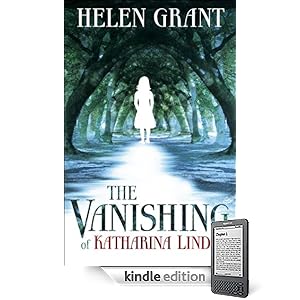
  4. 4.2, THE VANISHING OF KATHARINA LINDEN, Helen Grant
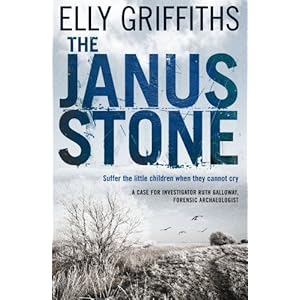
  5. 4.6, THE JANUS STONE, Elly Griffiths
  6. 4.0, LATE, LATE IN THE EVENING, Gladys Mitchell
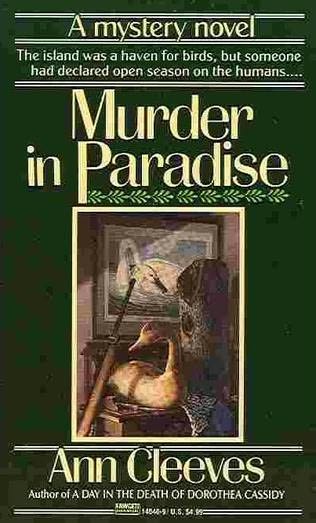
  7. 4.3, MURDER IN PARADISE, Ann Cleeves
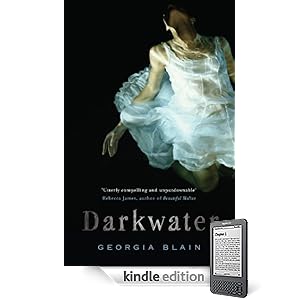
  8. 4.2, DARK WATER, Georgia Blain
  9. 4.0, MRS POLLIFAX, INNOCENT TOURIST, Dorothy Gilman
  10. 3.8, MONSIEUR PAMPLEMOUSSE TAKES THE CURE, Michael Bond
  11. 4.8, THE SWEETNESS AT THE BOTTOM OF THE PIE, Alan Bradley
  12. 4.4, CANDIED CRIME, Dorte Jakobsen
  13. 4.4, A COTSWOLD KILLING, Rebecca Tope
  14. 4.4, THE PERICLES COMMISSION, Gary Corby  
  15. 4.4, IN THE TEETH OF THE EVIDENCE, Dorothy L. Sayers

13 July 2011

Review: STIFF UPPER LIP, JEEVES, P.G. Wodehouse - audio

  • UNABRIDGED
  • Narrated by Jonathan Cecil
  • Length: 5 hrs and 11 mins
  • originally published 1963
Publisher's summary

When the news breaks that Madeline Bassett is engaged to Gussie Fink-Nottle, Bertie's relief is intense. But when Madeline attempts to turn Gussie vegetarian, Bertie's instinct for self-preservation sends him with the steadfast Jeeves on another uproariously funny mission to Sir Watkyn Bassett's residence, Totleigh Towers.

My take

Wodehouse's Jeeves and Wooster series was published from 1919 to 1974 and I suspect that by the time STIFF UPPER LIP was published the timeless Bertie Wooster may have lost most of his followers. Certainly by 1963 the style and content of this novel would have felt very dated. Part of me recognises that it is meant to be hilariously funny, and another part recognises that it is a spoof, but most of my brain didn't like it.

So why did I listen to it? Well, I was trying to add to the novels that I am reading and listening to for Cruisin' thru Cozies Reading Challenge reading challenge. I kept listening because I thought I might come across a redeeming feature but sadly it got no better. A niggling voice at the back of my mind kept asking me why I was persisting.

But then if you, unlike me, enjoy the comic mixed in with your crime fiction, and are looking for a light read/audio then you might enjoy a dabble in the Jeeves/Wooster novels. Predictably, you won't find me there. My tastes are definitely darker.

Check a comprehensive listing at Fantastic Fiction.

My rating: 3.5

STIFF UPPER LIP, JEEVES is this week's Friday's Forgotten book for the meme hosted by Patti Abbott on Pattinase's Friday's Forgotten Books as well as a book I am listing on my efforts for the Cruisin' thru Cozies Reading Challenge (which I have now completed) and the British Books Challenge where I am trying for a Crown.

1 July 2011

Review: A GRAVE IN THE COTSWOLDS, Rebecca Tope

Publisher: Allison & Busby 2010
383 pages
ISBN: 978-0-7490-0806-2
Source: my local library

Publisher's blurb

As undertaker Drew Slocombe drove to Greta Simmonds' burial in Broad Campden, deep in the heart of the Cotswolds, thoughts of his troubles at home and at work played on his mind. The last thing he was worried about was becoming a murder suspect.

Thea Osborne becomes Drew's unlikely friend and defender as she once again finds herself unwittingly involved in a brutal murder case when the council worker opposing the burial is found dead just minutes from her latest house-sitting assignment: the Cotswold home of the late Mrs. Simmonds. As they come to know more about the inhabitants of Broad Campden, Drew and Thea begin to unearth the secrets, conflicts and tensions that simmer below the surface of village life, together playing amateur detective to find the killer, and to clear Drew's name.

My take:

Introducing her sleuths from various series to each other was something that Agatha Christie occasionally did, so perhaps Rebecca Tope's strategy here is not so unusual.

She began documenting Thea Osborne's house sitting ventures with A COTSWOLD KILLING  in 2004 and A GRAVE IN THE COTSWOLDS is #8 in the series. (#9 DECEPTION IN THE COTSWOLDS has just been published)

The other series featuring Drew Slocombe who is an undertaker began in 1999 and A GRAVE IN THE COTSWOLDS is #5 in that series. Drew is conducting a service which gives clients cheaper rates and environmentally friendly burials.It is when he buries Greta Simmonds in a plot of land that she doesn't have title to that the problems start.

Will Drew and Thea get on? Fortunately for the author they do. Thea is more or less a free agent while Drew is married with an invalid wife and two young children. A GRAVE IN THE COTSWOLDS is narrated by Drew which in fact allows Thea to act independently and to undertake investigations that she tells Drew about after the event.

For the most part A GRAVE IN THE COTSWOLDS is an entertaining cozy, but I thought the final resolution was a bit too sloppy. The identity of the murderer, when it was revealed, surprised me as much as it did the other characters, so perhaps there were just not enough clues. There is also an "off-canvas" character whose influence over the culprit was an unknown.
  
My rating: 4.3

Rebecca Tope's website (in serious need of updating)

23 June 2011

Review: THE SALTON KILLINGS, Sally Spencer

Published: 1998
This edition: Dales Large Print Books
Length: 333 pages
ISBN 9-781853-899249
Source: my local library

Publisher's blurb

Drafted in from London to investigate the strangling of a teenager, Chief Inspector Woodend is an outspoken Northerner who does his policing the old-fashioned way: local knowledge and a healthy pinch of intuition. He is convinced that Margie Poole, daughter of the local landlady and the teenager's best friend, knows more about Dian Thorburn's last movements than she is prepared to tell. Woodend's enquiry turns up the death of another girl a generation before and the similarities look sinister. Is there a serial killer on the loose.

My take:

THE SALTON KILLINGS is set in a small salt mining village in Cheshire in the mid 50s. Chief Inspector Charlie Woodend, "Cloggin'- it Charlie", is a northerner, a bit of a misfit at Scotland Yard. He has a reputation of wearing out sergeants faster than you can get through shoe leather.
    Rutter [Charlie's assigned sergeant for this case] finally caught sight of the DCI, a man in his middle forties, wearing a baggy check sports coat over a zipped knitted cardigan. ... Hair - light brown, no Brylcreem, unruly. Nose - nearly, but not quite, hooked. Mouth - wide. Jaw - square without being brutish. All in all, a pleasant but unremarkable face. Except for the eyes. They were dark, almost black, and the lids were like camera shutters, constantly clicking and registering.
If you are looking for a well constructed British police procedural then THE SALTON KILLINGS, the debut novel in Spencer's Woodend series, might hit the spot. It did for me. An almost undemanding and quick read, with many of the hall marks of a cozy. But Charlie Woodend is an interesting character. THE SALTON KILLINGS is written retrospectively. The Epilogue takes us to Woodend in retirement and looks back at the case. An interesting technique.

I decided to track down the first in the series after I had read (and liked) the last on the list (see below) and then the second in Spencer's series that followed - the DCI Monika Paniatowski series.
4.5, THE RING OF DEATH
4.4, FATAL QUEST: WOODEND'S FIRST CASE 

I'll be reading more of the Woodend series.
My rating: 4.4

Inspector Woodend (list from Fantastic Fiction)
1. The Salton Killings (1998)
2. Murder at Swann's Lake (1999)
3. Death of a Cave Dweller (2000)
4. The Dark Lady (2000)
5. The Golden Mile to Murder (2000)
6. Dead On Cue (2001)
7. Death of an Innocent (2002)
8. The Red Herring (2002)
9. The Enemy Within (2003)
10. A Death Left Hanging (2003)
11. The Witch Maker (2004)
12. The Butcher Beyond (2004)
13. Dying in the Dark (2005)
14. Stone Killer (2005)
15. A Long Time Dead (2006)
16. Sins of the Fathers (2006)
17. Dangerous Games (2007)
18. Death Watch (2007)
19. A Dying Fall (2008)
20. Fatal Quest: Woodend's First Case (2008)

19 June 2011

Review: THE VANISHING OF KATHARINA LINDEN, Helen Grant

  • Format: Kindle Edition
  • File Size: 394 KB
  • Print Length: 352 pages
  • Publisher: ePenguin (April 2, 2009)
  • Sold by: Amazon Digital Services
  • Language: English
  • ASIN: B002XHNOCE
  • Source: I bought it
My Take:

Helen Grant's debut novel starts off dramatically enough.
    "My life might have been so different had I not been known as the girl whose grandmother exploded".
but this dramatic tale doesn't remain the focus of the novel for long. It does force 10 year old Pia Kolvenbach to become isolated at school as the other children avoid her in case they too explode. It does mean her only friend is Stinky Stefan, Stefan Bruer, and they become constant companions.

Meanwhile little girls vanish, beginning with Katharina Linden during one of the town's celebratory parades. Then Pia and Stefan learn that history is repeating itself: these aren't the first little girls to disappear from Bad Munstereifel.

Helen Grant shows a delightful sense of humour as she weaves into the story the legends of the town of Bad Munstereifel through the stories that Herr Schiller tells Pia and Stefan in after school sessions.

THE VANISHING OF KATHARINA LINDEN is told from ten-year-old Pia's point of view although at the time of the telling Pia is about 19 years old. I have seen reviews that criticise the authenticity of the narration, because in fact the narrative voice is not that of a ten year old. I wasn't particularly worried by that.

I think two other aspects of the novel can be criticised.
First of all, I don't think Helen Grant could make her mind about her audience, in particular what age level she was writing for. In the long run it is a novel for adults, but much of it has the feel of a Brothers Grimm fairytale.
My second criticism is the roller coaster ride the reader is taken on in the final pages as the author attempts to tie all the ends together. Now the style changes and the story takes on aspects of a thriller complete with car chase.

Nevertheless a good debut novel.

My rating: 4.2

The Kindle version of the novel contains a glossary at the end, of German terms and references used in the novel. It is a perfect illustration of how good it would be if Kindle editions came with a customised thesaurus/dictionary incorporated. As it is, the reader is not aware of this extra text until after they have read the novel. In this case there is no table of contents where the existence of a glossary could be shown.

Read another review on Reactions to Reading.

Comment by the author (from Amazon)
When we moved to Bad Münstereifel in 2001 my husband was anxious that I would be bored. “You can walk from one end of the town to the other in about two minutes,” he said. Actually I found Bad Münstereifel the most fascinating place. It is like stepping into the past. There are cobbled streets and old half-timbered houses, beautiful old churches and creepy castles. I’ve always loved folk tales and legends, and Bad Münstereifel has lots of those. The stories which Herr Schiller tells to Pia (the heroine) in the book are all genuine Bad Münstereifel folk tales. They were collected and published around 1910 by a local priest called Father Krause. I came across some of the stories in anthologies and went to read the originals at a library in Düren. They were written in old-fashioned German and printed in the Gothic type that was very popular in Germany at that time, which made it extremely difficult to read them! But I persevered because it was such an amazing journey of discovery for me. There was one particular character who really stood out, and that was “Unshockable Hans”, the miller who was not afraid of anything, even witches and ghosts. There are a number of stories about him. He seemed to represent the spirit of the town–-forthright, God-fearing and intrepid. I wanted him to be a central character in my book. I liked the idea that the heroine, Pia, would be inspired by his bravery to do her own investigations into the disappearances in her home town.

About the author:

Helen Grant was born in London, England. She read Classics at St.Hugh's College, Oxford, and then worked for ten years in Marketing to fund her love of travelling. In 2001 she and her family moved to Bad Münstereifel in Germany and it was exploring the legends of this beautiful town that inspired her to write her first novel. She now lives in Brussels with her husband, two children and two cats.
Helen's debut novel "The Vanishing of Katharina Linden" was shortlisted for the prestigious British fiction award, the CILIP Carnegie Medal 2010 and won an ALA Alex Award 2011. Helen's second novel "The Glass Demon" is being published in the US in June 2011 by Delacorte Press.

Visit Helen's website and read her blog at: http://www.helengrantbooks.com/ or follow her on Twitter at @helengrantsays

Challenges I'm counting this on: British Books Challenge, e-book challenge, Cruisin' thru Cozies Reading Challenge

1 April 2011

Review: THE JANUS STONE, Elly Griffiths

Publisher:         Houghton Mifflin Harcourt
Pub Date:         01/21/2011
ISBN:         9780547237442
Source: Review copy from NetGalley.com
Available as a Kindle e-book

Publisher's Blurb
Ruth Galloway’s expertise is called upon when builders, demolishing an old house in Norwich, uncover the bones of a child – minus the skull – beneath a doorway. Is it some ritual sacrifice or just plain straightforward murder?  DCI Harry Nelson investigates. The house was once a children’s home. Nelson traces the Catholic priest who used to run the place. He tells him that two children did go missing forty years before – a boy and a girl. They were never found. When carbon dating proves that the child’s bones predate the home and relate to a time when the house was privately owned, Ruth is drawn ever more deeply into the case. But as spring turns into summer it becomes clear that someone is trying hard to put her off the scent by frightening her to death …

My take:

This is #2 in Elly Griffiths' Ruth Galloway series. I was looking forward to it as I really enjoyed #1, THE CROSSING PLACES

Ruth Galloway is Head of Forensic Archaeology at the University of North Norfolk, an acknowledged expert – on bones, decomposition and death. In THE JANUS STONE she works again with Detective Chief Inspector Harry Nelson, and her old friend the Druid Cathbad plays a strong role, as well as a new friend Max Grey. Nelson is in charge of the Serious Crimes Unit. The investigation of discovered bodies comes under his brief, and of course when they are part of an archaelogical investigation, then Ruth is also called in. In addition, in THE JANUS STONE, the discovery of a child's body in a building site is particularly poignant for both Ruth and Nelson.

This is a novel with mystery on a number of levels. Add to that some really well drawn characters including Father Hennessy and Sister Immacolata who both worked at the site when it was a children's home.

The structure of the novel is interesting. Each chapter is prefaced with what seems to be a diary entry, beginning at the beginning of June. Here is a taste:
    1st June, Festival of Carna The house is waiting. It knows. When I sacrificed yesterday, the entrails were black. Everything is turned to night. Outside it is spring but in the house there is a coldness, a pall of despair that covers everything. We are cursed. This is no longer a house but a grave. The birds do not sing in the garden and even the sun does not dare penetrate the windows. No one knows how to lift the curse. They have given in and lie as if waiting for death. But I know and the house knows. Only blood will save us now.
The diary entries continue on Roman feast days throughout the month of June, detailing sacrifices made to various Roman gods. There are several candidates in the story for who the writer could be, and the entries add to the sense of an impending climax.
When the climax comes it brings great danger to Ruth.

There isn't the sense in THE JANUS STONE of Ruth and Nelson working together as they did in THE CROSSING PLACES. However the story is still a very satisfying one. I like the development of the main characters and look forward to finding out where their ongoing relationship takes us in the next in the series, already published, THE HOUSE AT SEA'S END.

One of the odd features of Elly Griffith's style is that the narrative is almost always written in the present tense.

    On impulse Ruth goes over to the box containing the other evidence bags from the site.

The tactic of always narrating in present tense has a peculiar effect. It makes the reader feel like a bystander listening to stage directions, as if the author is watching her characters and describing their actions for us in real time.

My rating: 4.6

Elly Griffith's website

The Ruth Galloway series
1. The Crossing Places (2009)
2. The Janus Stone (2010)
3. The House at Sea's End (2011)

This review is my 400th on MYSTERIES in PARADISE.
I'm including THE JANUS STONE in my lists for various challenges: Cruisin' thru Cosies Reading Challenge, e-book challenge, and British Books Challenge

25 March 2011

Review: LATE, LATE IN THE EVENING, Gladys Mitchell

First published 1976
This edition ISBN 0-7278-4793-7
190 pages
Source: Local Library
A Dame Beatrice Lestrange Bradley Mystery
#50 in a 66 book series published 1929-1984

Publisher's Blurb:
In the small Oxfordshire village where Ken and Meg Clifton spend their school holidays, the Fair is the most exciting thing that ever happens - that is, until a double murder is suddenly committed.

My take:

LATE, LATE IN THE EVENING, we are told on the dustjacket, returns to the days before Gladys Mitchell's sleuth, Mrs Beatrice Adela LeStrange Bradley, became Dame Beatrice.

This is the only title I have read in the series and was probably not a good one to start with.

The structure of the novel is difficult, apart from being set in the past, there are three narrators: Mrs Bradley herself who does not really feature until the second half of the novel, in which she solves the crime; young Margaret (Meg) Clifton, 10 years old, and her younger brother Kenneth, and between them they do all the ground work. They find out a murder has been committed, and save a gypsy from being accused of it. The third narrator is the local matriarch and lady of the manor, who engages Mrs Bradley to make a psychiatric assessment of her brother who appears to have become deranged and is digging holes all over the village. When he disappears, all the strands begin to come together.

The structure is made more complicated by the fact that Meg Clifton is speaking in retrospect,  harking back to days long gone, to one of Mrs Bradley's first cases. Mrs Bradley's account on the other hand mainly takes the form of letters to Sir Walter - and I don't have a clue who he was.

One aspect that slowed my reading was the author's insistence on reproducing the dialect of one of the families in Hill village where the action takes place.
Here is a sample:
    So you says. A lettle bet of a lah-di-dah, ennee? Seems loike I heered hem talken to you t'other day loike the gentry talks, and that's talk as Oi don't 'old weth, nor moi dad neether.
I defy you to read that quickly!

For all that, it is an interesting cozy plot from an author who was obviously popular in her day. LATE, LATE IN THE EVENING has the air of a vintage novel, of earlier times, although it was not published until 1976. Perhaps it sat in the bottom drawer for a time?
I couldn't find a cover image for the copy I had so have photographed it. It is a cozy gem!

I'm adding it to my list of  Cruisin' thru Cozies Reading Challenge and British Books Challenge novels.

My rating: 4.0

From Wikipedia
Mitchell was an early member of the Detection Club along with G. K. Chesterton, Agatha Christie and Dorothy L. Sayers and throughout the 1930s was considered to be one of the "Big Three women detective writers", but she often challenged and mocked the conventions of the genre - notably in her earliest books, such as the first novel Speedy Death, where there is a particularly surprising twist to the plot, or her parodies of Christie in The Mystery of a Butcher's Shop (1929) and The Saltmarsh Murders (1932).
You may have seen the BBC television series, The Mrs Bradley Mysteries (starring Diana Rigg), produced in 1999.

Gladys Mitchell  wrote at least one novel a year throughout her career. 1929-1983.  She also wrote under the pseudonyms Stephen Hockaby and Malcolm Torrie, and wrote ten children's books under her own name.

20 March 2011

Review: MURDER IN PARADISE, Ann Cleeves

published Ballantine Books, 1989
214 pages
ISBN 0-449-1450-9
Source: I bought it secondhand

Publisher's Blurb
The honeymoon was over .. and Jim and his English bride, Sarah, had come home to Kinness to settle down. But first there was to be one huge celebration for the newlyweds, with the whole island present. And before the party was over, there would be a shockingly unexpected death. Somehow, in the dark of the night, Jim's young sister, Mary, slipped off Ellie's Head to the rocks below. A terrible end to a boisterously cheerful evening.
But did Mary fall, or was she pushed? George Palmer-Jones, retired birdwatcher and amateur detective, suspected the latter, but proving it would be difficult: no one wanted to upset the balance of the isalnd's ancient relationships.
Yet those with something to hide inevitably to to hide it, and George, helped by Sarah, began to piece together a tragic story he wished he had nver heard. Kinness was a paradise lost.

My take:
How could I resist it? I saw this title beckoning me on the shelves of a second hand book shop in Melbourne yesterday. The synergy with the title of this blog hit me.

I had already read one title (SEA FEVER - see mini-review below) in Ann Cleeves' Palmer-Jones series and had mentally marked it as a series I would enjoy reading more from. MURDER IN PARADISE is #3 in the series, and George has recently retired from the public service, and not at all sure he will have enough to occupy him. He comes to the northerly island of Kinness to do some twitching (bird watching), but normally he would have his wife Molly with him.

Investigating Mary's death almost comes as a relief for George, as it gives him something to do. The island is small, only 3 miles long, and 2 miles wide; just a few families, divided into a couple of clans that don't get on terribly well, and so we have the equivalent of a locked room mystery. The murderer can't easily get off the island, so it is very likely one of the inhabitants.

You can see the makings of the Shetland series in this novel as Cleeves explores the ingrained suspicion of the islanders of both incomers and even those who were born on the island but are of the opposing clan. George is a very methodical sleuth (he reminded me a bit of Simon Brett's Carole Seddon who is also a retired public servant), and he is also an outsider which means he doesn't always get told the truth.

A very enjoyable cosy read.

My rating: 4.3

mini review, SEA FEVER, my rating 4.2
George Palmer-Jones and Greg Franks, despite a separation of four decades in age, have in common the fact that they are both twitchers. So George just happens to be on the spot when Greg is discovered murdered during a pelagic trip on the "Jessie Ellen" off the coast of Cornwall. In fact George is on the boat to meet Greg whose parents have hired George to find Greg and ask him to come home. It appears however that Greg has made sure that all his enemies know that he is on the bird-watching trip - so who is responsible for his death? Cosy medium paced detective novel "starring" amateur detective George Palmer Jones and his wife Molly. A story full of ifs…

Read a profile of Ann Cleeves by Martin Edwards

Anne Cleeves website

The series (listing thanks to Fantastic Fiction)
Palmer-Jones
1. A Bird In The Hand (1986)
2. Come Death and High Water (1987)
3. Murder In Paradise (1988)
4. A Prey To Murder (1989)
5. Sea Fever (1991)
6. Another Man's Poison (1992)
7. The Mill On The Shore (1994)
8. High Island Blues (1996)

I'm listing MURDER IN PARADISE in the British Books Challenge and the Cruisin' thru Cozies Reading Challenge

Review: DARK WATER, Georgia Blain

published 2010
ISBN: 978 1 86471 983 3 (pbk.)
Target audience: For secondary school age
Read on my Kindle but also available as ePub from publisher Random House Australia.
Source: I bought it.

Publisher's Blurb:
Amanda Clarke is dead.

Her body was found floating facedown by the riverbank, and no one knows what happened. As rumours fly and fear grows, it seems that everyone suspects Lyndon, one of Amanda's friends. He's known for his temper, his cruelty and his criminal family - and now the police want to talk to him.

It's the end of summer, 1973, the heat is enough to melt asphalt and a sleepy riverside suburb is losing some of its innocence. Fifteen-year-old Winter went to the same school and hung out in the same places as Amanda. As she finds herself alone in trying to defend Lyndon, Winter learns that you can never really know someone - and the answers she has been looking for are closer than she has ever wanted to believe.

My take:
The story is told in the first person by Winter Blair and is set on "the peninsula" which I mentally set in Victoria. Winter is the younger sister of Joe who was in Amanda's class and was just one of the boys who had the "hots" for Amanda.

DARK WATER, once the police designate Amanda's death as "suspicious", becomes a murder mystery laced with threads about the perils of growing up. Winter becomes a self-appointed investigator, concerned first of all to prove that Joe could not be guilty of Amanda's murder, and then extending her protection to his friends. In the background, Winter's mother Dee is leading an environmental protest about saving Greenwood Bush from the predations of developers who want to clear the land for factory development.

I'm far from an expert in young adult fiction but it seems to me that this age group would find DARK WATER a good read.

My rating: 4.2

About the author

Georgia Blain, an Australian author, has published five novels: CLOSED FOR WINTER, CANDELO, THE BLIND EYE, NAMES FOR NOTHINGNESS and the young adult novel DARKWATER.
She was named one of the Sydney Morning Herald's Best Young Novelists in 1998, and has been shortlisted for the NSW Premier's Literary Awards.
Two of her novels have been optioned for feature films, including CLOSED FOR WINTER, which was filmed as Elise in 2007.
She has been published internationally, with her work appearing in publications such as Granta and The Independent Magazine.
Her most recent book for adults BIRTHS DEATHS MARRIAGES was shortlisted for the Nita B Kibble Award in 2009.

I'm listing this title in the Aussie Author Challenge, the Cruisin' thru Cozies Reading Challenge and  the e-book challenge.

9 March 2011

Review: MRS POLLIFAX, INNOCENT TOURIST, Dorothy Gilman

Publisher: Fawcett Books, 1997
ISBN 0-449- 91137-3
203 pages
Source: my local library
#13 of the Mrs Pollifax series

Blurb:
The spry Connecticut matron and secret weapon for the CIA, Mrs. Pollifax, poses as a New York City bag lady in order to catch a Middle Eastern smuggler who holds the key to the power of Iraqi strongman Saddam Hussein.

About the author:
Dorothy Gilman (1923 - ) is a United States author of mystery and spy fiction. She is most well-known for the Mrs. Pollifax series of spy novels, about spy and grandmother Emily Pollifax, who chooses to become a spy in her 60s, and who stars in fourteen books written over three decades. Gilman's books tends to feature unlikely heroines, often travelling to exotic locales.

My take:
Mrs Pollifax is commissioned by the CIA to accompany a retired CIA agent John Farrell to Jordan and Amman to retrieve the final manuscript of a dissident Iraqi novelist Dib Assen, allegedly recently murdered in an Iraqi prison. Mrs Pollifax will add credence to their tourist disguise while Farrell carries out his mission to retrieve the manuscript at a rendezvous at a castle near Amman. It takes them a while to realise that they have been under surveillance from the very beginning.

MRS POLLIFAX, INNOCENT TOURIST reminded me of plots that Agatha Christie constructed back in the 1920s especially the ones that involved Tommy & Tuppence, except that INNOCENT TOURIST is played out against the backdrop of the aftermath of the Gulf War of the 1990-1991.
The plot background details about Saddam Hussein and the political situation in Iraq after the Gulf War seemed mostly correct if a bit simplified.

Emily Pollifax seems like a less fragile version of Jane Marple.
However the whole plot felt a tad unrealistic, even though I liked the description of their Bedu guide and his teenage sister. The way the CIA uses Mrs Pollifax as an "unofficial" agent seems most unlikely.

I've been thinking about whether this book qualifies as a "cozy" and have decided that it does despite containing elements that could be described as "thriller".

Dorothy Gilman wrote INNOCENT TOURIST towards the end of her writing life. The series had begun just over 30 years earlier back in 1966 and I couldn't help feeling that the style of INNOCENT TOURIST hadn't really moved with the times. However it was a quick and entertaining read, partly because of the length but also because the writing style is not particularly complex.

My rating: 4.0

I'm adding this to my list for the Cruisin' thru Cosies Reading Challenge as well as for "Asia" in the 2011 Global Reading Challenge

8 March 2011

Review: MONSIEUR PAMPLEMOUSSE TAKES THE CURE, Michael Bond

Published: Hodder & Stoughton 1987
ISBN 0-340-40331-4
160 pages
Source: my Local Library
#4 in the series featuring Aristide Pamplemousse

Blurb
This fourth in the detective series featuring Aristide Pamplemousse finds the corpulent Surete officer turned gastronomic investigator for Le Guide disguised as a blind man at Chateau Morgue, a health spa near the Pyrenees. Pamplemousse despairs of satisfied appetites for a fortnight, but his bloodhound Pommes Frites discovers kilos of sausage, and then Aristide himself discovers an affectionate English manicurist. While it becomes apparent that the regime at the spa covers some other activities, including murder and blackmail, not until the inspector rigs up a flying camera, utilizing helium and Pommes Frites's inflatable kennel hung with black silk lingerie, is the mystery of Chateau Morgue resolved.

My take:
I'm not sure whether this was just a poor choice for me to begin reading this series with (although the choice was determined by book availability) or whether I would have found other stories in the series too far fetched and improbable too. Fans of the series will tell me that I should have found it all a hoot, but I didn't find it all that amusing.

The plot was complicated by the appearance of Monsieur Pamplemousse's doppelganger, the television personality Ananas on the train going down to the health spa, and then again at the spa itself. I presume he has made an appearance in earlier books.

Monsieur Pamplemousse seems to travel with an unlikely amount of equipment, photographic, cooking, notemaking as well as a blow up kennel for the blood hound Pommes Frites.

The blurb from Publisher's Weekly said
    readers may have trouble following Pamplemousse's intricate thought processes and understanding exactly what was going on at Chateau Morgue
so it certainly sounds as if I was not an orphan. I certainly didn't manage to make the connections. The concept is without doubt a spoof on detective series. A quote on the back cover says "There is more than a touch of Peter Sellers". I was reminded myself of Alexander McCall Smith's Professor Dr Moritz-Maria von Igelfeld, although of course he is a much more recent creation.

If you are interested in checking the Pamplemousse series see this page at Fantastic Fiction.
Michael Bond of course was the person who gave us Paddington Bear.

My rating: 3.8

MONSIEUR PAPMPLEMOUSSE TAKES THE CURE is going to be listed among my reads for Cruisin  thru Cosies Reading Challenge, British Books Challenge, and this week's Friday's Forgotten Books

7 March 2011

Review: THE SWEETNESS AT THE BOTTOM OF THE PIE, Alan Bradley

  • Format: Kindle Edition
  • File Size: 480 KB
  • Print Length: 304 pages
  • Page Numbers Source ISBN: 0752883216
  • Publisher: Orion (April 30, 2009)
  • Sold by: Amazon Digital Services 
  • Source: I bought it.
Amazon Best of the Month, April 2009:
It's the beginning of a lazy summer in 1950 at the sleepy English village of Bishop's Lacey. Up at the great house of Buckshaw, aspiring chemist Flavia de Luce passes the time tinkering in the laboratory she's inherited from her deceased mother and an eccentric great uncle. When Flavia discovers a murdered stranger in the cucumber patch outside her bedroom window early one morning, she decides to leave aside her flasks and Bunsen burners to solve the crime herself, much to the chagrin of the local authorities. But who can blame her? What else does an eleven-year-old science prodigy have to do when left to her own devices? With her widowed father and two older sisters far too preoccupied with their own pursuits and passions—stamp collecting, adventure novels, and boys respectively—Flavia takes off on her trusty bicycle Gladys to catch a murderer. 

My take:

I'm not entirely sure of the 11 year old precocious heroine/detective, Flavia de Luca. There are times when she seems much older than 11! There are an incredible number of reviews on Amazon, and those who generally didn't like the novel, cited Flavia's character as the cause.

And don't believe those who say they found it a quick read! Well, it wasn't for me anyway.

But what hooked me was the language. Alan Bradley has a delightful turn of phrase. Flavia's narrative is  littered with classical illusions as well as Flavia's own interest in all things chemical.
    The panel on the right portrayed Jesus emerging from his tomb, as Mary Magdalene, in a red dress (also iron, or perhaps grated particles of gold), holds out to him a purple garment (manganese dioxide) and a loaf of yellow bread (silver chloride). I knew that these salts had been mixed with sand and the ashes of a salt-marsh reed called glasswort, fired in a furnace hot enough to have given even Shadrach, Meshach and Abednego second thoughts,
...........
    I had a quick look round at my surroundings. I was in a dismal little room with sticks of furniture so shabby that they might have been bought directly off the tailgate of a peddler’s cart, their legs chipped and dented as if they had suffered a century of kicks in the shin from government-regulation boots. In a vain attempt to cheer things up, a tiny wooden cupboard had been painted apple green, but the sink was a rust-stained relic that might have been on loan from Wormwood Scrubs. Cracked cups and crazed saucers stood sadly cheek by jowl on a draining board, and I noticed for the first time that the mullions of the window were, in fact, iron bars only half-heartedly disguised. The whole place had an odd, sharp odour I had noticed when I first came in: it smelled as if a jar of gentleman’s relish, forgotten years ago at the back of a drawer, had gone off.
The novel is set in 1950, but it often felt almost Edwardian or even Dickensian.
So if you are looking for a cozy that is a little bit different, with a sleuth who is certainly different, then this may be just the ticket. Make sure you have time to savour the careful prose though. And listen carefully - you may hear me chortling!

My rating: 4.8

In 2007 Alan Bradley won the CWA Debut Dagger for THE SWEETNESS.. at the age of 70 years.

Other reviews to check:
  • DJsKrimiblog: my one-word judgement: wonderful!
  • Material Witness: On the face of it, The Sweetness at the Bottom of the Pie, the debut novel of Canadian writer Alan Bradley, could hardly have been less promising.
  • Miss Lemon's Mysteries: highly enjoyable mystery with a gratifyingly original heroine.
  • Not Now ... I'm Reading: I haven't read many mysteries...but this one has to be my hands-down favourite.
I'm counting  THE SWEETNESS AT THE BOTTOM OF THE PIE in the Cruisin' thru Cosies Reading Challenge, the Canadian Book Challenge 2010-2011, and e-book challenge

    12 February 2011

    Review: CANDIED CRIME, Dorte Hummelshoj Jakobsen

    e-book self-published through Smashwords, 31 Jan 2011
    Words: 10203 (approximate)
    Language: English
    Source: I bought it.

    Ebook Description
    CANDIED CRIME, DJ´s Daim Stories (Daim/Dajm is a Scandinavian candy bar) vol 1, the first volume in a planned series. Thirteen flash fiction stories, a collection of cosy and humorous crime, some of which have been published earlier on Dorte's blog.

    Table of Contents
     1.The Knitting Club
     2.Grammy
     3.Mushrooms and Toadstools
     4.The Princess on the Pea
     5.A Nightly Burger
     6.End of Christmas
     7.Spring Cleaning
     8.Shots
     9.Trick or Treat
     10.Tea for Ten
     11.Toffee´s Christmas
     12.Casualty
     13.The Red Shoes

    My take:
    I sincerely hope we see a lot more of Dorte Jakobsen's writing in publication in the near future. It is hard to write a review of this book as there is so much variety in the flash fiction stories, from vignettes which stir the imagination to longer pieces which introduce the residents of Knavesborough, the location of a cozy that Dorte is currently working on.
    Humorous crime isn't usually my cup of tea but this is delightful reading, and I certainly want to read more of Dorte's writing.

    My rating: 4.4

    About the author:
    Dorte Hummelshøj Jakobsen was born in Denmark in 1961. She works as a teacher of English, but in her spare time she reads, writes and reviews crime fiction.   One of her stories appeared in "Discount Noir", a collection of flash fiction stories, in 2010 (editors Steve Weddle & Patricia Abbott).  See my post Published Friends.
    Catch up with Dorte's blog:  DJ´s Krimiblog

    Other mentions to check:

    31 January 2011

    Review: IN THE TEETH OF THE EVIDENCE, Dorothy L. Sayers - audio

    AUDIOBOOK: In the Teeth of the Evidence: UNABRIDGED
    A collection of 17 short stories by Dorothy L. Sayers first published by Victor Gollancz in 1939.
    The book's title is taken from the first story in the collection.

    The stories in the collection
    Original cover
    * Lord Peter Wimsey stories:
              o "In the Teeth of the Evidence"
              o "Absolutely Elsewhere"
     * Montague Egg stories:
              o "A Shot at Goal"
              o "Dirt Cheap"
              o "Bitter Almonds"
              o "False Weight"
              o "The Professor's Manuscript"
    * Other stories:
              o "The Milk-Bottles"
              o "Dilemma"
              o "An Arrow O'er the House"
              o "Scrawns"
              o "Nebuchadnezzar"
              o "The Inspiration of Mr. Budd"
              o "Blood Sacrifice"
              o "Suspicion"
              o "The Leopard Lady"
              o "The Cyprian Cat"

    My take:

    This was an entertaining audio book, narrated with touches of the dramatic by Ian Carmichael.
    I thought it gave a good idea of the range of Dorothy L. Sayers' crime fiction writing.
    I particularly liked the Lord Peter Wimsey stories and enjoyed meeting Montague Egg who was new to me. Many of the "other stories" had a Poe-ish quality to them.

    My rating: 4.4

    I'm "counting" this in the  2011 Vintage Mystery Reading Challenge and the Cruisin' thru Cosies Reading Challenge

    16 January 2011

    Review: THE PERICLES COMMISSION, Gary Corby

    Publisher: Penguin Group Australia 2010
    ISBN : 978-0-14-320591-3
    322 pages
    Source: Local Library

    Publisher's blurb:

    Athens, 461BC.  A dead man falls from the sky, landing at the feet of a surprised Nicolaos.
    It doesn't normally rain corpses.  This one is the politician Ephialtes, who only days before had turned Athens into a democracy.
    Rising young statesman Pericles commissions Nicolaos to find the assassin.  Nico walks the mean streets of Classical Athens in search of a killer, but what's really on his mind is how to get closer - much closer - to Diotima, an intelligent and annoyingly virgin priestess, and how to shake off his irritating twelve year old brother, Socrates . . .

    My take:
    This novel had me hooked from the beginning.
    How could I resist this opening paragraph?
      A dead man fell from the sky, landing at my feet with a thud. I stopped and stood there like a fool, astonished to see him lying where I was about to step. He lay facedown in the dirt, arms spread wide, with an arrow protruding out of his back. He'd been shot through the heart.
    Nicolaos recognises the body as Ephialtes, the man who had brought full democracy to Athens. He doesn't however recognise the man who turns the body over, Pericles, part of Athenian aristocracy. Pericles is convinced that his friend and mentor Ephialtes has been murdered at the instigation of the Council of the Areopagus whom he had taken power from.

    Nicolaos is just twenty, just finished ephebe training, and not really the best person Pericles could have chosen to investigate the death of his friend, but the two seem to hit it off right from the beginning. Athens has no police force (really a modern phenomenon) and such investigations are usually undertaken by families or tribal districts. And so Nicolaos begins his political education, finding out how the Athenian city state really works.

    In the blurb on the back cover Kelli Stanley calls THE PERICLES COMMISSION "a rollicking romp" and I enjoyed both that aspect and the detailed background of Athenian history, from the "Timeline to Democracy" and the list of "actors" in the opening pages, to the thoughtfully provided Glossary at the end. In the Author's Note at the end Gary Corby says "Perhaps the greatest joy of writing a book like this is interweaving fiction into the fabric of truth" and I think he does that very well.

    This is Gary Corby's debut novel, seemingly at least to have a sequel, if the implications of the final pages come to fruition.

    My rating: 4.4

    About the author:
    Gary Corby has long been fascinated by ancient history, finding it more exciting and bizarre than any modern thriller.  He's combined the ancient world with his love of whodunits, to create an historical mystery series set in Classical Greece.  Gary lives in Sydney, Australia, with his wife and two daughters.  He blogs at A Dead Man Fell From The Sky, on all things ancient, Athenian, and mysterious.

    I debated with myself for quite a while about which of my "challenges" I would count this novel against.
    I have decided on

    LinkWithin

    Blog Widget by LinkWithin