Showing posts with label Agatha Christie Challenge. Show all posts

2 October 2023

Review: NEMESIS, Agatha Christie

Synopsis (publisher) 

"In utter disbelief Miss Marple read the letter addressed to her from the recently deceased Mr Rafiel – an acquaintance she had met briefly on her travels. Recognising in Miss Marple a natural flair for justice, Mr Rafiel had left instructions for her to investigate a crime after his death. The only problem was, he had failed to tell her who was involved or where and when the crime had been committed. It was most intriguing."

Miss Marple receives an unusual bequest – her old friend and one-time partner in detection, has left posthumous instructions for an investigation into a crime. She must follow the clues across England to discover the truth of his bizarre request.

Extra notes

Nemesis was in fact the last novel Christie wrote featuring Miss Marple, although not the last to be published.

Mr Rafiel first appeared in A Caribbean Mystery and struck up a begrudging alliance with Miss Marple in order to solve a multiple murder case. This transformed to respect, which carries on through to Nemesis, despite the fact that it isn’t a sequel. They are partnered novels which complement each other. Written in her eighties, Nemesis is a testament to Agatha Christie's enduring skill at mystery and deception.

First adapted for screen in 1987, the story starred Joan Hickson. In 2004 BBC Radio 4 broadcast a dramatisation, starring June Whitfield. It was adapted again in 2007, with Geraldine McEwan and also featured Richard E Grant as her nephew, Raymond West.

My Take

Some years earlier, when on holiday in the Caribbean, Miss Marple had met Jonas Rafiel and together they had solved a mystery. Now, a number of years on, he has died, but with some"unfinished business" on his mind, and he leaves a bequest for Miss Marple, dependent on her carrying out his request. She is contacted by his lawyers who hand her a letter from him offering her £20,000. At that stage there is no detail about what he wants her to do apart from the fact that he is keen to see that justice is to be done, and he reminds her of the fact she once told him that she saw herself as Nemesis, the harbinger of justice.

So she begins her quest two days letter by joining a bus tour of Famous Hoses and Gardens of Great Britain with 15 other people. She really still has no idea of what Mr Rafiel wanted her to do, but she has already begun some investigations of her own into his background. As the bus trip progresses it becomes clear that although he hasn't told Miss Marple much, Mr Rafiel has assumed she will accept his request, and he has done several things to clear the way for her.

By the middle of the novel I thought the nature of Miss Marple's quest had become obvious, but at the same time, the narrative was frustratingly slow, almost as if Christie wanted us to think about what makes a person a good detective etc. And then came the first death when one of the passengers from the bus tour was killed, struck by a large boulder. Things speeded up a bit after that.

I can understand if readers are of two minds with this book. It is very different from most of the Miss Marple books, and I thought it was a bit obvious that Christie wanted to explore what made Jane Marple so sensitive to the presence of evil, what made her so determined to see that justice was done. There are sections of text that are almost rambling.

You will have seen that I have read this before. I am re-reading it with my U3A Agatha Christie reading group and I will be interested to see whether or not they have enjoyed it. We will follow our discussion with the viewing of one of the television interpretations but I have yet decided whether it will be the  Joan Hickson or the Geraldine McEwan one, probably the former I think, in the hope that it sticks closer to the original book. Which do you think it should be? (We don't have time for both)

My rating: 4.0

Agatha Christie novels that I've read.

17 July 2023

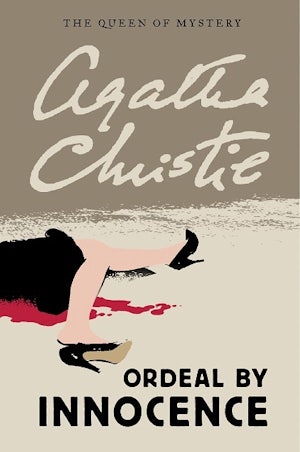
Review: ORDEAL BY INNOCENCE, Agatha Christie

  • this edition (large print) supplied by my local library
  • first publishd in 1958, this edition 2011
  • HarperLuxe from Harper Collins Publishers
  • ISBN 978-0-06-287968-4
  • 349 pages

Synopsis (Christie.com)

The Argyle family is far from pleased to discover one of its number has been posthumously pardoned for murder – if Jacko Argyle didn’t kill his mother, who did? 

Dr. Arthur Calgary takes a ferry across the Rubicon River to Sunny Point, the home of the Argyle family. Two years before, the matriarch of the family was murdered and a son, Jack, was convicted and sentenced to spend the rest of his life in prison. Throughout the trial Jack had maintained his innocence, claiming he was hitchhiking on the night of the murder and he had been picked up by a middle-aged man in a dark car. Unable to locate this mystery man the police viewed Jack’s as a lie. 

Calgary was the stranger in question, but he arrives too late for Jack – who succumbs to pneumonia after serving just six months of his sentence. Feeling a sense of duty to the Argyles, Calgary is surprised when his revelation has a disturbing effect on the family – it means one of the family is a murderer.

My Take

More about the book (from Christie.com)

Two years after Jacko was convicted of the murder of his adopted mother and has died in jail, his alibi steps forward. Dr Calgary had been out of the country during the trial and only heard news of it upon his return. Certain that Jacko was innocent, Dr Calgary takes it upon himself to investigate the past.

A psychological endeavour on Agatha Christie’s part, this story signifies a shift in style from some of her earlier, light works, and focuses largely on conversation, memory and perception, as each sibling suspects each other of the murder of their somewhat eccentric foster mother. The book was dedicated “To Billy Collins with affection and gratitude”. It was he who had convinced Christie to leave her one-sided deal with the Bodley Head, the publishers of her first six books, and to switch to William Collins Sons & Co in 1926. Now known as HarperCollins, they are Agatha Christie's UK and US publishers to this day.

It was first published in 1958 and it was in 1984 that the story was first adapted for film. It starred Donald Sutherland, Faye Dunaway and Christopher Plummer, and featured an interesting soundtrack that is often thought to conflict with the atmosphere of the film. In 2007, the story featured Miss Marple as part of the ITV television series, played by Geraldine McEwan.

In 2018 new TV adaptation of Ordeal by Innocence was broadcast with an all-star cast, including Bill Nighy, Eleanor Tomlinson and Anna Chancellor.

It is 10 years since I last read this and I am re-reading it for my Agatha Christie reading group.
It was chosen for our discussion because it is a stand alone, so we will be following our discussion with the viewing of the 2018 TV adaptation.

We are told in reviews that the book was one of Agatha Christie's own favourite novels, and featured a interpretation of her holiday home, Greenway House. Also that the reason this was not a "Poirot" was that when she wrote this book Christie was free to do whatever she wanted as she was not in any financial need that period and wanted to write something that would be enjoyable for her.
We spend a lot of time (along with the characters) thinking about who the murderer is, and also about the fact that the innocent are suffering too. We are presented with each of the family in turn for assessment. Did you finally guess who it was?

I haven't actually created a list of questions this time, so it will be interesting to see how the discussion goes.
Some suggestion of themes

  • Guilt vs Innocence
  • Why is no-one pleased by Dr. Calgary's assertion of the alibi?
  • Nurture vs Nature - in particular why didn't Rachel Argyle's great "experiment" work?
  • Did Calgary do the right thing? Or should life have gone on with the case unsolved?
    Remember that Calgary's revelations eventually led to  Mary's husband Philip becoming fixated on solving the murder and so there was in fact another murder and an attempted murder. 

Characters
Leo Argyle
Rachel Argyle
Mary Durrant
Philip Durrant
Jacko Argyle
Mickey Argyle
Tina Argyle
Hetser Argyle
Kirsten Lindstrom
Gwenda Vaughan
Arthur Calgary

My rating: 4.5

My original review

My list of Agatha Christie books.

11 July 2023

Review: HERCULE POIROT'S SILENT NIGHT, Sophie Hannah

  • This book made available as a review copy by NetGalley - an e-book, but it will be available later in the year in hard copy.
  • Pub Date 04 Oct 2023
  • HarperCollins Publishers Australia, HarperCollins

Synopsis (NetGalley)

The world’s greatest detective, Hercule Poirot – legendary star of Agatha Christie’s Murder on the Orient Express, Death on the Nile and A Haunting in Venice – puts his little grey cells to work solving a baffling Christmas mystery.

CAN HERCULE POIROT SOLVE A BAFFLING MURDER MYSTERY IN TIME FOR CHRISTMAS?

It’s 19 December 1931. Hercule Poirot and Inspector Edward Catchpool are called to investigate the murder of a man in the apparent safe haven of a Norfolk hospital ward. Catchpool’s mother, the irrepressible Cynthia, insists that Poirot stays in a crumbling mansion by the coast, so that they can all be together for the festive period while Poirot solves the case. Cynthia’s friend Arnold is soon to be admitted to that same hospital and his wife is convinced he will be the killer’s next victim, though she refuses to explain why.

Poirot has less than a week to solve the crime and prevent more murders, if he is to escape from this nightmare scenario and get home in time for Christmas. Meanwhile, someone else – someone utterly ruthless – also has ideas about what ought to happen to Hercule Poirot . . .

My Take

I think Sophie Hannah has done a good job in re-creating Hercule Poirot, but perhaps Inspector Edward Catchpool is not a good replacement for his old offsider Arthur Hastings.

Catchpool's mother requests Poirot's help in solving one murder and preventing another. The possible second victim is due to be admitted to hospital early in the New Year and to spend his remaining days there. If Poirot can work out who committed the original murder then perhaps her friend Arnold will be safe. There seems to be no reason why the second murder should take place, there is no evident link between the first victim and Arnold, and yet Arnold's wife is convinced the hospital is an unsafe place.

Poirot is confident that the solving of the first murder will take him only a couple of days and that he and Catchpool will be free to return to London in plenty of time for Christmas. However he has not taken Catchpool's mother's determination into account, and the lengths that she will go to. Add to that a mix of very strange and at times unpleasant characters, an inept local police investigator, and something in the past reaching out into the present .....

This is the 5th book by Sophie Hannah in this series, and I recommend that if you are still to give it a try, that you make Hercule Poirot's acquaintance. I doubt that you will be disappointed.

My rating: 4.4

The Hercule Poirot series

  1. The Monogram Murders (2014)
  2. Closed Casket (2016)
  3. The Mystery of Three Quarters (2018)
  4. The Killings at Kingfisher Hill (2020)
  5. Hercule Poirot's Silent Night (2023)

I have already read

4.3, THE MONOGRAM MURDERS - #1
4.2, CLOSED CASKET - #2
4.4, CLOSED CASKET - audio
4.4, THE MYSTERY OF THREE QUARTERS - audio book #3
4.4, THE KILLINGS AT KINGFISHER HILL - audio book #4  

20 April 2023

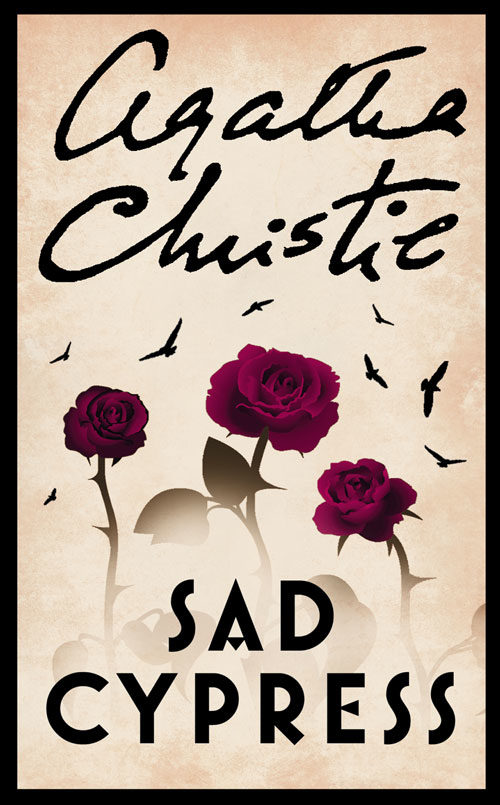
Review: SAD CYPRESS, Agatha Christie

  • this edition a large print one published by Harper Collins in 2013 and supplied by my local library
  • originally published in 1940
  • ISBN 978-1-61173-770-7
  • 318 pages

Trivia Quiz

Nice review to check

Synopsis (Christie.com)

An elderly stroke victim dies without having arranged a will. Beautiful young Elinor Carlisle stood serenely in the dock, accused of the murder of Mary Gerrard, her rival in love. The evidence was damning: only Elinor had the motive, the opportunity and the means to administer the fatal poison. Yet, inside the hostile courtroom, only one man still presumed Elinor was innocent until proven guilty: Hercule Poirot was all that stood between Elinor and the gallows. 

Come away, come away, death.,
And in sad cypress let me be laid;
Fly away, fly away, breath!
i am slain by a fair cruel maid.
My shroud of white, stuck all with yew
O prepare it;
My part of death no one so true;
Did share it    
                                Shakespeare

My Take

As I am re-reading this novel for discussion with my U3A Agatha Christie Reading Group, I have decided to create a list of questions for our session. I think we will have plenty to talk about. 

My earlier review is here.

If you, blog reader, decide to answer any of my questions, please feel free to leave your responses as a comment.

Discussion Questions (not listed in any particular order)

  • In what major ways does this novel differ from other Hercule Poirot ones? 
  • How does the structure of this book differ from most other Christie novels?
  • Where does the title come from? What does it mean? Does it work as a title?
  • There are several mysteries in Sad Cypress. How many can you list?
  • What is the buried scandal in this novel? What clues are we given about it?
  • How does Agatha Christie raise the issue of euthanasia? Do you think it is seriously done?
  • Whom did you suspect of the murder(s)?
  • Did Elinor ever love Roddy? Why did she break their engagement off?
  • This novel was published in 1940. What period do you think it was set in? Why?
  • Who committed the murder(s) and why?
  • What is the irony in Mary making a will?
  • What do you think of Elinor's state of mind?
  • The first courtroom drama for Poirot, Sad Cypress was written in the build up to the Second World War, a particularly prolific period for Agatha Christie and her little Belgian. It is written in three parts – the defendant’s account, the build-up to the murder, and Poirot’s investigation. Reflecting upon the piece after publication, Christie decided it would have been better without the character of Poirot. Do you agree
  • Apart from the title, there are other literary references in the novel. Which ones did you pick?
  • How does Christie demonstrate her knowledge of poisons (and how they work)
  • There is at least one reference in the novel that the "clean up brigade" who are sanitising the Christie books will have earmarked for removal. What did you pick up?
  • What about the ideas that Mary Gerrard had been "educated above her station". Do you think Christie was serious in suggesting that? Who talks about the dangers of education?
  • Hercule Poirot is amazed by the fact that everyone he talks to tells him lies. Some are just small lies and he can understand why the person has lied. But then he comes across a lie that seems unnecessary. The other thing that prompts his involvement is that he becomes convinced that the truth lies not in what he knows about Elinor Carlisle, but in what he does not know about Mary Gerrard? What lies is he talking about?
  • What is a curate's egg? (I've seen this used in reference to this novel)
  • Which of the characters do you like best? least? Why?
  • How does Poirot deliver justice?
  • Does the novel have a happy ending?
  • How much out of 5 do you give it?
  • Some commentators say that this is a much under-appreciated novel. Do you agree?

My rating: 4.5 

My list of Agatha Christie novels.

7 March 2023

Review: THE ABC MURDERS, Agatha Christie

  • This edition made available on Amazon (Kindle)
  • ASIN ‏ : ‎ B0046RE5CM
  • Publisher ‏ : ‎ HarperCollins; Masterpiece Ed edition (October 14, 2010)
  • Originally published 1936
  • Print length ‏ : ‎ 244 pages
  • Page numbers source ISBN ‏ : ‎ 042513024X
  • My original review
  • this cover shows Jon Malkovitch as Poirot    

Agatha Christie’s world-famous serial killer mystery, reissued with a striking cover designed to appeal to the latest generation of Agatha Christie fans and book lovers.

There’s a serial killer on the loose, bent on working his way through the alphabet. And as a macabre calling card he leaves beside each victim’s corpe the ABC Railway Guide open at the name of the town where the murder has taken place.

Having begun with Andover, Bexhill and then Churston, there seems little chance of the murderer being caught – until he makes the crucial and vain mistake of challenging Hercule Poirot to frustrate his plans…

From the Back Cover

There’s a serial killer on the loose, working his way through the alphabet and the whole country is in a state of panic.

A is for Mrs. Ascher in Andover, B is for Betty Barnard in Bexhill, C is for Sir Carmichael Clarke in Churston. With each murder, the killer is getting more confident—but leaving a trail of deliberate clues to taunt the proud Hercule Poirot might just prove to be the first, and fatal, mistake.

My take

Once again this is a novel I am reading with my U3A Agatha Christie Reading Group, and it is a re-read for me. Once again I have used the note-making facility on my Kindle to make a big list of the things that I want to talk about. (I actually started off using a printed copy, and then thought this note-making ability would be very useful).

Here are some of the things we are going to talk about - please leave a comment if you'd like to contribute to our discussion

  • The disclosure right at the beginning by Captain Hastings that he has departed from his usual practice of using only his own account, and has included third person accounts by someone else. So who wrote these extra chapters?
  • this novel was originally published in 1936, but the setting is only a year before?
  • How old is Poirot at this stage - Let's say he was about 60 when he arrived as a Belgian refugee during World War 1. Is he getting past it? Is Agatha Christie ageing him in "real time"? 
  • Poirot and Hastings trying to prevent aging. Poirot with his black hair dye, Hastings with his comb-over
  • I think it is Agatha Christie's only novel with a plot about a serial killer. But am I right? Aren't there some novels where the killer strikes more than once?
  • How did Hercule Poirot tackle solving the puzzle. Why does Hastings get annoyed by his method? How do his methods differ from those of the other detectives?
  • the fact that Hercule Poirot has now retired several times, and now tackles only "the cream of crime"
  • The way Poirot is regarded (or not) by the other detectives trying to solve the crime
  • What is ABC trying to do with his letters to Poirot?
  • What are the questions Poirot asks himself in reference to the case? (Why has ABC contacted him rather than going straight to the police?)
  • Why does Poirot get the "vigilante" group together - the victims of crime group. What is he trying to achieve?
  • When does Poirot get his first idea about who is really behind the murders?
  • What is the final solution?

What other questions do YOU think I should put on my list?

My rating: 4.7

See my list of Agatha Christie novels

14 January 2023

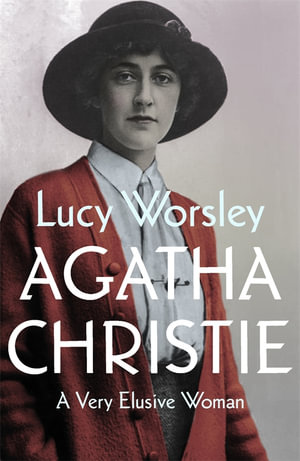
Review: AGATHA CHRISTIE: A Very Elusive Woman, Lucy Worsley

  • This edition published By Hodder & Stoughton, Great Britain 2022
  • ISBN 978-1-528-30388-9
  • 415 pages

Synopsis (publisher) 

Nobody in the world was more inadequate to act the heroine than I was.'

Why did Agatha Christie spend her career pretending that she was 'just' an ordinary housewife, when clearly she wasn't? As Lucy Worsley says, 'She was thrillingly, scintillatingly modern'. She went surfing in Hawaii, she loved fast cars, and she was intrigued by the new science of psychology, which helped her through devastating mental illness.

So why - despite all the evidence to the contrary - did Agatha present herself as a retiring Edwardian lady of leisure?

She was born in 1890 into a world which had its own rules about what women could and couldn't do. Lucy Worsley's biography is not just of an internationally renowned bestselling writer. It's also the story of a person who, despite the obstacles of class and gender, became an astonishingly successful working woman.

With access to personal letters and papers that have rarely been seen, Lucy Worsley's biography is both authoritative and entertaining and makes us realise what an extraordinary pioneer Agatha Christie was - truly a woman who wrote the twentieth century. 

My Take

An impressive non-fiction work that covers Agatha Christie's whole life, written by a person who is quite obviously a "fan", well versed in the events of Christie's life and the books she has written.

I've also just watched, and can recommend, the first of the documentaries (4?) based on the book.

I was glad to see that Worsley shares some of my own impressions of the importance of Agatha Christie in crime fiction. She refers to some of Christie's plot strategies as Christie's "tricks" and refers to the way they made a difference to what we expect from crime fiction as a genre. The book has also sowed a few seeds that will influence my interpretation of the Christie novels that I intend reading this year.

My rating: 5.0

About the Author

Lucy Worsley OBE is Chief Curator at the charity Historic Royal Palaces and also presents history documentaries for the BBC. Her bestselling books include Queen Victoria, Jane Austen at Home, A Very British Murder, If Walls Could Talk: An Intimate History of the Home, Courtiers, Cavalier and four historical novels for young readers. In 2019 her BBC One programme Suffragettes with Lucy Worsley won a BAFTA. 

30 October 2022

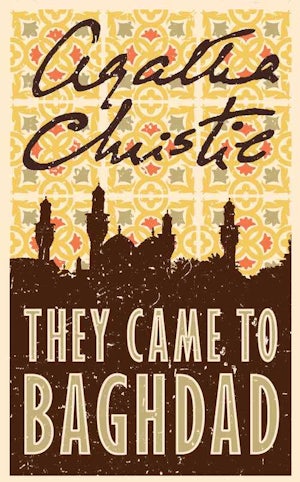
Review: THEY CAME TO BAGHDAD, Agatha Christie

  • this edition published in 2017, by Harper Collins
  • first published 1951
  • ISBN 978-0-00-819635-6
  • 294 pages

Synopsis (agathachristie.com)

Baghdad is the chosen location for a secret summit of superpowers, concerned but not convinced, about the development of an, as yet, unidentified and undescribed secret weapon.

Only one man has the proof that can confirm the nature of this fantastic secret weapon – a British agent named Carmichael. Unfortunately the criminal organisation responsible for the weapon’s development will stop at nothing to prevent him entering Baghdad and presenting his proof to the assembled delegates. Can Carmichael enter the city against such odds?

Into this explosive situations appears Victoria Jones, a girl with a yearning for adventure who gets more than she bargains for when a wounded Carmichael dies in her arms in her hotel room.

Now, if only she could make sense of his last words ‘…Lucifer…Basrah…Lefarge…

My Take

Dedicated to "All My Friends in Baghdad", this story is based around an impending meeting, taking place after World War II, of the superpowers America and Russia.  It gave the author an opportunity to vaunt her knowledge of archaeology and of Islamic/Arabic culture.

I first reviewed it on this blog ten years ago. I am re-reading it with my U3A Agatha Christie group, and it will be our last book for this year.

I was surprised to find that it really had so many connections to PASSENGER TO FRANKFURT which we read recently and which was published 20 years later. 

Among them are

  • a nefarious organisation siphoning of funds to use for evil purposes
  • the disappearance of talented young from all walks of life (also raised in DESTINATION UNKNOWN) and their dedication to "making the world a better place"
  • the conflict between ideologies
  • the possibility of World War III
  • the cult of the young Siegfried
  • the idea that World War II concluded unsatisfactorily and really left more problems than it solved.

Trivia Quiz to try

Things I have found out

  • They Came to Baghdad was first published in the UK in eight abridged instalments in John Bull magazine from January to March 1951, and in Canada, in an abridged version in Star Weekly Complete Novel, a magazine supplement published in Toronto, in September 1951.
  • the full version was then published in March 1951 by the Collins Crime Club
  • Victoria, the heroine/detective, never appears in another Agatha Christie novel

My rating: 4.3

My list of Agatha Christie novels 

Agatha Christie Reading Challenge 

1 October 2022

Review: DEATH COMES AS THE END, Agatha Christie

  • this edition accessed through my local library as a large print edition
  • first published 1944
  • ISBN 978-0-06-287971-4
  • 321 pages

Synopsis (publisher)

It is Egypt, 2000 BC, where death gives meaning to life. At the foot of a cliff lies the broken, twisted body of Nofret, concubine to a Ka-priest. Young, beautiful and venomous, most agree that she deserved to die like a snake. 

Yet Renisenb, the priest’s daughter, believes that the woman’s death was not fate, but murder. Increasingly, she becomes convinced that the source of evil lurks within her own father’s household. 

As the wife of an eminent archaeologist, Agatha Christie took part in several expeditions to the Middle East. Drawing upon this experience and exhaustive research, she wrote this serial killer mystery laid in Egypt 4000 years ago.  

My Take

This is not the first time I've read this novel - I am re-reading it with my U3A Agatha Christie Reading Group. See my previous review.

When Imhotep, the Ka-priest, returns to his family, he brings with him an unwelcome surprise, a concubine from the North, who is in fact younger than his recently widowed daughter. None of his household like the concubine, and she plainly does not like them. She tries to turn the family against their father and seems determined to stir up trouble.

But what Nofret, the concubine, does, as one of the family remarks, is reveals where trouble and evil already are present.

In the introductory Author's Note Agatha Christie points out that the fact that the action of the book takes place on the West bank of the Nile at Thebes in Egypt about 2000 BC is actually incidental to the story. It is a story that could have been played out against any setting. It is a story of jealousy, a father who dominates too much, and children who are chafing against the bit. The murder of the concubine is just the first in a series of incidents, and the author holds various characters up for us to scrutinise.

We see the action mainly through the eyes of Imhotep's daughter Renisenb, who is not always the most reliable judge if character, and she is bewildered as various members of the household are killed, and she is not sure who to trust.

The author puts her knowledge of Egyptian funerary rites and procedures to good use in providing the reader with an authentic background for a solid murder mystery. In all there are 5 murders, enough to overwhelm even the most vigilant family.

My rating: 4.4

Agatha Christie novels I've read


21 August 2022

Review: PASSENGER TO FRANKFURT, Agatha Christie

  • this edition a large print one published in 2012 by Harper Collins Publishers
  • novel first published 1970
  • ISBN 978-1-4448-0305-1
  • 357 pages

Synopsis (Agatha Christie fandom)

Sir Stafford Nye's flight home from Malaya takes an unexpected twist when the bored diplomat is approached in an airport by a woman whose life is in danger, he agrees to lend her his passport and boarding ticket. Suddenly, Stafford has unwittingly entered a web of international intrigue, from which the only escape is to outwit the power-crazed Countess von Waldsausen who is hell-bent on world domination through the manipulation and arming of the planet's youth, which brings with it what promises to be a resurgence of Nazi domination. Unwittingly the diplomat has put his own life on the line; when he meets the mystery woman again she is a different person and he finds himself drawn into a battle against an invisible and altogether more dangerous enemy.

My Take

I was so conscious that my U3A Agatha Christie reading group might make heavy weather of this novel that I wrote them some guidelines for their reading:

I am very conscious that you won't find PASSENGER TO FRANKFURT the easiest book to read but please persist.

Passenger to Frankfurt: An Extravanganza is a spy novel by Agatha Christie first published in the UK by the Collins Crime Club in September 1970 and in the US later in the same year.

It was published to mark Christie's eightieth birthday and, by counting up both UK and US short-story collections to reach the desired total, was also advertised as her eightieth book. It is the last of her spy novels. 

Plot Summary (from Agatha Christie fandom)
Sir Stafford Nye's flight home from Malaya takes an unexpected twist when the bored diplomat is approached in an airport by a woman whose life is in danger, he agrees to lend her his passport and boarding ticket. Suddenly, Stafford has unwittingly entered a web of international intrigue, from which the only escape is to outwit the power-crazed Countess von Waldsausen who is hell-bent on world domination through the manipulation and arming of the planet's youth, which brings with it what promises to be a resurgence of Nazi domination. Unwittingly the diplomat has put his own life on the line; when he meets the mystery woman again she is a different person and he finds himself drawn into a battle against an invisible and altogether more dangerous enemy.

There is more detail and a list of characters at https://agathachristie.fandom.com/wiki/Passenger_to_Frankfurt but you may not want to look at that until after you've finished reading it and after you've made your own notes.

So, in reading it, I suggest you make your own notes and try to think about the following questions

  • think about Christie the social commentator: what is she observing happening in the world (in the 1950s and 1960s)?
  • think of the world events that are described in various chapters as snapshots from television news reels. Make a list of some of them
  • Make a list of the world problems that Christie identifies.
  • What does the Young Siegfried symbolise? Who is he?
  • What does the young woman to whom Sir Stafford Nye lends his cloak at Frankfurt airport carry into England?
  • Where and when did Christie make this sort of commentary before?
  • What does this novel have in common with one that we read earlier, DESTINATION UNKNOWN?
  • Make a list of your own questions and comments not covered by mine

This novel had a very mixed reception. Can you understand why? Is it a satire or are we meant to take it seriously?

I read this novel nearly 10 years ago and really didn't give it much credit then and gave it a rating of 2.0

Today I am feeling a bit more kindly to it, but have still only given it 3.5 and I feel there is a certain clumsiness about it and I don't think it was a style she was suited to.

See my list of Agatha Christie novels.


7 July 2022

Review: THE HOUND OF DEATH and other stories, Agatha Christie

  • This edition published by the Hamlyn Publishing Group in 1972
  • part of the Agatha Christie Crime Collection, pages 345-510 (165 pages)
  • is a collection of twelve short stories by Agatha Christie first published in the United Kingdom in October 1933.

Synopsis (Agatha Christie.com)

Twelve unexplained phenomena with no apparent earthly explanation…

A dog-shaped gunpowder mark; an omen from ‘the other side’; a haunted house; a chilling séance; a case of split personalities; a recurring nightmare; an eerie wireless message; an elderly lady’s hold over a young man; a disembodied cry of ‘murder’; a young man’s sudden amnesia; a levitation experience; a mysterious SOS.

I have read this earlier - see my post.

I am reading this again, this time with my U3A discussion group, so I have decided to ask them each to handle the discussion of a particular story. Below is the wording that I have sent to them:

.. if you could each make some notes on the particular short story assigned to you along the following lines:

  • brief plot summary - don't worry about spoilers - we will have all read it, but we probably need to be reminded of the main narrative, including how it ends.
  • over riding theme -is it crime fiction or something else?
  • how you felt about it - did you enjoy it? - give it a rating out of 5
  • you will have 5 or so minutes to talk about it.

My Take

I have assigned myself  The Red Signal, published June 1924. But here I will be careful about spoilers.

This story is one of the longer ones in the collection. It begins with a discussion of the sixth sense, which the speaker, Mrs Eversleigh, thinks all women have. She is addressing Sir Alington West, a famous alienist, a former term for a psychiatrist. A discussion ensues about the differences between the sixth sense and premonitions. One of the party, Dermot West, talks about "red signals", the feeling that something is not quite right. Sir Alington says that he thinks premonitions often come from within, the subconscious picking up on vibes from other people.

However, even as he talks, Dermot feels that he is picking up a Red Signal, and begins to look for what is giving it to him. If you want to know how this story continues, go down to the bottom of the page.      

My rating: 4.4 

See the other Agatha Christie short stories that I have read. 156 of them.

The continuation of the story - spoiler alert!

Dermot West feels that Sir Alington is focussing in particular on another member of the dinner party, Claire Trent. He himself feels particularly attracted to Claire, really besotted with her, but torn because her husband Jack is his best friend.

After dinner, the group participates in a seance, in which the medium calls a Japanese spirit. A voice comes through the medium advising someone not to go home but nobody is really sure who the advice is directed to. When the medium comes back to normality she says she has the feeling that there is death in the air.

In a discussion afterwards Sir Alington tells Dermot that Claire is not for him. That there is insanity in the family. Dermot assumes the one with insanity is Claire. Claire's husband Jack is his best friend, and actually saved his life back in the war. 

Later that night the police come to Dermot's flat to tell him that Sir Alington has been murdered shortly after Dermot left him. We later discover that the murderer is Jack Trent, that he is the one with insanity, not Claire. He has committed the murder and fudged evidence that will convict Dermot, as he has noticed Dermot's feelings for Claire.

So how did I feel about this story? I guess the theme is that while you might have a premonition, recognise danger signals etc., you might still misinterpret them, just as Sir Alington West did, as he did not imagine that he was the one in danger. So, also, danger signals, premonitions etc. do exist.

In the long run, the story was a bit complicated, maybe too many mini stories. The finale of the story was well disguised. And every one you talk to will say they understand what are meant by danger signals. 

LinkWithin

Blog Widget by LinkWithin