Showing posts with label Arthur Upfield. Show all posts

23 August 2018

Review: BODIES FROM THE LIBRARY: Lost Classic Stories, Tony Medawar (edit)

  • format: Kindle (Amazon)
  • File Size: 809 KB
  • Print Length: 336 pages
  • Publisher: Collins Crime Club (July 26, 2018)
  • Publication Date: July 26, 2018
  • Sold by: HarperCollins Publishers
  • Language: English
  • ASIN: B077ZGVY1Z
Synopsis (Amazon)

This anthology of rare stories of crime and suspense brings together 16 rare tales by masters of the Golden Age of Detective Fiction for the first time in book form, including a newly discovered Agatha Christie crime story that has not been seen since 1922.

At a time when crime and thriller writing has once again overtaken the sales of general and literary fiction, Bodies from the Library unearths lost stories from the Golden Age, that period between the World Wars when detective fiction captured the public’s imagination and saw the emergence of some of the world’s cleverest and most popular storytellers.

This anthology brings together 16 forgotten tales that have either been published only once before – perhaps in a newspaper or rare magazine – or have never before appeared in print. From a previously unpublished 1917 script featuring Ernest Bramah’s blind detective Max Carrados, to early 1950s crime stories written for London’s Evening Standard by Cyril Hare, Freeman Wills Crofts and A.A. Milne, it spans five decades of writing by masters of the Golden Age.

Most anticipated of all are the contributions by women writers: the first detective story by Georgette Heyer, unseen since 1923; an unpublished story by Christianna Brand, creator of Nanny McPhee; and a dark tale by Agatha Christie published only in an Australian journal in 1922 during her ‘Grand Tour’ of the British Empire.

With other stories by Detection Club stalwarts Anthony Berkeley, H.C. Bailey, J.J. Connington, John Rhode and Nicholas Blake, plus Vincent Cornier, Leo Bruce, Roy Vickers and Arthur Upfield, this essential collection harks back to a time before forensic science – when murder was a complex business.

My Take

This is a fascinating collection of stories and plays by Golden Age authors, including the one that got Arthur Upfield into so much trouble, about the perfect murder, and an Agatha Christie story The Wife of the Kenite published in in an Australian Women's Magazine in 1922. This is the earliest published Christie story that I have read. (See my list here).

Most of the stories in the anthology have only been published once, or not previously. Some have worn well, others were more 19th century in their "feel". After each short story is an excellent short biography of the author. The introduction also gave an excellent summary of the Golden Age period. What a productive time it was!

The contents
Before Insulin, J.J. Connington
The Inverness Cape, Leo Bruce
Dark Waters, Freeman Wills Croft
Lincke's Great Case, Georgette Heyer
Calling James Braithwaite, Nicholas Blake - a play
The Elusive Bullet, John Rhode
The Euthanasia of Hilary's Aunt, Cyril Hare
The Girdle of Dreams, Vincent Cornier
The Fool and the Perfect Murder, Arthur Upfield
Bread Upon the Waters, A.A. Milne
The Man with the Twisted Thumb, Anthony Berkeley
The Rum Punch, Christianna Brand
Blind Man's Buff, Ernest Bramah - a play
Victoria Pumphrey, H.C. Bailey
The Starting-Handle Murder, Roy Vickers
The Wife of the Kenite, Agatha Christie

My rating: 4.5

About the Author

Editor Tony Medawar is a detective fiction expert and researcher with a penchant for tracking down rare stories. His other collections of previously uncollected stories include WHILE THE LIGHT LASTS (Agatha Christie), THE AVENGING CHANCE (Anthony Berkeley), THE SPOTTED CAT (Christianna Brand) and A SPOT OF FOLLY (Ruth Rendell).

18 March 2018

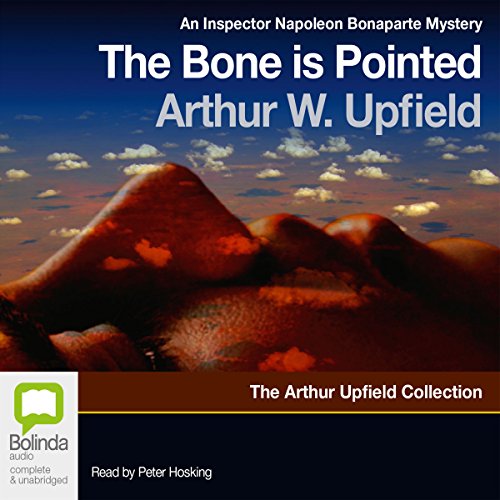
Review: THE BONE IS POINTED, Arthur Upfield - audio book


  (Audible)

Arthur Upfield's The Bone is Pointed follows Inspector Bonaparte who solves mysteries in the Australian outback. Published in the 1940's, this story not only offers up a good mystery but also a portrait of the aborigines and Australia in the early 20th century. Peter Hosking tackles this story with verve. He speaks with a clear Australian accent while developing the characters believably, giving each his own attributes. Meanwhile, his varied pacing makes the story easy to follow. Mystery lovers and history buffs alike will have fun with the Inspector Bonaparte Mysteries.

Jack Anderson was a big man with a foul temper, a sadist and a drunk. Five months after his horse appeared riderless, no trace of the man has surfaced and no one seems to care. But Bony is determined to follow the cold trail and smoke out some answers.

My Take

In this tale Bony appears as a Queensland C.I.B. detective on leave, turning up at an outback station where a rouseabout has gone missing during a storm. His horse turns up at the station the morning after the storm riderless and there is no trace of Jack Anderson. No black trackers are available because the whole local tribe has gone to visit a female elder thought to be dying. By the time a tracker can be found heavy rains have obliterated Anderson's tracks.

During the story Bony becomes ill with the "Barcoo sickness" but station owner is convinced that the bones has been pointed at him. At first Bony is determined that he will not succumb but he becomes weaker and weaker despite the attempts of the local policeman to help him.

Bony is also proud of his reputation that no case that he has tackled has ever gone unsolved, but that is because he stays on the case until the very end, despite telegrams from his superiors that he must return to the city immediately.

What impressed me was the detailed observations of Aboriginal culture and customs that the author must have recorded. He also presents both sides of the argument with regard to preserving aboriginal heritage. One station family in particular recognise the damage that contact with white people has done to the aborigines, but at the same time are a bit patronising in the way they deal with the aborigines on their station. The character who has disappeared has mistreated aboriginal stockmen, whipping one almost to death, and so is very unpopular. No-one can work out why "Old Lacey" the station owner has kept him on.

There is more than one mystery in this book, and it is good reading, despite the warning from the publisher that Arthur Upfield reflects attitudes of his time, not necessarily views we would share today.

My rating: 4.5

I've also read
DEATH OF A SWAGMAN
4.4, THE BARRAKEE MYSTERY
4.0, A MAN OF TWO TRIBES
4.4, THE BATTLING PROPHET
4.3, MR JELLY'S BUSINESS 
4.5, DEATH OF A LAKE 

27 February 2018

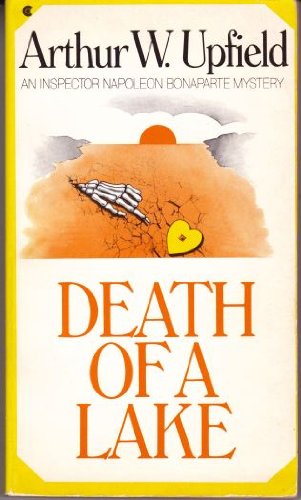
Review: DEATH OF A LAKE, Arthur Upfield - audio book

Synopsis (Fantastic Fiction)

Features Inspector Napoleon Bonaparte(Bony), a detective of mixed European and Aboriginal heritage.
On a vast sheep station in the outback Raymond Gillen goes swimming in the lake one night and is never seen again. Bony arrives disguised as a horsebreaker and uncovers a story of sexual tension and murder. The lake is evaporating in the intense drought, only when it is drained will the mystery be solved.

My Take

The audio book begins with the usual warning that the publisher does not ascribe to Upfield's now politically incorrect views. However they do reflect popularly held opinions, particularly abour aborigines, in the 1950s.

The story moves a bit slowly in this tale because Lake Otway, a lake that had filled three years before because of flooding in the north, is in the process of evaporating and dying. There are wonderful descriptions of what happens as the lake gets shallower and shallower and smaller and smaller. At the same time the rabbit population blows out. The daily temperature is well over 110F and the outstation near the lake burns to the ground one night.

You can't help but be impressed by Upfield's detailed observations of life on Outback stations.

Bony turns up (undercover) to investigate the Ray Gillen's disappearance and discovers that all the hands living at the outstation have, unusually, stayed on since Gillen's disappearance, not taking holidays and so on. Something is keeping them all there.

The tension builds very well, and the narration by Peter Hosking is in a class of its own.

My rating: 4.5

I've also read
DEATH OF A SWAGMAN
4.4, THE BARRAKEE MYSTERY
4.0, A MAN OF TWO TRIBES
4.4, THE BATTLING PROPHET
4.3, MR JELLY'S BUSINESS 

25 September 2016

Review: MR JELLY'S BUSINESS, Arthur Upfield - audio book

  • #4 in the Napoleon Bonaparte series
  • originally published 1937
  • aka MURDER DOWN UNDER
  • this edition unabridged audiobook
  • Narrated by Peter Hosking
  • length 7 hours 27 minutes
  • available at Audible.com
 Synopsis (Audible.com)

Mr. Jelly's Business is one of the finest of Arthur Upfield's many distinguished stories about the career of Detective Inspector Napoleon ("Bony") Bonaparte.

It takes Bony to the West Australian town of Burracoppin to investigate the disappearance of George Loftus, whose car was found wrecked near the longest fence in the world, the 1,500 mile Rabbit Fence. He meets Loftus's wife, who is anything but grief-stricken at her husband's disappearance; Loftus's hired man, singularly reticent about his own past history; and many of Burracoppin's numerous gossips. Later he encounters the mysterious Mr. Jelly, whose business causes his charming daughters great anxiety.

The double question of Loftus' disappearance and Mr. Jelly's business taxes Bony's well-known powers of observation and deduction to the utmost, until the two problems are simultaneously solved.
As anyone who knows Arthur Upfield's other work would expect, Mr. Jelly's Business is more than a story of crime and detection: It also offers an admirable picture of life in West Australia's wheat country

My Take

Bony takes on the case of George Loftus' disappearance as a favour to a friend, and gets a job working on the Rabbit Proof Fence so he can keep the locals under observation and work out what has happened to Loftus. Mr Jelly is convinced that Loftus has been murdered by his wife and her lover, but he is surrounded by his own mystery. He gets telegrams that summon him to Perth for at least a week at a time. Given his personal hobby that involves keeping extensive files on murderers, Mr Jelly's daughters are convinced that his job must be something to be ashamed of. Bony promises Mr Jelly's daughters that he will find out what their father does during his absences.

This novel is filled with Upfield's own philosophy about what creates murderers. We also find out a lot about aboriginal tracking methods, as well as more information about Bony's family background.

My rating: 4.3

I've also read
DEATH OF A SWAGMAN
4.4, THE BARRAKEE MYSTERY
4.0, A MAN OF TWO TRIBES
4.4, THE BATTLING PROPHET 

Review: MR JELLY'S BUSINESS, Arthur Upfield - audio book

  • #4 in the Napoleon Bonaparte series
  • originally published 1937
  • aka MURDER DOWN UNDER
  • this edition unabridged audiobook
  • Narrated by Peter Hosking
  • length 7 hours 27 minutes
  • available at Audible.com
 Synopsis (Audible.com)

Mr. Jelly's Business is one of the finest of Arthur Upfield's many distinguished stories about the career of Detective Inspector Napoleon ("Bony") Bonaparte.

It takes Bony to the West Australian town of Burracoppin to investigate the disappearance of George Loftus, whose car was found wrecked near the longest fence in the world, the 1,500 mile Rabbit Fence. He meets Loftus's wife, who is anything but grief-stricken at her husband's disappearance; Loftus's hired man, singularly reticent about his own past history; and many of Burracoppin's numerous gossips. Later he encounters the mysterious Mr. Jelly, whose business causes his charming daughters great anxiety.

The double question of Loftus' disappearance and Mr. Jelly's business taxes Bony's well-known powers of observation and deduction to the utmost, until the two problems are simultaneously solved.
As anyone who knows Arthur Upfield's other work would expect, Mr. Jelly's Business is more than a story of crime and detection: It also offers an admirable picture of life in West Australia's wheat country

My Take

Bony takes on the case of George Loftus' disappearance as a favour to a friend, and gets a job working on the Rabbit Proof Fence so he can keep the locals under observation and work out what has happened to Loftus. Mr Jelly is convinced that Loftus has been murdered by his wife and her lover, but he is surrounded by his own mystery. He gets telegrams that summon him to Perth for at least a week at a time. Given his personal hobby that involves keeping extensive files on murderers, Mr Jelly's daughters are convinced that his job must be something to be ashamed of. Bony promises Mr Jelly's daughters that he will find out what their father does during his absences.

This novel is filled with Upfield's own philosophy about what creates murderers. We also find out a lot about aboriginal tracking methods, as well as more information about Bony's family background.

My rating: 4.3

I've also read
DEATH OF A SWAGMAN
4.4, THE BARRAKEE MYSTERY
4.0, A MAN OF TWO TRIBES
4.4, THE BATTLING PROPHET 

26 May 2016

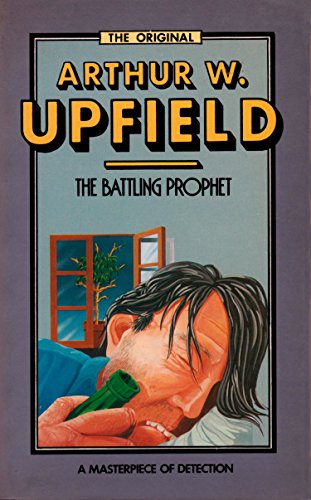
Review: THE BATTLING PROPHET, Arthur Upfield- audio book

  • Source: Audible.com
  • first published 1956
  • #22 in the Napoleon Bonaparte series
  • Narrated by: Peter Hosking
  • Length: 6 hrs and 21 mins
  • Unabridged Audiobook
Synopsis (Fantastic Fiction)

Detective-Inspector Napoleon Bonaparte is on leave, staying with an old friend near Adelaide. Ben Wickham, a meteorologist whose uncannily accurate weather forecasts had helped farmers all over Australia, lived nearby. Ben died after a three-week drinking binge and a doctor certified death as due to delirium tremens - but Bony's host insists that whatever Ben died of it wasn't alcohol...

From Audible
Ben Wickham, a famous meteorologist whose uncannily accurate forecasts have helped famers and graziers all over Australia, has died after a three-week drinking bout.

The doctor certifies that his death was cause by heart failure due to alcoholic poisoning.
But Ben's neighbour and drinking partner, John Luton, is convinced his friends didn't die from too much gin. He manages to lure Detective-Inspector Napoleon Bonaparte to his riverside cottage near the South Australian coast, on an unofficial visit for a spot of fishing.

Bony, thinking at first he's on holiday and paying a casual visit, is intrigued and decides to investigate.

My Take

Weather forecasts are extraordinarily important in the driest continent in the world. Farmers and graziers base their activities on them, but if drought is forecast then they will not re-stock their land, nor will they harrow in preparation for seeding. So lots of people stand to lose income if farming activities don't occur.

Ben Wickham tried to interest the Australian government in purchasing his weather predictions in advance and, when they rejected him, then approached overseas governments. Since Wickham died lots of people, not all Australian in origin, have become very interested in finding his will, and the books in which he wrote his predictions for future weather. They are all convinced that his best mate John Luton is hiding something. After Luton takes a beating from some outsider Bony realises that some major steps have to be taken. But someone higher up in government wants Bony off the scene and he is peremptorily recalled Queensland, and even escorted to the South Australian border.

A story with quite a bit of outback humour as well as some serious thought. There are some very quirky characters and the author has tried give us some idea of their colloquial language.

Of particular interest to me is that so many of the Bony stories have a link to South Australia. This one appears to be set somewhere near the River Murray. Ironically the year of publication, 1956, is also the year of the flooding of the Murray, in contrast with the drought conditions of the novel.

My rating: 4.4

I've also read
DEATH OF A SWAGMAN
4.4, THE BARRAKEE MYSTERY
4.0, A MAN OF TWO TRIBES 

22 May 2016

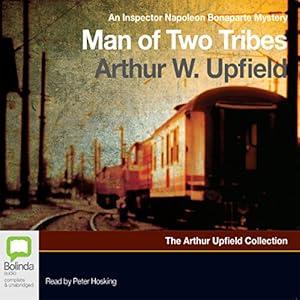
Review: MAN OF TWO TRIBES, Arthur Upfield - audio book

  • Available from Audible.com
  • first published 1956
  • Napoleon Bonaparte series #21
  • Narrated by: Peter Hosking
  • Length: 6 hrs
  • Unabridged Audiobook

Synopsis (Fantastic Fiction)

With two camels and a dog, Detective-Inspector Napoleon Bonaparte sets off across southern Australia's Nullarbor Plain in search of a missing woman. He finds much more than he bargained for. Set in some of the most mysterious and unforgiving territory in the world - the Australian desert - Man of Two Tribes is vintage Upfield.

From Audible:


Myra Thomas, accused of murdering her philandering husband, is found not guilty by a sympathetic jury. But while travelling from Adelaide to Perth on the Transcontinental Railway express, she mysteriously disappears during the overnight journey across the vast, featureless desert.

Detective-Inspector Napoleon Bonaparte takes the case and sets off to search for her over the flat wasteland of the Nullabor Plain. At first it seems that the harsh environment will give him no clues, but Bony soon finds more than he bargained for? landing himself in a bigger mystery, and a fight for survival...

My Take

The Woomera Rocket Range, a collaborative effort between a number of International groups including the British and Australia, began immediately after World War II in 1946, with a joint project running until 1960. It is located in north-west South Australia, about 500 km north west of Adelaide. British nuclear tests at Maralinga, a series of seven nuclear tests were conducted within the Woomera area between 1955 and 1963. More recently, the Woomera Immigration Reception and Processing Centre, a detention centre,  opened nearby in 1999 and operated until 2003.

The focus in the opening pages of the story is a woman, recently acquitted of murder, who has disappeared without trace from the East-West railway travelling from Adelaide to Western Australia. There is some indication that she may have connections with international espionage and Bony is sent out on an undercover mission to see if he can locate her.

There are various Aboriginal legends associated with the Australian outback but here Upfield tells one about a monster, maybe a version of the Rainbow Snake, supposedly occupying the underground limestone caverns of the Nullarbor Plain which the train line traverses. This has the effect of both deterring aboriginal trackers from looking too closely for the missing woman, and also provides an explanation of any strange noises heard at night.

Bony of course is the "man of two tribes", being a half-caste aborigine, but his Queensland tribe has little in common with the Aboriginal people living on the Nullarbor, apart from the markings on his body that show he is a warrior of some note. At the same time he is a very articulate person, highly qualified with a university degree, and a reputation for never failing to successfully conclude a case.

An interesting story but I did feel that it stretched the bounds of credibility. Basing the story around the Nullarbor Plain and Woomera does show how in touch with current events Upfield was. At the time of publication 1956, 8 years before his death, he was 66 years old and there would be another 8 Bony novels.

My rating: 4.0


I've also read
DEATH OF A SWAGMAN
4.4, THE BARRAKEE MYSTERY

23 April 2016

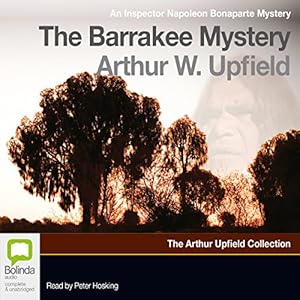
Review: THE BARRAKEE MYSTERY, Arthur Upfield - audio book

  • First published in 1929, #1 in the Napoleon Bonaparte titles
  • Available from Audible
  • Narrated by: Peter Hosking
  • Length: 8 hrs and 16 mins 
  • Unabridged Audiobook
Synopsis (Audible)

Why was the redoubtable King Henry, an aborigine from Western Australia, killed during a thunderstorm in New South Wales? What was the feud that led to murder after nineteen long years had passed? And who was the woman who saw the murder and kept silent?

This first story of Inspector Napoleon Bonaparte, the half-aborigine detective, takes him to a sheep station in the Darling River bush country where he encounters those problems he understands so well... mixed blood and divided loyalties.

PLEASE NOTE: Part of the appeal of Arthur Upfield's stories lies in their authentic portrayal of many aspects of outback Australian life in the 1930s and through into the 1950s. These books reflect and depict the attitudes and ways of speech of that era particularly with regard to Aborigines and to women. In reproducing this book the publisher does not endorse the attitudes or opinions they express.

©1965 First published 1929 by Hutchinson and Company Ltd. © Bonaparte Holdings Pty Ltd, 1965. (P)2015 Bolinda Publishing Pty Ltd

My Take

It would be easy to focus in a review of  THE BARRAKEE MYSTERY on the politically incorrect (by today's standards anyway) attitudes and terminology. But as the publisher says, they reflected the attitudes of the times.

Peter Hosking does a wonderful job of the narration and that allowed me to reflect on other things: the descriptions of the outback and the toughness required of those who chose to live there. I was struck also by how the novel reflected Australia's bush heritage.

Born in England in 1890, Upfield moved to Australia in 1911 and fought with the Australian military during the First World War. Following his war service, he travelled extensively throughout Australia, obtaining a knowledge of Australian Aboriginal culture that he would later use in his written works. In addition to writing detective fiction, Upfield was a member of the Australian Geological Society and was involved in numerous scientific expeditions. (Wikipedia)

The bush heritage that I am reminded of were the works of Banjo Paterson and particularly the stories of Henry Lawson, even SUCH IS LIFE by Joseph Furphy.  In later novels Upfield wasn't as expansive in his descriptions of the country, and focussed more on detective/crime elements, but there are a lot of mini-stories in THE BARRAKEE MYSTERY. There is a mystery element in the novel too, well structured, but not really all that difficult to solve.

Bony reminds me a little of Hercules Poirot: not only does he believe in his own superior detection skills, but he also dispenses his own form of justice.

My rating: 4.4

I've also reviewed DEATH OF A SWAGMAN 

22 January 2014

Review: DEATH OF A SWAGMAN, Arthur Upfield

  • first published 1945
  • this edition published by Angus & Robertson 1994
  • ISBN 0-207-18582-4
  • 256 pages
  • setting: Lake Mungo in south-western New South Wales
Synopsis (Amazon)

In an isolated hut not far from the sleepy country town of Merino, stockman George Kendall is found dead and it looks very much like murder. Six weeks later, when the murderer is still at large, another stockman turns up in the township and, as a first move, provokes the local sergeant to lock him up.

This particular stockman is Detective-Inspector Napoleon Bonaparte, and there's method in his seeming madness. While serving a semi-detention sentence and being made to paint the police station, he wears the best of all possible disguises for a policeman on the trail of a ruthless and single-minded killer.

My Take

The editorial note at the front of the book will be of interest:
"Part of the appeal of Arthur Upfield's stories lies in their authentic portrayal of many aspects of outback Australian life in the 1930s and into the 1950s. The dialogue, especially, is a faithful evocation of how people spoke. Hence, these books reflect and depict the attitudes and ways of speech, particularly with regard to Aborigines and to women, which were then commonplace. In reprinting these books the publisher does not endorse the attitudes or opinions they express."

There is considerable similarity between Bony and his contemporary Hercule Poirot. Both emphasise the importance of observation in their methods of detection. In this book Bony is able to move freely among the people of the town of Merino because his real identity is kept secret. He collects information, and checks alibis, without those he is checking suspecting.

The other similarity with Poirot lies in his confidence that he will solve the crime in the end. He does not take on cases that will not provide a challenge and treats all the evidence as puzzle to be correctly assembled.

In the 1930s Bony would have been a conundrum is Australian society: an Aboriginal half caste, with a better education than 99% of the population. 

I think the writing comes across as a little dated until the reader becomes immersed in the puzzle Bony is solving. One interesting aspect of this novel are the coded messages itinerant swagmen are leaving in shearing sheds and at station gates. They look like noughts and crosses puzzles but contain information about how the cook and manager of the place will treat a swaggie. And of course, set at the beginning of the Depression, swaggies looking for work are common in the outback.

An interesting read for those who have not met this author before.

My rating: 4.4

About the author

Arthur Upfield (1890-1964) was an Australian crime fiction author who wrote 34 novels 1926-1966, with "Bony" making his first appearance in 1929, and then subsequently in 28 other novels. Inspector Napoleon Bonaparte was the son of an unknown white man and an aboriginal mother, a gentleman and genius of criminal science, with an M.A. degree from Brisbane University. In his work Bony frequently faces race prejudices but wins them with his wit and smile.

Find out more


3 June 2009

Review: 3 Acts of Murder

Many thanks to author Felicity Young, for the following review.

‘Just because you give someone an idea for murder, does that make you responsible for the crime?’

So reads the tagline of Taylor Media’s upcoming television movie, 3 Acts of Murder. This is the story of Arthur Upfield (played by Robert Menzies), a depression-era crime writer whose search for the perfect crime inspired young sociopath, Snowy Rowles (Luke Ford), to undertake a murderous rampage in the Murchison area, near the rabbit proof fence.

The first 2 Acts of the movie set the scene in the Murchison: the sandblasted country, the flies, the loneliness of the war-damaged author, the nature of the criminal sociopath and his victims. Act 3, Recrimination, explores the responsibility of the author and shows Upfield wrestling with his conscience.

Arthur Upfield’s book The Sands Of Windee was published. Sales soared when the general public learned that Snowy had been arrested and charged with several murders. Snowy was summarily hanged for his crimes.

Upfield’s elation at his novel’s success was tarnished by the knowledge that if not for his book, four men, including the executed Snowy, would still be alive. He comforted himself with the belief that a fiction writer is not accountable for the effect of his words.

You can’t stop someone reacting in an aberrant way to art, be it movies, music literature etc, but most artists would be appalled to learn that their work had inspired someone to commit a heinous crime. One of the most interesting issues explored in 3 Acts is Upfield’s lack of empathy for Snowy’s victims. Crime writers must distance themselves from their work if they are to sleep at night. But Upfield seems to have distanced himself to the extent that the true-life victims are no more real to him than the characters of his book — possibly a symptom of post traumatic stress disorder brought about by his wartime experiences.

His wife, Anne (played by a suitably care-worn Anni Finsterer) is not a fan of his books. When she suggests that he tries his hand at romance writing, he says he can’t: ‘I don’t understand what passes for passion between people.’ Later on he admits to her, ‘I’m not good with character.’ His relationship with his wife and son shows a similar failure to connect.

And yet he genuinely grieves for Snowy. He knew Snowy, Snowy was a ‘Decent, friendly bloke.’ It seems that not only was Upfield no good at writing character; he wasn’t much good at judging it either.

3 Acts of Murder is a unique take on a fascinating concept, the responsibility of Art. The movie vividly portrays the true-life background to Upfield’s novel, The Sands of Windee, and the moral dilemma for the author following its release. There is a lot to admire about this movie: the setting, the superb performances and above all the glimpse into the mind of Australia’s most internationally successful crime writer. It is sure to appeal to all lovers of crime fiction and intelligent, thought provoking Australian drama.

3 Acts of Murder will be shown on ABC 1 on Sunday June 14th at 8.30 PM

Felicity Young is the the author of A CERTAIN MALICE, AN EASEFUL DEATH, HARUM SCARUM, and SKIN ON SKIN (forthcoming 2010).

27 May 2009

3 Acts of Murder coming to ABC TV

In 1928 Arthur Upfield, Australia’s premier crime writer, plotted the perfect murder for his novel THE SANDS OF WINDEE.

Meanwhile, one of his friends, stockman Snowy Rowles, put the scheme into deadly effect, even before the book was published. This true story resulted in one of Australia’s most sensational murder trials of the 1930’s and catapulted Upfield’s name onto the world stage.

The ABC are screening a 95 minute telemovie on June 14. Check the website.

Here is the first of 5 short Youtube snippets about the making of 3 Acts of Murder.


If that link doesn't work for you then try this.

11 February 2009

Forgotten Books: VENOM HOUSE, Arthur Upfield

Another contribution to Pattinase's Friday's Forgotten Books theme.

Arthur Upfield (1890-1964)
was an Australian crime fiction author who wrote 34 novels 1926-1966, with "Bony" making his first appearance in 1929, and then subsequently in 28 other novels. Inspector Napoleon Bonaparte was the son of an unknown white man and an aboriginal mother, a gentleman and genius of criminal science, with an M.A. degree from Brisbane University. In his work Bony frequently faces race prejudices but wins them with his wit and smile.

The first title in my records (31 years ago) is VENOM HOUSE written in 1952, but I am sure I had read many before that.

Napoleon Bonaparte, the brilliant half-caste Detective-Inspector, is sent out to small "one-pub" coastal town south of Brisbane to look into the death of Mrs. Answerth of Venom House, found floating in the moat surrounding her home. Two previous murders can also be traced to the house. Bony finds enough psychological dynamite under Venom's roof to account for dozens of murders; a housekeeper, formerly a nurse for mental cases; a violent, mannish sister; a sly, feminine sister; and, locked away upstairs, a mentally retarded brother.

VENOM HOUSE was published in 1952 by Doubleday as part of its Crime Club series. The first British edition was published by Heinemann in 1953. Pictured above is the Medallion edition of 1952, printed by Berkley in the United States.

One of the pleasures in the research on forgotten books is the discovery of delightful sites. While the Wikipedia page will give you lots of info., it can't beat the Unofficial Arthur Upfield site, which not only lists the books but has some lovely scanned covers like the one that I have used here.

From the Wikipedia entry:
In 1987, H.R.F. Keating included The Sands of Windee (1931) in his list of the 100 best crime and mystery books ever published. J.B. Priestley wrote of Upfield: "If you like detective stories that are something more than puzzles, that have solid characters and backgrounds, that avoid familiar patterns of crime and detection, then Mr Upfield is your man."

At one stage Upfield was definitive Australian crime fiction, set in the outback, you can almost smell the hot brown land. Today we might feel that an Upfield novel could possibly carry with it politically incorrect overtones, but in their day his novels put Australia on the crime fiction map, and many titles were widely available overseas, with publishers in both the UK and the USA. His values reflected those of Australian society in the 1940s and 1950s, although the status he gave Bony was an exception to how aborigines were generally treated, in a country which did not give them the vote in Federal elections until 1962.

Arthur Upfield books turn up often on the dusty shelves of our used book shops here in Australia, but such was his popularity that you can still get copies, admittedly used, of VENOM HOUSE at Amazon, and they have many many Upfields on offer.

LinkWithin

Blog Widget by LinkWithin