Why MYSTERIES? Because that is the genre I read. Why PARADISE? Because that is where I live.
Among other things, this blog, the result of a 2008 New Year's resolution, will act as a record of books that I've read, and random thoughts.
This list will be a little different from my "best reads so far" list that I'll publish later in the week.
That will be a list of about 30 books that have rated 4.8 and above from m this year.
It is almost with relief that our train pulls into various Italian cities this week. I for one feel like I am on more familiar ground, but I have learnt so much so far.
This week's country is Italy
Regretfully we have only two more stops on our journey:
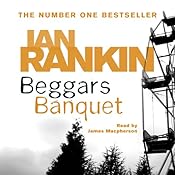
Over the years, Ian Rankin has amassed an incredible portfolio of short stories. Published in crime magazines, composed for events, broadcast on radio, they all share the best qualities of his phenomenally popular Rebus novels. Ranging from the macabre ('The Hanged Man') to the unfortunate ('The Only True Comedian') right back to the sinister ('Someone Got To Eddie') they all bear the hallmark of great crime writing. Of even more interest to his many fans, Ian includes seven Inspector Rebus stories in this collection...
Listen to an audio sample
From Wikipedia - a list of the stories is available there Beggars Banquet is the second collection of short stories by crime writer Ian Rankin.
It features 21 stories written between 1991 and 2000.
The collection also includes the novella Death Is Not the End which was later expanded into the novel Dead Souls. The story Herbert in Motion is concerned with the theft of works of art from the storage facilities of a major Gallery and their replacement with high quality forgeries to avoid detection of the crime, which was also the basis for the 2008 novel Doors Open
My take
Ian Rankin's short stories always illustrate what a superb story teller he really is, and what a variety of issues and ideas interest him. The short stories collected into BEGGARS BANQUET have also recently been included in a new volume called THE COMPLETE SHORT STORIES.
I must admit the ones I most enjoyed were the Rebus ones, and the ones I disliked most were the Walter Scott ones.
The story Herbert in Motion won a CWA Short Dagger in 1996.
James Macpherson (whom you will remember from Taggart) does an excellent job of narration, if sometimes challenging when he implements a broad Scottish brogue.
In general each of the stories is approximately 20 mins long.
“Those quiet ones are often the worst. Jane Marple says so.” Miss Wetherby.
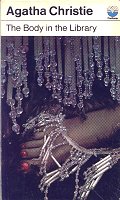
Dolly Bantry wakes in her beautiful home in the quiet village of St Mary Mead; everything is perfect until the shocking discovery of a body in the library. Who is the murdered young girl and who could possibly have killed her? Suspicion falls on Dolly’s husband, a man with a reputation as a flirt, who swears he never met the young woman – but why was she found in his library?
Dolly calls on her friend, Miss Marple to help them in their time of need. Can she find the killer or is village gossip about Colonel Bantry true? Nothing seems certain, then another body is discovered…
Various characters apart from Dolly and Arthur Bantry also appear in other Marple titles including Sir Henry Clithering and Jane Marple already has a reputation of a puzzle solver. Her method is to compare situations to those that she has already encountered in village life and she is full of anecdotes. All those who first meet her see is that she is an old lady who merges into her background. Others like the Chief Constable know better. Dolly Bantry on the other hand is disappointed when Miss Marple can't solve the murder when she first sees the body in the library.
A couple of things struck me. First of all Christie is not very complImentary about the police force, from the way Police-Constable Palk answers the phone with his "Hallo, 'hallo, 'hallo", to the name of Inspector Slack.
THE BODY IN THE LIBRARY is full of people who aren't quite who or what they seem. Appearances are deceptive. People who don't look nice quite often are, and vice versa. This provides quite a bit of misdirection and a number of red herrings.
The other thing that struck me is that we the readers know what the police know and we know most of what Miss Marple knows. But she doesn't know all that the police know. She has only partial knowledge. But we rarely "see" what she is thinking. That makes it all the more puzzling when she eventually nods her head and tells Dolly that she knows who the murderer is.
A very satisfying read, part of my participation in the Agatha Christie Reading Challenge, my 10th Agatha Christie title for this year..
Adelaide Writers Week, 3-8 March 2012, is a biennial event that is part of the Adelaide Festival of Arts (2-18 March in 2012).
Because for the most part events are free, AWW really allows writers and their reading public to come together in a unique way. It also raises our expectations of what literary events should be like.
AWW is easy to get to. Any visitor staying within the immediate city will be able to walk there. The venue is very close to the Adelaide Festival Centre.
Adelaide Writers Week has been taking place for over 40 years, making it the oldest literary event in Australia. It is a free writer's festival traditionally held adjacent to the memorial in the Pioneer Women's Memorial Gardens. The event features national and international significant writers on two stages within the gardens. The event offers a blend of readings, panel discussions and 'meet the author' sessions. A comprehensive children's program is also proposed for this event.
The events are mainly held outside under shade. In the past this has been in marquees. In 2012 these will be replaced with temporary shade sails.
In the past there have been a number of events to delight the crime fiction reader, with a great mixture of international and Australian writers.There will be two night events, usually held at Bonython Hall in the University of Adelaide. In the past these have featured panels of writers, many of them crime fiction.
There is no sign of a program yet but here are some sites to visit for more information:
While the last couple of books that I read for the 2011 Global Reading Challenge, particularly the last one, were disappointing, I have finished the challenge at Expert Level.
I have found the GRC a good way of ensuring that I read a good variety of books, although the fact that I am participating in a number of other challenges does that too, as does the fact that I am constantly bombarded with suggestions for reading from blogging friends, particularly through the Crime and mystery fiction room on FriendFeed.
I committed myself to reading 21 titles, all crime fiction, 3 titles each from 7 "continents". My 7th continent - historical crime fiction.
Blog site: 2011 Global Reading Challenge
 It is getting to that stage of the year when I am beginning to assess what I've read so far and what the outstanding books have been for me.