Showing posts with label Aust Crime Fiction. Show all posts

21 February 2012

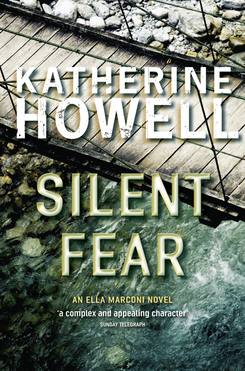
review: SILENT FEAR, Katherine Howell


Synopsis (author site)

On a searing summer's day paramedic Holly Garland rushes to an emergency to find a man collapsed with a bullet wound in the back of his head, CPR being performed by two bystanders, and her long-estranged brother Seth watching it all unfold.

Seth claims to be the dying man's best friend, but Holly knows better than to believe anything he says and fears that his re-appearance will reveal the bleak secrets of her past – secrets which both her fiance Norris and her colleagues have no idea exist, and which if exposed could cause her to lose everything.

Detective Ella Marconi suspects Seth too, but she's also sure the dead man's wife is lying, and the deceased's boss seems just too helpful. But then a shocking double homicide related to the case makes Ella realise that her investigations are getting closer to the killer, but also increasing the risk of an even higher body count.

My Take

Katherine Howell has really cemented herself as an Australian crime fiction author of international note.

SILENT FEAR follows the pattern set in earlier novels: the main plot involves a paramedic working in the ambulance service in Sydney. In this case a young man collapses in the parklands and is then discovered to have been shot. The investigating officer is Detective Ella Marconi. Ella is the thread that connects the series.

As in the other novels, there is also a thread that connects the paramedic Holly Garland and Detective Ella Marconi. In this case there is something in Holly's past that gives a colleague a hold over her, while a new detective is making Ella's life a little unpleasant.

Howell strikes a nice balance between descriptive detail, and an authoritative view of both paramedic and police procedures.  In the five novels in the series so far she has established an interesting character for Detective Ella Marconi, and yet it doesn't feel like the reader can't break into the series at any point. The result is a tightly constructed, fast paced thriller.

My rating: 4.8

Other reviews to check:

My other reviews of books in the series
THE DARKEST HOUR
4.8, COLD JUSTICE 
- includes a mini review of debut novel FRANTIC
4.8, VIOLENT EXPOSURE

Katherine Howell's website

About Katherine Howell
Katherine Howell worked as a paramedic for fifteen years while completing her Bachelor and Masters degrees in creative writing. Her first novel, Frantic, was published in 2007 by Pan Macmillan and set a paramedic alongside Sydney police detective Ella Marconi in 'an adrenaline rush of a thriller' (Sydney Morning Herald). It won the 2008 Davitt award for best crime fiction. Her second book, The Darkest Hour, continued the pattern with Ella and another paramedic in 'a finely paced and engrossing novel' (Guardian UK). The third in the series, Cold Justice, made the Australian bestseller list, saw Katherine travelling on a P&O cruise as guest author, and was described by NYT bestselling author Tess Gerritsen as 'one of my favourite books of the year'. It also won the 2011 Davitt award for best crime fiction, making Katherine the only author to have won twice. more

11 October 2010

Review: FEAR THE WORST, Linwood Barclay

Bantam 2009
ISBN 978-0-553-80716-5
399 pages
Borrowed from my library

Every parent's worst fear is that one day their daughter won't come home. And when that happens - that's what you do - fear the worst, that is.

Publisher's blurb
Sydney Blake’s summer is shaping up to be typical for a teenager: she’s spending it with her father, and she has landed a part-time job at a local hotel. One night, Syd fails to come home from her shift, and her father Tim begins to panic after he visits the hotel and the manager claims that Syd has never worked there. Grilling his daughter’s friends for clues leads Tim nowhere — except to threats against his life — and as he frantically chases every lead, he can’t help but wonder if Syd is even still alive. Despite a growing list of unanswered questions, all Tim knows for certain is that he must continue searching for his daughter no matter how high the stakes become.

If Sydney has run away, then there are some things that need explaining. She hasn't taken anything with her - no clothes, nor her bag, not her laptop, nor her iPod Shuffle. Everything is expecting her back. And then her car turns up in a car park in a nearby town. The steering wheel and the door handle have blood stains.

Tim has a website set up with details about Syd's disappearance on it, and hope flares when someone in Seattle contacts him with a sighting. The journey to Seattle is worse than useless though - when he arrives back his house has been trashed. Tim comes to understand he is being watched, and that there is nothing simple about Syd's disappearance.

As time goes on, the tension builds, the drama escalates, the police show they are not sure they believe Tim's version of the story.

FEAR THE WORST makes you thankful that nothing like this has ever happened to you. I'm not sure that all of the story is entirely credible, but the events heighten the suspense and it is certainly a page-turner.

My rating: 4.5

I read FEAR THE WORST for the Canadian Book Challenge hosted by John Mutford who blogs at The Book Mine Set

You might like to check
My reviews of other Linwood Barclay titles:
Linwood Barclay's website
Petrona's Review
Review by Material Witness

26 March 2010

Review: TAKE OUT, Felicity Young

Fremantle Press, 2010, ISBN 9-781921-361838, 314 pages
#3 in the Stevie Hooper series
Many thanks to Fremantle Press for supplying the review copy.
My abject apologies for taking 4 months to read and review it.

Skye Williams is a district nurse and Stevie Hooper's friend. Skye is visiting a stroke patient Lilly Hardegan who has become worried because her neighbours have disappeared. Stevie belongs to Perth's Central Crime Squad and really shouldn't be entering the house, but Skye has already tried unsuccessfully to get the local cops to take an interest. There are clear signs of what seems to have been a hasty departure - an unfinished meal, an overflowing mail box, and the stove is still on and contains the charred remains of apple pies. And then they make a discovery they had not expected.

Mrs Hardegan lives next door with her son who is also absent. Her speech has been severely affected by a stroke, which makes communication difficult, particularly as she seems to be prone to make up her own words.

Stevie feels that the local cops are not taking the case seriously enough and continues to take an interest even though she knows she should walk away. She has more than enough on her own plate - her husband Monty is due to have heart surgery any day now - but when Skye Williams is killed there is no way she can disconnect.

I liked the way TAKE OUT is constructed. There are some threats that raise the level of tension in the book very effectively. There is Monty's impending surgery, threats to Stevie herself and to her daughter Izzy, and a plot that involves a trade in bringing Thai girls into Australia illegally.  There is an interesting device which gives Mrs Hardegan "a voice" that reveals her role in her neighbours' disappearance.
I'm not sure I understand what the title means and Young has to resort to a heightened level of coincidences to bring the plot strands together. Nevertheless TAKE OUT provided a satisfying read.

My rating: 4.6

I've counted this in my Aussie Author challenge.

Other reviews you might enjoy:

20 February 2010

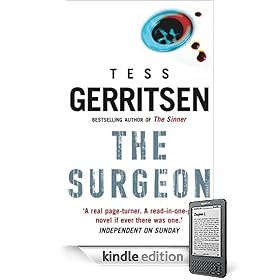
Review: THE SURGEON, Tess Gerritsen

  • Format: Kindle Edition
  • File Size: 544 KB
  • Print Length: 432 pages
  • Publisher: Transworld Digital (December 23, 2009)
Tess Gerritsen was already a well established author when THE SURGEON launched the Jane Rizzoli series in 2001. Jane is a female detective working in a man's world in the Boston Police Department. She's recently moved from Vice and Narcotics to Homicide. She's the only woman in Homicide and already there has been trouble between her and another detective. She's a woman out to make her mark.

There's a serial killer on the loose in Boston, his hallmark that he operates on his victims, removing body parts while they are still alive. Jane Rizzoli knows solving this case could be the making of her career. Her assigned partner is "Saint" Thomas Moore, the cop who never stepped over the line, never swore, never lost his cool.

THE SURGEON snags the reader straightaway, opening with a prologue from the killer's point of view.
Today they will find her body.
Today they will know we are back
.

The Surgeon has a fixation of Boston doctor Catherine Cordell. His victims, we learn, are women who have already been damaged, as has Catherine Cordell, through rape. In their own ways Jane Rizzoli and Thomas Moore both step over the line, Rizzoli in a way that could mean the end of her career.

The blurb on the front of the book says THE SURGEON is a page turner - as I read this on my Kindle, the "next page" button got a rapid work out.
An excellent read and highly recommended.
Perhaps I should warn that some of the medical details may make you a little squeamish.

My rating 4.7

Read an excerpt on Gerritsen's own site.

I featured Tess Gerritsen  for my letter G in the Crime Fiction Alphabet.
You'll find in that post my reviews of  THE MEPHISTO CLUB (4.6) and THE BONE GARDEN (4.6)

My other mini-reviews:

THE SINNER (4.8)
This is the novel immediately before 'Body Double'.  Not even the icy temperatures of a typical New England winter can match the bone-chilling scene of carnage discovered at the chapel of Our Lady of Divine Light. Within the cloistered convent lie two nuns–one dead, one critically injured–victims of an unspeakably savage attacker. The brutal crime appears to be without motive, but medical examiner Maura Isles’s autopsy of the dead woman yields a shocking surprise: twenty-year-old Sister Camille gave birth before she was murdered. Then another body is found mutilated beyond recognition. Together, Isles and homicide detective Jane Rizzoli uncover an ancient horror that connects these terrible slaughters. As long-buried secrets come to light, Maura Isles finds herself drawn inexorably toward the heart of an investigation that strikes close to home–and toward a dawning revelation about the killer’s identity too shattering to consider.  Also available as an abridged audio cassette, abridged audio CD, an abridged downloadable audiobook, an abridged downloadable audiobook and an eBook.

VANISH (4.5)
The last thing that Boston medical examiner Maura Isles expects to find in her morgue in a zipped up body bag is a Jane Doe that is still alive. And the last thing that Boston police detective Jane Rizzoli expects to happen when she goes to hospital to have her baby is to become a hostage. When these two threads combine you have an explosive mixture.

19 June 2009

Detective Pairs, Twosomes

A post over on Crime Scraps Adamsberg and Danglard, reminded me of my own post just over a month ago Sleuths & Foils and my intention to follow up on that.

I am interested in how crime fiction authors complement and contrast their detective duos. The cleverness and intuition of one is often contrasted with the methodical and rule-observing nature of the other.

I've updated my original list with the suggestions people made, and with some additions of my own. [I hasten to say though that they don't all fit the pattern I've described above.]

From Ruth Rendell, Reg Wexford & Mike Burden.
From Agatha Christie, Hercule Poirot & Captain Hastings.
Also Tommy & Tuppence, Mr Satterthwaite and Mr Harley Quinn, Superintendent Battle & Bundle Brent.
From Conan Doyle, Sherlock Holmes & Dr. Watson
So from Reginald Hill, Andy Dalziel & Peter Pascoe.
From Colin Dexter, Morse & Lewis.
From Kerry Greenwood, Phryne Fisher & Dot,
and from Ian Rankin John Rebus & Siobhan Clarke.
And then from Elizabeth George comes Thomas Lynley & Barbara Havers.
Michael Robotham has created Joe O'Loughlin & Vincent Ruiz.
From Charles Todd Ian Rutledge & "Hamish in his head".
From Martin Edwards, Daniel Kind & Hannah Scarlett
From Dorothy L. Sayers, Lord Peter Wimsey & Harriet Vane
From Cara Black, Aimee Leduc & Rene Friant
From E.W. Hornung, A.J. Raffles & Bunny Manders
From Alexander McCall Smith, Mma Ramotswe & Mma Matutsi

The lists could really go on ad nauseam couldn't they? But what really interests me is how the authors use them.
There is often more to it than just contrasting how they think, and what they do with the evidence they have.
In Dalziel & Pascoe, Hill has us thinking about what it is about their working together that makes the difference? Would Peter Pascoe solve the mystery on his own?
In Vargas, Danglard often despairs over what he sees as Adamsber's lack of method, but he would often have come to the wrong conclusion if left to his own devices.
In Agatha Christie, Mr Harley Quinn helps Mr Satterthwaite see what he already knows in a new light.

Sometimes there are parallel investigations going on. The seemingly random wool gathering approach contrasted with the methodical. Which one will get to the answer first? Or is it that the groundwork done by both is needed?

And what is it that adds to the reader's enjoyment of the story? Is it the contrast between the two main characters. Through the contrast do we get to know each character just a little better? Does it flesh their individuality out just a bit better?

There have been books where the author lets one character play without the other. For example Reginald Hill has let Peter Pascoe loose several times by giving Dalziel a heart attack, blowing him up with a bomb and so on. But all the time we sit around waiting for Fat Andy to miraculously revive.
Similarly Elizabeth George brings Havers to the fore by striking Lynley the most fearful blow by killing his wife.
Agatha Christie resorted to marrying Captain Hastings off and sending him to some far flung clime.
Colin Dexter killed Morse off, and Ian Rankin sent Rebus into retirement.

So what do you think? Why have pairs been the fashion?

4 June 2009

Forgotten Books: KILLING FOR PLEASURE, Debi Marshall

A special posting for Pattinase, who is featuring "forgotten" crime non-fiction on 5 June 2009.

My guess is that this book did not sell much outside Australia, although I could be wrong.

KILLING FOR PLEASURE:THE DEFINITIVE STORY OF THE SNOWTOWN SERIAL MURDERS
Debi Marshall
Random House Australia, Apr 2006

Do you really know your neighbours? What happens in their houses? In their backyards? Could you be living next door to people like this?

In KILLING FOR PLEASURE Australian journalist Debi Marshall tells the stories behind the grisly Snowtown "bodies-in-the barrels" serial killings, carried out over seven years in South Australia by three killers and their accomplices. KILLING FOR PLEASURE took Marshall five years to write, synthesising thousands of hours of interviews with the families of the victims, with neighbours, and with close members of the families of the murderers. What she describes pushes the boundaries of credibility, both in relation to the nature of the murders, and in the slowness of the South Australian police system to begin investigations.

The book is divided into two main parts: "Crime" and "Retribution", along with some photographs provided of both murderers and victims.

In "Crime", Marshall made the decision to deal with the huge amounts of accumulated material by mainly recounting the stories of the twelve victims. This allows the reader to gain some understanding of how each victim came to that position, and to get a picture of what happened to each of them. Unfortunately this strategy at times makes the actual chronology of events a little difficult to follow. The information provided in the Appendix about the victims, the killers, and other characters helps remedy this, but I did not realise it was there until I had finished the book. The relationships between the victims and the murderers is illustrated in a diagram just before the Preface, and I found myself consulting it often.

The primary murderer, John Bunting, emerges as a manipulative vigilante, a crusader cleaning up the world, ridding it of human "waste" such as pedophiles, epileptics, the obese, disease-ridden, and those in need of a "cure". The people whom he manipulates and those whose deaths he engineers are emotionally fragile, damaged, dependent, ripe for external control, psychotics, transvestites, and schizophrenics with low mental capacity and often intellectual impairment. They have dysfunctional families, living from generation to generation in an endless cycle of poverty and hopelessness. These are impressionable, damaged people who lead disruptive, unsettled lives. Marshall talks about "Depravity up close. A human parade of the banality of evil."

The most horrifying aspects are: the fact that each of the victims is a relative, or a friend, of one or more of the murderers; the escalation of the murders; and the pleasure that Bunting, Wagner, Vlassakis and Haydon appear to have taken in torturing and finally killing their victims.

In "Retribution" the reader finds descriptions of how the police piece the evidence together, an account of the arrests of the main suspects, the release of the story to the media, how the pathologists arrive at the cause of death for each of the twelve bodies, the media parade to Snowtown, and the poor taste opportunism shown by some of its residents.

There is not a blow-by-blow description of the trials, described by some as a "legal gravy train". Marshall says "lengthy trials can … become very dull." In the final chapters the trial outcomes are described.

Marshall asks such difficult and provocative questions that, as a South Australian, I found it impossible to read the book dispassionately. Is there something about the social and economic fabric of South Australia that fosters such horrendous behaviour? Are these people the product of a failing society; dereliction by the police, social services, welfare agencies, and South Australia's Housing Trust which has placed them in shabby suburbs with little support. At least one of the victims dies after police surveillance has discovered who is withdrawing funds from the bank account of a missing person. Tapped phone lines in hindsight reveal that a person is in danger but no action is taken at the time. It is only when the names of the three murderers are all linked to the disappearance of one of the victims that a major crime investigation begins.

Marshall makes much of closed Adelaide society, connections by each of the murderers and some of the victims, at some stage, to a local Pentecostal church. She says that the South Australian police did not provide sufficient resources for the investigation even when they knew they had three suspects for four murders.

There are things that I don't particularly like in KILLING FOR PLEASURE. For example, Marshall has a chapter on serial killers where she sets herself up as an expert. Seemingly determined not to waste any of her meticulous notes, she has included lengthy atmospheric detail such as the description of Snowtown, a rural town in decline.

While few will read this book for pleasure, it certainly will be widely read. During the trials South Australia had a media blackout that meant details of the trials could not be published in local newspapers, some evidence was taken in camera, and so for some this book will be a great revelation. And Marshall does a good job. KILLING FOR PLEASURE is gripping reading.

Apr 2006 Review, original version published on Murder and Mayhem
This review is also published on Reviewer's Choice.

12 May 2009

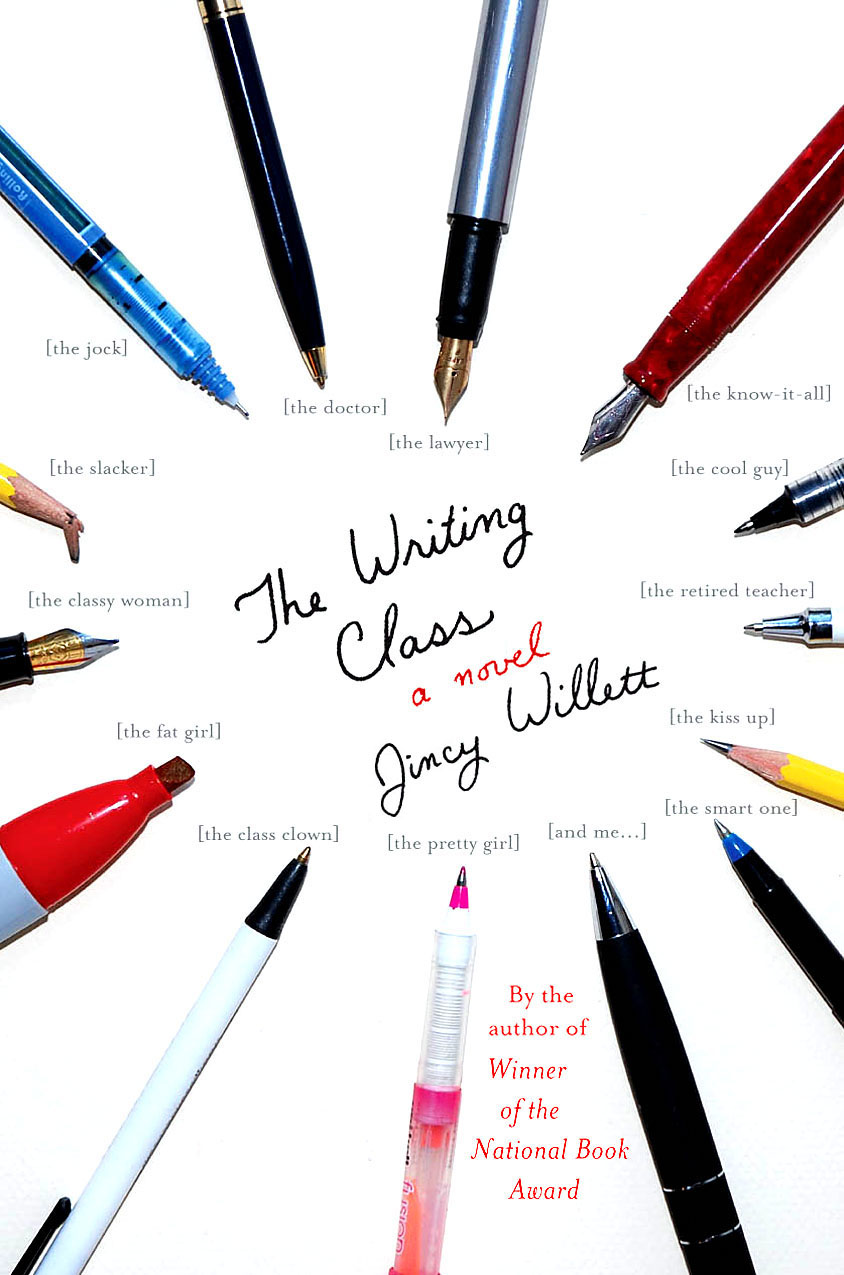
Review: THE WRITING CLASS, Jincy Willett

Scribe Publications, 2008, ISBN 9781921372117, 326 pages.

Amy Gallup teaches an adult writing class as a university extension. It is a fiction workshop and they will meet weekly for 9 weeks. From the start Amy has problems. She doesn't really enjoy starting off with a new group of people, and there are 15 names on her list, and 16 people in the room. Carla, the one person who has attended one of her classes before, is missing on the first night. When Amy gets home on the night of the first class, a heavy breather has left whispered fragments on her answering machine.

By the third class it is obvious there is someone in the class who isn't quite what they seem. As the class continues, this person, identity still unknown, selects victims with cruel comments on their manuscripts, and practical jokes. And then one of the class dies.

It is obvious that Jincy Willett has brought considerable experience in conducting writing classes to the writing of this book, with keen observations, and realistic scenarios. It reminded me quite a lot of classes I attended a couple of years ago, although Amy was much more demanding of her students than my teacher was.

However for me, the book became a little long. I desperately wanted to get on and hunt down The Sniper, the perpetrator of all the nasty deeds, including by the end more than one murder. And from that standpoint the last hundred pages just didn't move fast enough. It felt like Jincy Willett had a lot of material she wanted to include, and we were going to get it whether we liked it or not. I became increasingly annoyed by the fact that I felt there weren't enough hints about who the villain was.

Bernadette in Reactions to Reading says " I’m not sure this book is really crime fiction" and I am inclined to agree with her. I think the crime elements take a back seat to the other things that Willett is writing about. But Bernadette obviously enjoyed it.

My rating : 4.2

Other reviews:
  • Lost in Books liked it better than me: "a funny, well-crafted mystery, very worthy of reading".
  • It's Criminal: Heen says it is "alive with humour, there is an underlying poignancy too."
I never did finish reading THE WRITING CLASS in time for my face to face discussion. Back on that post though there is a large copy of the novel's cover, which make a fascinating subject in itself.

Jincy Willett claims to be "An aging, bitter, unpleasant woman living in Escondido, California, who spends her days parsing the sentences of total strangers and her nights teaching and writing. Sometimes, late at night, in the dark, she laughs inappropriately."
That statement fits pretty well with the rather quirky sense of humour that emerges in THE WRITING CLASS.

7 May 2009

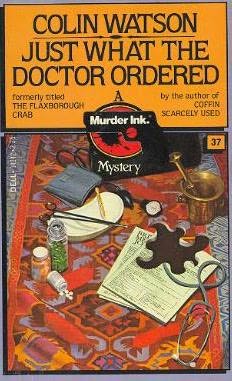
Forgotten Book: THE FLAXBOROUGH CRAB, Colin Watson

This week's contribution to Pattinase's Friday's Forgotten Books.

Colin Watson (1920-1982) was a British writer of detective fiction and the creator of characters such as Inspector Purbright and Lucilla Teatime. He is most famous for the twelve 'Flaxborough' novels, typified by their comic and dry wit and set in a fictional small town in England.

I have been a Johnny-come-lately to this series and read THE FLAXBOROUGH (1969) only a couple of years ago.

The village of Flaxborough appears to have a sex fiend who attempts to molest women of varying ages as they walk along the riverside or through the woods. Others have reported their underwear has gone missing from laundry lines. So far descriptions of the man vary from tall to short, thin to solid, semi-bald to a full head of hair, but what they all seem to have in common is a scrabbling crab-like gait as the offender makes his escape.
As Detective Inspector Purbright of the Fen St. police station investigates an incident in which the town’s assistant librarian successfully thwarts an attacker, he uncovers other incidents thus far unreported.
The action hots up when Alderman Winge is drowned on an excursion to a local reservoir with the Darby and Joan club, and the name of one of the local doctors appears to be cropping up more than it should.

The Flaxborough novels are a dozen or so cozies in the Golden Age village mystery tradition, but very much in a tongue-in-cheek with a puckish sense of humour. If this one is anything to go by, they are carefully crafted relatively quick reads.

From Fantastic Fiction:
The series consists of
Coffin, Scarcely Used (1958)
Bump in the Night (1960)
Hopjoy Was Here (1962)
Lonelyheart 4122 (1967)
Charity Ends at Home (1968)
Flaxborough Chronicle (1969)
The Flaxborough Crab (1969) aka Just What the Doctor Ordered
Broomsticks Over Flaxborough (1972) aka Kissing Covens
The Naked Nuns (1975) aka Six Nuns and a Shotgun
One Man's Meat (1975) aka It Shouldn't Happen to a Dog
Blue Murder (1979)
Plaster Sinners (1980)
Whatever's Been Going on at Mumblesby? (1982)

21 March 2009

Review: TOUCHSTONE, Laurie R. King

Bantam 2008, ISBN 978-0-553-58666-6, 548 pages

Bennett Grey survived being blown up at the end of World War I. In fact he believes he was blown to pieces and somehow miraculously re-assembled. With the experience came the new ability to see into people, to "feel" accurately whether they are telling the truth. When his ability is noticed he becomes a "touchstone" for British intelligence, useful in prisoner interrogation, and in the development of lie detection technology. Upset by the brutality of the interrogations he participates in, he withdraws from the project and becomes a recluse, abandoning the woman he was to marry, and going to live in Cornwall.

He emerges to help Harris Stuyvesant, an American agent attached the Bureau of Investigation, who is looking for an archist, a bomber, thought to be British, already responsible for a number of deaths in the USA.
Their quest leads them to a houseparty held near Oxford, to the home of the woman whom Grey still loves, so that the American can get close to the man whom he believes is the bomber.

The main story is set against the impending General Strike of 1926, a time when many are hoping for the collapse of the British government, and some sort of Revolution. For many of the characters the agenda is one of high political ideals, of a possible role for themselves in a new order. For Harris Stuyvesant though the agenda is personal. It is also a story of manipulation, but it wasn't until the last 20 or so pages that I thought I knew what was going to happen, and the identity of the bomber.

TOUCHSTONE came to my attention originally because it was short-listed for Left Coast Crime's THE BRUCE ALEXANDER MEMORIAL HISTORICAL MYSTERY. While I was at LCC I hade the opportunity to attend a couple of panels that Laurie King was on, and also to get Laurie to sign a copy of the book for me.

I originally thought, about TOUCHSTONE, "another American writer rather cheekily setting her novel in England", but I have been pleasantly surprised. Like Elizabeth George's, Laurie R. King's writing has an authentic English feel to it. The story reflects an incredible depth of research, and only the occasional American spelling points to the nationality of the author (and the location of the publisher).

My rating: 4.7

Laurie R. King's website: http://www.laurierking.com/

1 March 2009

Weekly Geeks 2009-08: Crime Fiction & Social Issues

This week's Weekly Geek Challenge is to talk about social or political issues.
    1. Choose a political or social issue that matters to you. If you were a Weekly Geek last May and already did this theme, pick a different theme than the one you did at that time.

    2. Educate readers about your topic by telling us a little about it and any involvement you've had in this issue.

    3. Find books addressing your issue; they do not necessarily have to be books you’ve read. They can be non fiction, fiction, poetry, etc...Give a little synopsis of the book or a link to the description.

    4. Use images which you feel illustrate your topic.

    You can be as creative as you like - have fun with the theme and show us your passion!
I'm, as usual, doing a little variant on that, and talking about crime fiction writers as social commentators.

This was a point that Henning Mankell made in the foreword to PYRAMID that I reviewed recently. He says he is conscious of making Kurt Wallander his mouthpiece: talking about what is happening to Sweden, the erosion of traditional values, the rise of violence, the influx of refugee immigrants who do not share the same value systems.

In it I wrote:
As you do in the novels of Ian Rankin, Ruth Rendell and Donna Leon, the reader becomes aware of social change, as refugees flood into Sweden, and drug trafficking replaces the old ways criminals used to make money. Mankell sees himself as a social commentator, and Kurt Wallender as his mouthpiece: (this is from the Foreword to THE PYRAMID)
"... the books have always been variations on a single theme: 'What is happening to the Swedish welfare state in the 1990s?..'.....
Wallander has in a way served as a kind of mouthpiece for growing insecurity, anger and healthy insights about the relationship between the welfare state and democracy".

It is in fact something you see even in the novels of Agatha Christie.

In my review of her very first novel THE MYSTERIOUS AFFAIR AT STYLES I wrote
This novel is set towards the end of World War One, and Christie makes a number of observations about the privations of life in England during the war, rationing, and shortages, and a style of living that is fast disappearing. The house at Styles for example once had a much larger domestic, household and garden staff, but is now "making do". The Cavendish brothers have inherited money, John lives the life of a country squire, and Lawrence, the younger brother is delicate and follows literary pursuits. Other members of the family are working in "acceptable" occupations, for war time that is, a nurse, the land army, and a companion.

Once you recognise Agatha Christie as a social and political commentator on her own times, then you recognise this role everywhere in her early novels at least.

It helps you understand that most crime fiction writeres are not writing in a social or political vacuum. They are part of the times that they live in, and can't help either reflecting that, or in some way commenting on it. They may simply be using in their novel an exploration of something they have seen in a newspaper, or an idea that has been worrying at them.

3 October 2008

Review: SUCKED IN, Shane Maloney

Text Publishing, ISBN 978-1-921145-44-5, 2007, 276 Pages

At approximately the same time that two fishing friends discover a skull in the muddy bottom of Victoria's Lake Nillahcootie, Victorian politician Murray Whelan is attending the funeral of Australian Federal Member of Parliament Charlie Talbot. Charlie has died before his time. In fact he dropped dead at the age of 64 over breakfast in Murray's company in a Mildura hotel. Charlie's death means his Federal seat is up for grabs, and this is a trophy Murray would very much like.

The discovery that the skull found in Lake Nillahcootie appears to sport a bullet hole sparks a police investigation that rakes up old memories. Twenty years ago, a union official called Merv Cutlett disappeared, presumed drowned, from a boat on Lake Nillahcootie. One of his fishing companions was Charlie Talbot, the other a university lecturer. As the police begin to contact those who accompanied Merv to Lake Nillahcootie, Murray attempts to uncover the truth about Merv's disappearance himself.

SUCKED IN is one of those rare crime fiction novels that combines a murder mystery with an Australian sense of humour. Maloney achieves this through frequent use of authentic Australian idiom without detracting from the sense of an ongoing investigation. Murray Whelan's humour is dry, laconic, and always present. His first person narrative holds nothing back, whether he is talking about fellow Australian Labor Party officials, his relationship with his son, his description of the various farewells the death of Charlie Talbot occasions, his attempts to learn Greek, or his own sexual adventures. There is no mistaking the Australian setting of this novel, and I could almost hear the gravelly voice of Murray Whelan reading it into my ear.

SUCKED IN is #6 in Shane Maloney's Murray Whelan series. I haven't read them all but that didn't affect my enjoyment of this latest. #2, THE BRUSH-OFF, was the winner of the Ned Kelly Award for best crime novel in 1997, and SUCKED IN was shortlisted for the same award in 2008.

My rating: 4.7

Shane Maloney's website: http://www.shanemaloney.com/

28 September 2008

Weekly Geeks # 19: Top 10 books published in 2008

The challenge in Weekly Geeks #19 is to, before October 25,

1. Compile your list of favorites. Please be sure that books you choose actually were published in 2008, or at the very earliest in the winter holiday season of 2007. Sometimes books that come out then are left out.

2. Come back and sign Mr Linky with the url to your top books of 2008 post.

3. If you happen to see any non-WG bloggers making similar lists, please grab the url and come put it in Mr Linky for them. Let them know you’re doing that, please, in case they have some sort of objection; if they do, they can ask me to remove their link. I’ve already seen a couple favorites of 2008 posts, which is another reason I wanted to get started early.

4. Feel free to make changes to your list if you read something new in the next few weeks. After about October 25, I can’t guarantee your changes will be reflected in the master list. We’ll probably start compiling lists around then.

5. Please consider whether you’d like to help me compile lists.

If you follow my blog, then you'll know that creating such a list is no problem for me.
You can see my ranked list for all the books I have read in 2008 at Smik's Reviews (all my reviews)

Here are my top 10, chosen from books published in 2008

SHATTER, Michael Robotham
A CURE FOR ALL DISEASES, Reginald Hill
NEMESIS, Jo Nesbo
FAN MAIL, PD Martin
CARELESS IN RED, Elizabeth George
VOODOO DOLL, Leah Giarratano
WHERE WILL THERE BE GOOD NEWS?, Kate Atkinson
A KILLING FROST, R.D. Wingfield
DEAD MAN'S FOOTSTEPS, Peter James
NO TIME FOR GOODBYE, Linwood Barclay

There don't seem to be all that many crime fiction readers amongst my fellow weekly geekers, so my choices probably won't poll all that well, unless fellow crime fiction bloggers decide to chime in. There are some Australian authors in my list too - Michael Robotham, PD Martin, and Leah Giarratano - and they probably won't poll particularly well overall either.

Also, in our genre we have so much choice, so the choices could be wide ranging rather than concentrated. Much will depend on people sticking to the published in 2008 rule. Of course what it doesn't take into account that some books are published in some countries earlier than in others. We often find that books published in Australia are not available in the UK or the US until later, or vice versa. There are always flaws in any rule.

Meanwhile, you've read my list. Are any of mine in your top 10? What crime fiction have I left out that you would put in your top 10? Please feel free to list your top 10 in your comment, but only those published in 2008. I might work up a "local" poll for us in a couple of weeks time.

6 September 2008

Review: WHEN WILL THERE BE GOOD NEWS?, Kate Atkinson

Random House Australia, 2008, 348 pages
ISBN 978-0-385-61451-1

Thirty years ago Andrew Decker killed Joanna Mason's mother, sister, dog and baby brother. Six year old Joanna escaped by running into the fields. And now Andrew Decker is to be released from gaol.

Reggie Chase is an orphan too. Her mother died recently while on holidays, an accidental drowning, not a murder. Reggie's life owes its stability to her own resilience, her part-time job as a nanny for Dr. Hunter's baby son, and to her friendship with her ex-teacher Ms. McDonald. The night of the big train derailment on the line behind Ms. McDonald's house is the night Dr. Hunter disappears. It's also the night Reggie Chase brings Jackson Brodie back from the dead.

Reggie is convinced that, whatever Dr. Hunter's husband says, she and the baby have been kidnapped. Life has made Reggie old beyond her years. She is remarkably resourceful and persistent.

WHEN WILL THERE BE GOOD NEWS? isn't just a good read. It's a mystery, and an exploration of relationships. #3 in the series, it adds to the unfolding story of Jackson Brodie, and newly married Detective Chief Inspector Louise Munro. Despite serious story threads it is laced with humour in unexpected places, and with poignant sadness too.

Some of the scenarios are perhaps a little too coincidental, maybe testing the reader's sense of credibility. But who cares? This is fiction and an author whose writing holds our interest can do whatever she likes, can't she?

Kate Atkinson's love of the English language surfaces in the way she merges nursery rhymes into the text: "Reggie Chase, as small as a mouse, as quiet as a house with no one home." The description of the sound of the derailing of the train is vivid: ".. as if a giant hand was clawing a giant blackboard with giant fingernails and finally a tremendous bang like an explosive clap of thunder. The apocalypse had come to town." Kate Atkinson wants us to savour the words, roll them around like wine on the palate.

This is a book worth dwelling on. I hesitate to use the term literary thriller even though the blurb on the back cover does. Kate Atkinson, winner of the Whitbread Book of the Year with her very first novel, is something of a "genre-jumper". But take your time with this book. There's more than one story to enjoy here. I look forward to Jackson Brodie #4, although, according to the author, it may be a long time in coming.

Kate Atkinson's site contains the first chapter of WHEN WILL THERE BE GOOD NEWS? as well as a video interview, where she talks about where her ideas come from and how her characters are created. There is also a video extract of Kate Atkinson reading from the book.

Her other books:
Other Jackson Brodie titles:
My rating of WHEN WILL THERE BE GOOD NEWS? 4.8

24 August 2008

Sunday Salon #23 - 24 August 2008

I've probably over-blogged this week. To my dismay I see that I've posted 10 times in the last week. I hope it is not losing me friends. Perhaps it is a symptom of my addiction to blogging, or do I just have too much time on my hands?

This week's posts:
  • Around the Traps, Sunday 24 August
    I'm not sure whether I will do this regularly or not. It's a summary of some of the posts that have come into my RSS reader.
  • Review: LITTLE GIRL LOST, Susan Kelly
    My review of #3 in Susan Hill's Gregory Summers series. police procedurals with a difference.
  • Backs, Covers, and Tattoos
    What's the fascination with backs and tattoos that have recently been seen on book covers? More seriously, are there some infringements of copyright or intellectual property going on in the book publishing world? If nothing else, have a look at the covers themselves.
  • Reading the ending first? No way!
    I came across a posting where someone claimed she always read the ending of a mystery novel first so she can focus on the unfolding story. My question is whether this person is serious about their reading anyway.
  • Melbourne, UNESCO City of Literature
    On the eve of the Melbourne Writers Festival, UNESCO has granted the city the status of City of Literature, and the Victorian government is contributing $millions to a cultural venture!
  • It's all Enid's fault
    Were you brought up on a diet of Enid Blyton? A new Costa Book Awards survey has revealed that she is the top of the poll as far as 2000 surveyed adults are concerned. She is obviously the cause of my crime fiction addiction, or at least the fact that my day feels incomplete if I don't read for pleasure.
  • Olympics and Reading
    Some crime fiction titles connected to the Olympics.
  • Drop in, chat about books
    This morning I'm trying out a new web 2.0 tool where live chat people are moderated but don't have to log in.
  • Book Blogger Appreciation week 15-19 Sept
    Do you appreciate Book Bloggers? Of course you do! You are one aren't you? Spread the word.
  • SHATTER on ITV3 Shortlist
    Michael Robotham makes the shortlist with 11 others for ITV3's inaugural Crime Thriller Awards. The competition is stiff though.
Miscellaneous
  • I've been playing around with my blog layout again and now have Breaking News featured at the top of every page.
  • I found a site that tells me what my blog is worth. It is on the top right of the page.
  • I've begun participating in Pattinase's forgotten books and so there is a button and link now in the right hand column to my postings. Look for the lovely Creative Commons picture of some library shelves.
  • I've added a block that shows what books I have available through BookMooch.
  • I'm now watching 66 Blogs in my blog roll available on the right. This is a Blogger gadget.
  • Through the Books Alive scheme Michael Robotham is coming to my library next Wednesday. He must be worn out - he has been travelling around Oz for the last 3 weeks meeting and greeting as part of his role as Books Alive Ambassador.
  • Melbourne Writers Festival has started. Unfortunately I won't get there until next Friday night, but my "coven" of friends Karen Sally, Helen, Sunnie, and Fiona are attending this weekend. I'll arrive mid-way through the Ned Kelly Awards night next Friday night and then am able to attend a couple of things next Saturday and Sunday.
    Stop me and say hello if you spot me there.
  • OzMysteryReaders discussion programme for the next 6 weeks:
    September
    8-14 Chat to Michael Robotham, author of THE SUSPECT, LOST (THE DROWNING MAN), THE NIGHT FERRY and SHATTER, published April 2008.
    16-26, discussion of THE GIRL WITH THE DRAGON TATTOO by Stieg Larsson.
    October 1-10, discussion of SUCKED IN by Shane Maloney.
Currently reading:
  • now - THE FORGOTTEN GARDEN, Kate Morton
  • next - BOMBPROOF, Michael Robotham
  • audio book - BENEATH THE BLEEDING, Val McDermid (nearly finished) and then it will be MY LADY JUDGE by Cora Harrison- a historical mystery.
Happy reading folks.

19 July 2008

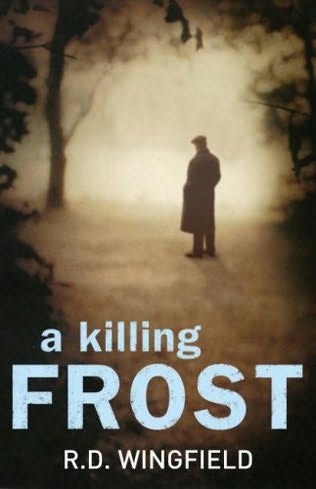
REVIEW: A KILLING FROST, R. D. Wingfield

Bantam Press, 2008, 400 pages. ISBN 978-0-593-0647-6

It's late at night in Denton, dark with rain, and a man walking in Denton Woods is horrified when his dog retrieves a chopped-off human foot. As usual D.I. Jack Frost has far too many cases to cover - fifteen year old Sally Marsden attacked and raped near a multi-storey carpark; the reported abduction of a two year old from his cot;two missing teenagers; a blackmailer who has poisoned baby food in a local supermarket and is demanding money; and then on top of it all, the arrival of a new D. C. I. whose sole mission in life is to rid Denton police station of scruffy, irregular, and unconventional Jack Frost.

Published posthumously by the estate of R. D. Wingfield, after a long gap in the six book series, it seemed to me as I said in my progress report earlier this week, that the early incidents in A KILLING FROST owed their existence to some of the episodes in the very popular television series. In all there have been 42 episodes in 13 series, made, "based on the characters created by R. D. Wingfield". A KILLING FROST seemed to me to contain a compilation of some of these episodes.

His very continuance as part of the Denton police force under threat because of scheming by the new D. C. I. and Superintendent Mullett, to get him to volunteer to transfer to another station, overburdened with an enormous workload, continually under-resourced, Frost continues to show as he connects the dots in the puzzles, why he is among the best.
If I had to compare him to another fictional detective then I think it would be Fred Vargas' Jean-Baptiste Adamsberg. Like Adamsberg Frost is able to connect the seemingly unconnected. Nor does Frost do things by the book. If he doesn't get a search warrant then he is devious enough to do without. His mind continues to gnaw at problems, trying make sense of what he knows he has seen.

I liked A TOUCH OF FROST more as the central story of missing teenagers surged on. Frost complains at the amount of work piled on his plate, but he never shirks, and he always shoulders the blame when it is his.

As the threat of having to leave Denton looms, Frost is haunted by thoughts of his dead wife. They were not close in the final years of their marriage, constantly driven apart by the demands of his job, and the fact that he really is a workaholic. That strand inserts an element of pathos into the story. But it's easy to see how the job separated them.

So this book is Wingfield's last. It is sad to think there will be no more.
If you haven't read any at all, do start from the beginning.
Here's the list to look for
1. Frost at Christmas (1984)
2. A Touch of Frost (1987)
3. Night Frost (1992)
4. Hard Frost (1995)
5. Winter Frost (1999)
6. A Killing Frost (2008)

My rating: 4.7

1 July 2008

Carnival of Criminal Minds, No. 18

The Carnival has come to Paradise, hurtling at 100 kph along the O-Bahn to the home of Mysteries in Paradise.

Adelaide's North-East busway, commonly known as the O-Bahn, was the second of its kind in the world. Built in 1985, the concrete O-Bahn busway has since sparked a series of similar style roads in other major cities across the world. With limited access points and grade separated junctions, the road is only built for specially fitted buses. So get your ticket and ride!

The Carnival has already visited a number of very entertaining locations. Most recently it was at Do You Write Under Your Own Name with host Martin Edwards. I just hope your reading sack still has room for just a few more authors and titles, especially for some with an antipodean flavour.
It is my pleasure to list for your delectation some wonderful crime fiction authors from the land of Oz.

Under the Big Top
A selection of my reading for the last 3 years giving you authors and titles to look out for.

Sydney Bauer, UNDERTOW
Marshall Browne, INSPECTOR ANDERS and THE SHIP OF FOOLS, INSPECTOR ANDERS and THE BLOOD VENDETTA
Patricia Carlon, THE WHISPERING WALL
Caroline Carver, BLOOD JUNCTION, BENEATH THE SNOW
Lauren Crow, BYE BYE BABY
Sandy Curtis, DANGEROUS DECEPTION
Garry Disher, CHAIN OF EVIDENCE
Kathryn Fox, MALICIOUS INTENT
Leah Giarratano, VODKA DOESN’T FREEZE
Jane R. Goodall, THE VISITOR, THE CALLING
Robert Gott, GOOD MURDER
Kerry Greenwood, MURDER IN MONTPARNASSE, DEATH BY WATER, MURDER IN THE DARK
Katherine Howell, FRANTIC
Fergus Hume, THE MYSTERY OF A HANSOM CAB
Adrian Hyland, DIAMOND DOVE (aka MOONLIGHT DOWNS)
Nicholas Jose, ORIGINAL FACE
Brian Kavanagh, THE EMBROIDERED CORPSE
Gabrielle Lord, DEATH DELIGHTS, BABY DID A BAD BAD THING, DIRTY WEEKEND, SHATTERED
Barry Maitland, ALL MY ENEMIES, NO TRACE, SPIDER TRAP
PD Martin, BODY COUNT, THE MURDERERS' CLUB, FAN MAIL
John Misto, THE DEVIL'S COMPANION
Kate Morton, THE SHIFTING FOG (aka THE HOUSE AT RIVERTON)
Kel Robertson, DEAD SET
Michael Robotham, SUSPECT, LOST, THE NIGHT FERRY, SHATTER
Jennifer Rowe, THE MAKEOVER MURDERS
Angela Savage, BEHIND THE NIGHT BAZAAR
Caroline Shaw, CATCH CATCHER
Peter Temple, THE BROKEN SHORE
Felicity Young, A CERTAIN MALICE, AN EASEFUL DEATH, HARUM SCARUM

Spectacular Grand Parade: The Ned Kelly 2008 Long List

These Australian awards, presented by the Crimewriters Association of Australia will be announced during Melbourne Writers' Festival in late August, and at some stage before that a short list will be announced. (Who was Ned Kelly anyway? More)

The following list is linked, where possible, to reviews on Aust Crime Fiction to which a coven of friends contribute.

Best First Fiction:
GOLDEN SERPENT, Mark Abernethy
SHADOW MAKER, Robert Sims
A FRACTION OF THE WHOLE, Steve Toltz
THE LOW ROAD, Chris Womersley
THE BUTCHERBIRD, Geoffrey Cousins
BYE BYE BABY, Lauren Crow - my review here (rating 4.2)
BROKEN SWALLOW, JJ Burn Green
VELVET SHOES, Christina Ann Alexander
FRANTIC, Katherine Howell - among my best reads in 2007
VODKA DOESN'T FREEZE, Leah Giarratano - a good read in 2007
IRAQUI ICICLE, Bernie Dowling
MAELSTROM, Michael MacConnell

Best Fiction:
TRICK OR TREAT, Kerry Greenwood - my review here (rating 4.3)
CHERRY PIE, Leigh Redhead - in mount TBR somewhere
ENDANGERED LIST, Brian Westlake
HARUM SCARUM, Felicity Young - my review here (rating 4.4)
SENSITIVE NEW AGE SPY, Geoffrey McGeachin
SUCKED IN, Shane Maloney - in mount TBR somewhere
THE NIGHT HAS A THOUSAND EYES, Mandy Sayer
ORPHEUS LOST, Janette Turner Hospital
AMONGST THE DEAD, Robert Gott
APPEAL DENIED, Peter Corris
OPEN FILE, Peter Corris
GOSPEL, Sydney Bauer
BROKEN, Ilsa Evans
SKIN & BONE, Kathryn Fox - in mount TBR somewhere
FAN MAIL, PD Martin - 5.0 from me
EL DORADO, Dorothy Porter
SHATTERED, Gabrielle Lord - 4.6 from me last year
THE CALLING, Jane Goodall - 4.8 from me last year
SHATTER, Michael Robotham - 5.0 from me
GAME AS NED, Tim Pegler
THE TATTOED MAN, Alex Palmer - in mount TBR somewhere
BLOOD SUNSET, Jarad Henry
REDBACK, Lindy Cameron - in mount TBR somewhere

Best Non-Fiction:
BONDI BADLANDS, Greg Callaghan
MR SIN, Tony Reeves
UNDERBELLY THE GANGLAND WAR, John Silvester and Andrew Rule
KILLING JODIE, Janet Fife-Yeomans
RED CENTRE, DARK, Evan McHugh
BIG SHOTS, ADAM SHAND LIVES OF CRIME, Gary Tippett & Ian Munro
FATAL FLAW, Roger Maynard
NED KELLY'S JERILDERIE LETTER, Carole Wilkinson
WILD COLONIAL BOYS, Paula Hunt


2007:
Best First Fiction: DIAMOND DOVE, Adrian Hyland (Text)
Best Fiction: CHAIN OF EVIDENCE, Gary Disher (Text)

2006:
Best First Novel: OUT OF THE SILENCE Wendy James, Random House
Best Novel (Tie):
CROOK AS ROOKWOOD, Chris Nyst, Harper Collins
and THE BROKEN SHORE, Peter Temple, Text

2005
Best First Novel: A PRIVATE MAN, Malcolm Knox
Best Novel: LOST (aka THE DROWNING MAN), Michael Robotham

2004
Best First Novel (Joint Winners):
THE WALKER, Jane R. Goodall and JUNKIE PILGRIM, Wayne Grogan
Best Novel: Degrees of Connection Jon Cleary

2003
Best First Novel: BLOOD REDEMPTION, Alex Palmer
Best Novel: WHITE DOG, Peter Temple

2002
Best First Novel (Tie):
APARTMENT 255, Bunty Avieson and WHO KILLED ANGELIQUE?, Emma Darcy
Best Novel: DEATH DELIGHTS, Gabrielle Lord

2001
Best First Crime Novel: LAST DRINKS,Andrew McGahan
Best Crime Novel (tie):
DEAD POINT, Peter Temple and THE SECOND COMING, Andrew Masterson

2000
Best First Novel: THE WOODEN LEG OF INSPECTOR ANDERS, Marshall Browne
Best Novel: SHOOTING STAR, Peter Temple

1999
Best First Novel: THE LAST DAYS, Andrew Masterson
Best Novel: AMAZE YOUR FRIENDS, Peter Doyle

1997
Best First Novel (tie):
BAD DEBTS, Peter Temple and GET RICH QUICK, Peter Doyle
Best Novel: BRUSH OFF, Shane Maloney

1996
Best First Novel: DARK ANGEL, John Dale
Best Novel (tie)
THE MALCONTENTA, Barry Maitland and INSIDE DOPE, Paul Thomas

On the High Wire

Other Rings to visit:

Australian blogs or specialising in Australian crime fiction
For further suggestions, try these links to other pages in my blog.
Carnival No. 19 will still be in Australia at Crime Down Under, around August 1st.

9 June 2008

Dangers of being a genre novelist

I was struck by a comment by Irish novelist John Connolly today in an article titled Reaping Chills with John Connolly.

When I sit down to write a book it’s because it’s something I really want to write. Sometimes it’s something that’s led me away from crime fiction altogether. There is a difficulty in being a genre novelist; as you achieve an amount of success, there’s pressure to repeat that success, to do pretty much the same thing. ...... I recognize this dependence I have on a certain readership, and sometimes that comes into conflict with the desire to take chances.
The preamble to the article said

Dublin, Ireland-based author John Connolly is best known for his series of crime thrillers starring eternally haunted private eye Charlie “Bird” Parker. Filled with tensely quiet, isolated
settings and distinctive, spooky antagonists, Connolly’s novels increasingly flirt with the supernatural—a realm explored in more depth in standalone works “The Book of Lost Things” and the story collection “Nocturnes.” Those elements aren’t as prevalent in his latest book, “The Reapers,” which focuses on Louis, a former hired killer whose past threatens to catch up to him with deadly results.
I discovered that the only Connolly novel in my database is BLACK ANGEL (I gave it a rating of 4.7)
The rebel angels fell, garlanded with fire…. Charlie Parker has got his life back together, and is settled with a new girlfriend and a new daughter, Sam. But in New York City Martha is looking for her daughter Alice and when she doesn't find her, she calls in a favour from Louis, Charlie Parker's right hand man. Martha turns up at Sam's christening party. As he investigates, Charlie realises that Alice's disappearance goes further than the streets of New York, and is linked to events as old as time itself. In fact to the fall of the angels.. Read the prologue at http://www.johnconnollybooks.com/novels_ba.php
This book would appeal to those of you who like a bit of woo-woo with your mystery/thriller
.

The reason that the book made such an impression on me, and I think the reason I read it, was that Bob and I were going to Europe for a holiday and were visiting Prague where much of the novel is set. In fact we went on a tour of the old silver mining town of Kutna Hora with its ossiary (see picture), which made BLACK ANGEL seem just that much more "real".

Susan Hill has copped a bit of flack recently with her Simon Serrailler novels for venturing into a new genre - she seems to feel the criticism is coming from publishers and book sellers - she says publishers "panic" because they don't know how to "brand" the books - but I'm also sure I have seen criticism from readers and reviewers who thought she was almost "trespassing". She, like Australian crime fiction author Kerry Greenwood, also writes for children and adolescents.

I must admit, that when I go into a book store, I gravitate to the crime fiction shelves, expecting that is where I will find my favourite authors. RJ Ellory is another who seems to be a bit cross-genre and whose books may be on other shelves.

Speaking of genres though, how many crime fiction authors do you know who have been ghost writers? Can't think of one? Here is one who has been the voice of Lulu, Rolfe Harris, and Toni Bullimore.

23 May 2008

DEAD LOVELY, Helen Fitzgerald

Allen & Unwin, 2007, 298 pages

We know from the beginning that Krissie Donald has killed her best friend Sarah Morgan. They are on a hiking holiday in Scotland with Sarah's husband Kyle, and you know the old saying, three's a crowd.

Krissie Donald has always been a bit unstable, a rolling stone, and promiscuous with it. One of the results of her promiscuity after a holiday in Tenerife was pregnancy. But Krissie is not yet ready to be a mother to her son Robbie. Sarah on the other hand is childless despite almost 8 years of trying to fall pregnant.

Krissie's near nervous collapse is the reason for the hiking holiday, but it ends in a way that none of them could have predicted.

This is a book where the writing and structure break all the rules. It has a deceptively simple style- very short sentences for the most part, and often very blunt expression. I would be tempted to characterise it as chick-lit, and I think the market it is probably aimed at is young women. This is reinforced not only by its vocabulary, but also through the topics of interest to the main characters: sex, pregnancy, getting drunk.

One of the rules that it breaks happens through abrupt changes in P.O.V. For example the first four chapters are in the first person, Krissie's voice. Then chapter 5 is third person, almost a narrator, and in chapter 6 back to Krissie's voice. When this first happens it is a bit disconcerting.
Chapter 5 prompted me to look back and check whose head I had been in in the previous chapters. At times we see the action through the eyes of other narrators too. It's part of what makes this novel quite remarkable.

What surprised me about this novel was how well very disparate strands converged towards the final resolution. I wouldn't say it was all believable. The murder is particularly grisly and there was an un-hinged side to the murderer that I hadn't been prepared for.

Not my best read for the year, but a good solid one.
My rating 4.0

Sally reviewed it here

From Helen Fitzgerald's web site:
Helen FitzGerald writes thrillers and teen fiction. Her first novel - Dead Lovely - was published by Allen and Unwin in Australia and New Zealand in Sept 2007 and will be published in the UK by Faber and Faber in June 2008. She has four thrillers being published in the UK in 2008 and 2009. The books have been sold to numerous other countries and will be translated into several languages. Helen's writing is pacy, sharp, funny and disturbing.

Someone needs to write better text for her though - the description of the plot of DEAD LOVELY on the website gives the game away a bit.

13 April 2008

A QUIET BELIEF IN ANGELS, R.J. Ellory

Reading a novel in a matter of a couple of days is rare for me, but this morning I had 150 pages to go, and fairly galloped through it to find out whether what I thought had happened was what did happen. Just for the record, I was partly right, but got a lot wrong, despite the clues that Ellory laid.

Yesterday I gave a progress report, but I'll repeat a little of it here. I have found that the progress reports help me to sort out what I think is happening.

Death took Joseph Vaughan's father in the summer of 1939 just after Joseph, 11 years old, had picked up a long slender white feather, perhaps from an angel's wing. Death came that day. Workmanlike, methodical, indifferent to fashion and favor; disrespectful of Passover, Christmas, all observance or any tradition. Death came - cold and unfeeling, the collector of life's taxation, the due paid for breathing.

In the following years Death visits the small community of Augusta Falls where Joseph lives with his mother, many times, as a serial killer who takes the lives of young girls after doing unspeakable things to them. At school Joseph learns of unbelievable events happening in Europe through the evil of Adolf Hitler, and when after Pearl Harbour America goes to war, the murders of the young girls continue, all girls that Joseph knows well. Joseph organises a young band of vigilantes who call themselves The Guardians, but they can do nothing, and when the latest victim is a young Jewish girl, the community of Augusta Falls turns on non-Americans, including the Krugers who live next door to Joseph and his mother. These deaths dominate the path that Joseph Vaughan's life takes and what happens to the Krugers is nothing to what will happen to Joseph Vaughan.

Ellory uses the angel's feather icon at least a couple more times in A QUIET BELIEF IN ANGELS. Joseph Vaughan is almost a magnet for Death - it touches those near and dear to him, and sometimes he sees it coming, and sometimes not. As a child and a young man he often sees the workings of Death as his own fault. The events that catch him up in their thrall almost cost him his sanity, but the fact that he is at heart a writer finally helps him to the truth.

I have put this book among my top finds for the year, and that is not just for a complex story well told, but also for Ellory's wonderful writing. Last week I saw a book categorised as a "literary thriller" and wondered what that actually meant. There has been a tendency not to consider crime fiction as having literary merit but I think A QUIET BELIEF IN ANGELS easily straddles both genres. There's a quality in its word pictures that puts it right at the top. This book should win awards!

My rating: 5.0

LinkWithin

Blog Widget by LinkWithin