Showing posts with label historical setting. Show all posts

27 July 2014

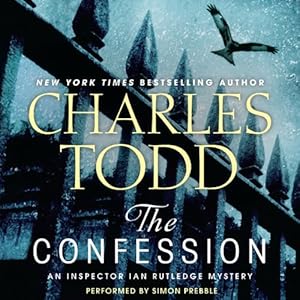
Review: THE CONFESSION. Charles Todd - audio book

Synopsis (Audible)

Declaring he needs to clear his conscience, a dying man walks into Scotland Yard and confesses that he killed his cousin five years earlier during the Great War. 

When Inspector Ian Rutledge presses for details, the man evades his questions, revealing only that he hails from a village east of London. 

With little information and no body to open an official inquiry, Rutledge begins to look into the case on his own. Less than two weeks later, the alleged killer’s body is found floating in the Thames, a bullet in the back of his head. 

The inspector’s only clue is a gold locket, found around the dead man’s neck, that leads back to Essex and an insular village whose occupants will do anything to protect themselves from notoriety. For notoriety brings the curious, and with the curious come change and an unwelcome spotlight on a centuries-old act of evil that even now can damn them all.  

My Take:

Another really good read from Charles Todd. Simon Prebble does an excellent job of the audio presentation. Although this is #14 in the series, it is only 1920 so we haven't progressed very far from the demons and ghosts of World War One. Ian Rutledge seems in better control of his own personal ghost Hamish, but even so wonders whether sometimes people hear him in conversation with Hamish.

Things are changing at the Yard. The Chief Inspector has had a heart attack and been hospitalised and so underlings like Rutledge are able to take advantage of the laxer supervision to operate this case on his own initiative. Of course that also means that the Yard doesn't actually know where he is and should anything happen to him, it will be some time before help arrives, if ever.

The audio versions of these books are produced to a very high standard, assisted by the fact that each story is carefully plotted and sufficiently tangled to be intriguing. World War One lurks there as a background without being intrusive.

my rating: 4.6

I've also reviewed
SEARCH THE DARK
A PALE HORSE
A TEST OF WILLS
4.5, A DUTY TO THE DEAD
4.7, A LONELY DEATH
4.7, HUNTING SHADOWS 

26 June 2014

Review: I WILL HAVE VENGEANCE, Maurizio de Giovanni

  • Format: Kindle (Amazon)
  • File Size: 324 KB
  • Print Length: 216 pages
  • Publisher: First published in Italian 2007, this English edition by Hersilia Press (February 13, 2012)
  • Sold by: Amazon Digital Services, Inc.
  • Language: English
  • ASIN: B00793NHSI
  • Translated by Anne Milano Appel 
  • Title byline: THE WINTER OF COMMISSARIO RICCIARDI
Synopsis (Amazon)

Naples, March 1931: a bitter wind stalks the city’s streets, and murder lies at its chilled heart.

As one of the world’s greatest tenors, Maestro Vezzi, is found brutally murdered in his dressing room at Naples’ famous San Carlo Theatre, the enigmatic and aloof Commissario Ricciardi is called in to investigate. Arrogant and bad-tempered, Vezzi was hated by many, but with the livelihoods of the opera at stake, who would have committed this callous act?

Ricciardi, along with his loyal colleague, Maione, is determined to discover the truth. But Ricciardi carries his own secret: will it help him solve this murder?

My Take

This is the first in a series featuring an enigmatic Naples detective, Commissario Ricciardi,  and set during the Fascist 1930s. Ricciardi inherited an interesting trait from his mother - the dead talk to him, appealing for justice. Sometime after their death, the images fade and they haunt him no longer. But just after they have died they pose puzzles about their death. You would think this might be advantageous for a homicide detective like Ricciardi but in fact the murder victim rarely tells him straight out who committed the deed. In the case of the murdered tenor Vezzi, Ricciardi picks up hints rather than proof.

So Ricciardi insists that he enter a murder scene alone for a few minutes at first, to see what the dead person has to "say". In the case of Vezzi there are things that just don't make sense. As always those higher up the order are pressing for a quick apprehension of the murderer. Vezzi is a house-hold word with even Il Duce's office taking an interest. When a young man confesses to the murder the Vice-Questore pressures Ricciardi to charge him quickly but he still feels that there are things that don't add up. Ricciardi's superiors find him prickly, rather uncompromising, and at times downright uncooperative. It is not secret that only his assistant Brigadier Maione will work with him.

While the series is set in Naples at the beginning of the 1930s I don't feel that the historical details are particularly influential. They really provide setting only. You are not going to learn much Italian history from reading this book. There is an interesting section at the end of the e-book where the translator explains some of the historical references. But after all de Giovanni's primary audience is Italian readers who know a lot about their own history, not non-Italians who know little. So the Italian reader will mentally fill in a lot of supplementary detail from a simple reference to, for example, the hairnet that Ricciardi wears to bed.

Overall though, a good read, and I will look forward to another.

My rating: 4.7

The others in the series:
#2. BLOOD CURSE: THE SPRINGTIME OF COMMISSARIO RICCIARDI
#3. EVERYONE IN THEIR PLACE: THE SUMMER OF COMMISSARIO RICCIARDI
#4. DAY OF THE DEAD: THE AUTUMN OF COMMISSARIO RICCIARDI

See a review at Crime Scraps

6 November 2010

Historical Mysteries read this year

The announcement this week of the winner of the 2010 CWA Ellis Peters Award for Historical Mystery reminded me that I really haven't read all that many "historically set" crime fiction titles this year.

Mind you, a history teacher by trade, just as I can see a mystery element in almost every novel, so I can see the historical in many.

Just at the moment I am listening to ALEXANDRIA by Lindsey Davis, and I've just finished Dan Waddell's THE BLOOD DETECTIVE which reminded me how much I enjoy a historical element. 

So I've explored my records to see what else I've read in 2010 that I could count if I was "doing" a Historical Challenge.

The first problem that I came across was the books that were written/published in the past, but did not involve the author delving back into history. They give us a glimpse of times past, but that was not what the author intended. He/she was not writing a book that we would today classify as "historical crime fiction".
So I've separated them out from the others. You might like to comment on what I've done.
And then there are those that provide a sort of bridge between the past and the present - they have sort of dual time frames.
They are listed in the order in which I have read them this year. Who would have thought that I had read so many?

Crime fiction written in the past.
4.4, THREE ACT TRAGEDY, Agatha Christie, 1920s
4.2, THE SWAYING PILLARS, Elizabeth Ferrars - set in an African state in the 1960s
4.1, THE FALL OF THE HOUSE OF USHER, Edgar Allan Poe - America, publ. 1840
4.5, THE SPY'S WIFE, Reginald Hill - Britain, Cold War publ 1980
4.4, THE HOUND OF DEATH, Agatha Christie - England 1930s
4.2, THE LISTERDALE MYSTERY, Agatha Christie - England 1930s
4.6, DEATH IN THE CLOUDS, Agatha Christie - England 1935
4.6, THE A B C MURDERS, Agatha Christie  - England 1930s

Crime fiction written recently but given a historical setting.
4.3, CONSEQUENCES OF SIN, Clare Langley-Hawthorne  - England, suffragette movement
4.7, DANCING FOR THE HANGMAN, Martin Edwards - the story of Crippen who was hanged in 1910
4.2, MARCH VIOLETS, Philip Kerr - Berlin 1936
4.7, BURY ME DEEP, Megan Abbott  - America 1931
4.4, THE PILGRIM OF HATE, Ellis Peters  - Brother Cadfael, Shrewsbury 12th century England.
4.3, DEAD MAN'S CHEST, Kerry Greenwood - Australia 1920s
5.0, A BEAUTIFUL PLACE TO DIE, Malla Nunn  - South Africa 1952

Those that bridge the past and the present
5.0, SKELETON HILL, Peter Lovesey - involves modern day police procedural and Civil War re-enactment
4.5, BLOOD & ICE, Robert Masello - Antarctica, bridges 1850s and current time
4.6, THE WHITE GALLOWS, Rob Kitchin - set in Ireland, some elements of bridging between World War 2 and the present.
4.6, THE CROSSING PLACES, Elly Griffiths  - a blend of police procedural and archaeology
4.5, THE BLOOD DETECTIVE, Dan Waddell  - a blend of police procedural and genealogy
4.3, THE LABOURS OF HERCULES, Agatha Christie - bridges ancient legend and 1930s 

10 June 2009

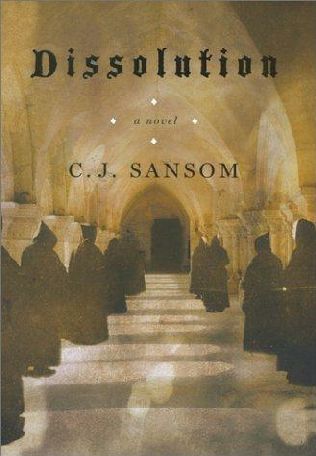
From my database: DISSOLUTION, C.J. Sansom

I started using my current database at the end of 2004, and it now has records of well over 500 books. It occurred to me the other day that there is some perfectly good material in that database, just waiting to be used in my blog.

So from time to time, I will use one as the basis of a blog posting.

DISSOLUTION was the first in C. J. Sansom's Matthew Shardlake series.

Blurb:
It is 1537, a time of revolution that sees the greatest changes in England since 1066. Henry VIII has procliamed himslef the Supreme Head of the Church. The country is waking up to new savage laws, rigged trials and the greatest network of informers that it has ever seen. Under the orders of Thomas Cromwell, a team of commissioners is sent throughout the country to investigate the monasteries. There can be only one outcome: the monasteries are to be dissolved.
But on the Sussex coast, at the monastery of Scarnsea, events have spiralled out of control. Cromwell's commissioner, Robin Singleton, has been found dead, his head severed from his body. His horrific murder is accompanied by equally sinister acts of sacrilege - a black cockerel sacrificed on the church altar and the disappearance of Scarnsea's Great relic.
Dr. Matthew Shardlake, lawyer and long-time supporter of Reform, has been sent by Cromwell into this atmosphere of treachery and death, accompanied by his loyal assistant Mark. His duty is to uncover the truth behind the dark happenings at Scarnsea.
Shardlake's investigation soon forces him to question everything that he hears, and everything that he intrinsically believes..

My comment:
DISSOLUTION is set in a period that I have always found fascinating.
A MAN FOR ALL SEASONS became one of my favourite films, and Thomas Cromwell, as portrayed by Leo McKern, an image difficult to dislodge.

Although set 300 years later, this book reminded me a lot of the Brother Cadfael books. I found it a bit slow to start with, but the plot was clever and the characters well drawn. An interesting picture of the turmoil that resulted in Anne Boleyn's execution. At the time of the book, Jane Seymour has just died and Cromwell survives. The impact of the dissolution of the monasteries is well described and Henry VIII's need for them to agree to their own dissolution in the name of Reform gives an interesting perspective.

My rating was 5.0

The series:

1. Dissolution (2003)
2. Dark Fire (2004)
3. Sovereign (2006)
4. Revelation (2008)

DISSOLUTION has been Amazon UK's Amazon UK's Crime fiction the top 100 for 738 days - that's over 2 years. DARK FIRE won the Ellis Peters Historical Dagger in 2005, while REVELATION was shorlisted for the same award in 2008.
SOVEREIGN was shortlisted for the Theakston's Old Peculier Award in 2008, and in May 2008 DISSOLUTION and DARK FIRE were both in the Amazon UK Crime Fiction top 10.

So if you are looking for really good crime fiction in a historical setting, here is a series to choose.

2 June 2009

The Dangers of Genre Mixing

Currently I'm reading SILENT IN THE GRAVE by Deanna Raybourn, and a recent review of the same book by Bernadette on Reactions to Reading set me thinking about the risks that an author runs if he/she decides to mix genres, in this case mystery and history.

And then today Crime Scraps touches on a parallel subject in What Makes a Novel feel Right?

So what can go wrong if a writer decides to straddle two genres? Reginald Hill tried something similar last year with A CURE FOR ALL DISEASES when he combined crime fiction with a tribute to Jane Austen. Both his Dalziel & Pascoe followers, and Jane-ites, expressed feelings of dissatisfaction, and it did seem as if he had not pulled it off for all.

I think the problem with trying to write historical crime fiction is that the author can go astray on at least two counts.
  • First of all those who love their historical fiction will expect an authenticity that is hard to achieve. As Bernadette says "the writing of it is deceptively difficult". The readers don't want the details laboured or forced, but they do demand that not only the visual elements but the incidental details support the story.
  • Secondly those who are reading it for the crime fiction will not be tolerant if the historical stuff appears to get too much emphasis. They want the book to get to the mystery or crime relatively quickly.
It is hard to strike the balance between the two.

A historian by training, and history teacher for many years, I don't actually specifically choose to read historical crime fiction. So my acquaintance with this cross-genre is not all that deep, although I have come across some that I really enjoy.

For example the Charles Todd books that I have recently discovered do a really good job of setting the series in the period just after the First World War. There's a good post on the Todd books over on Mystery Fanfare. There are other authors such as Elton, Greenwood, and Winspear, who manage to re-create that period too.
Rhys Bowen's Royal Spyness series similarly seems to me to do a good job with the post war period.

From an entirely different period: Ellis Peters showed just how it could be done with the Cadfael series.

If you are looking for some other recommendations about who does the historical mystery thing well, you might like to follow Sarah Weinman's articles on Barnes & Noble, beginning with Ancient Plots. If you find it hard to get to the next article, go to the last (there are 4 articles) and work back.

21 March 2009

Weekly Geeks 2009-11: Historical Fiction

This week's Weekly Geek Challenge relates to historical fiction and to a period that I love. And of course in my case, it will relate also to crime fiction.

Here is the challenge:
Let's take a magical history tour this week, with a focus on Historical Fiction. That is, contemporary novels with a historical setting. {I've now selected from the choices}

Is there a particular era that you love reading about? Tell us about it--give us a book list, if you'd like. Include pictures or some fun facts from that time period, maybe link to a website that focuses on that time. Educate us.

This challenge has come at a very opportune time in my reading. One of the periods that I seem to read a lot of fiction set in is the decade or so immediately after World War One, i.e. 1919-1932, and particularly, although not exclusively British crime fiction.

Here are a few titles to think about. The links are to reviews I've recently written, but I'll also give a short summary here.

TOUCHSTONE by Laurie R. King
The main story is set against the impending General Strike of 1926, a time when many are hoping for the collapse of the British government, and some sort of Revolution. For many of the characters the agenda is one of high political ideals, of a possible role for themselves in a new order. For Harris Stuyvesant though the agenda is personal. It is also a story of manipulation, but it wasn't until the last 20 or so pages that I thought I knew what was going to happen, and the identity of the bomber.

HER ROYAL SPYNESS
, Rhys Bowen
Georgie, Lady Victoria Georgiana Charlotte Eugenie, related to the king of England through his grandmother Queen Victoria, is 34th in line to the English throne. Georgie is the product of her father's second marriage to a "bolter", and at 21 is living in Castle Rannoch with no real income and no prospects.
She determines to take charge of her own future when she overhears a conversation between her half brother Binky and his wife Fig about the Queen's intentions to use Georgie as marriage bait for a visiting Romanian Royal. Georgie decides to make her escape to Rannoch House in London despite the fact that she will have no maid or other help in the house with her. Queen Mary hears that she has come to London and commissions Georgie to be her eyes and ears in the Prince of Wales' escalating affair with an American woman.
The sequel is A ROYAL PAIN
These are pretty light and frothy reads, with a backing of genuine research.

And of course, my current project, the Agatha Christie Reading Challenge, allows me to wallow in the historical setting of the 1920s. Agatha Christie was such a good observer of what is happening to the society in which she lives.

Here are some other books to think about:

MURDER IN MONTPARNASSE by Kerry Greenwood. My rating 4.6
A Phryne Fisher Mystery read by Julia Davis. At the end of World War 1 in Paris, Bert, Cec and 5 other Australian soldiers witness a murder when a man is pushed under a Paris train. Now, in Australia in 1928, two are very recently dead and Bert and Cec believe they are being targetted. Phryne was in Paris in 1918 and remembers the train incident. It also brings back memories of the man she was infatuated with then. Now she learns that he has recently arrived in Melbourne.

THE SHIFTING FOG (aka THE HOUSE AT RIVERTON) by Kate Morton. My rating 4.7
Set mainly during World War I and immediately after it. Six months before the war starts young Grace Bradley, 14, takes up a position as a housemaid at Riverton Manor. Eighty four years on, she is contacted by a young female filmmaker who is making a romance film about the death of Robbie Harrison, a young poet, who suicided at the house during a mid summer's eve party in 1924. Many will argue this is not a murder mystery, but you'll have to decide for yourself.

BIRDS OF A FEATHER by Jacqueline Winspear. My rating 4.6
This novel is set some time after the first in the Maisie Dobbs series. Maisie is now an established detective with rooms of her own and an assistant. It's now the early Spring of 1930. Her friend Detective Inspector Stratton of Scotland Yard's Murder Squad is investigating a murder case in Coulsden, while Maisie has been summoned to Dulwich to find a runaway heiress. The woman is the daughter of Joseph Waite, a wealthy self-made man who has lavished her with privilege but kept her in a gilded cage. His domineering ways have driven her off before, and now she's bolted again. Waite's instructions are to find his daughter and bring her home. When Maisie looks into the disappearance she finds a chilling link to Stratton's murder case, and to the terrible legacy of The Great War.

PARDONABLE LIES by Jacqueline Winspear. My rating 4.6
A deathbed plea from his wife leads Sir Cecil Lawton to seek the aid of Maisie Dobbs to confirm that his son, an aviator in the Great War, did actually die when his plane crashed in France. It was something his wife never accepted and it was a torment that drove her mad. Lawton believes his son is dead and is expecting Maisie to confirm just that. Maisie was in France during the War herself as a nurse and it is where her friend Simon was wounded and brain-damaged, so going back to France is no easy thing for Maisie. She takes on an extra mission - to find out for her friend Priscilla Evernden what happened to one of her three brothers who were also killed there. I would call this book a comfortable, rather old-fashioned read, which are the qualities that I liked in the first book in the series, and which led others to dislike the book.
Review: TOUCHSTONE, Laurie R. King

Bantam 2008, ISBN 978-0-553-58666-6, 548 pages

Bennett Grey survived being blown up at the end of World War I. In fact he believes he was blown to pieces and somehow miraculously re-assembled. With the experience came the new ability to see into people, to "feel" accurately whether they are telling the truth. When his ability is noticed he becomes a "touchstone" for British intelligence, useful in prisoner interrogation, and in the development of lie detection technology. Upset by the brutality of the interrogations he participates in, he withdraws from the project and becomes a recluse, abandoning the woman he was to marry, and going to live in Cornwall.

He emerges to help Harris Stuyvesant, an American agent attached the Bureau of Investigation, who is looking for an archist, a bomber, thought to be British, already responsible for a number of deaths in the USA.
Their quest leads them to a houseparty held near Oxford, to the home of the woman whom Grey still loves, so that the American can get close to the man whom he believes is the bomber.

The main story is set against the impending General Strike of 1926, a time when many are hoping for the collapse of the British government, and some sort of Revolution. For many of the characters the agenda is one of high political ideals, of a possible role for themselves in a new order. For Harris Stuyvesant though the agenda is personal. It is also a story of manipulation, but it wasn't until the last 20 or so pages that I thought I knew what was going to happen, and the identity of the bomber.

TOUCHSTONE came to my attention originally because it was short-listed for Left Coast Crime's THE BRUCE ALEXANDER MEMORIAL HISTORICAL MYSTERY. While I was at LCC I hade the opportunity to attend a couple of panels that Laurie King was on, and also to get Laurie to sign a copy of the book for me.

I originally thought, about TOUCHSTONE, "another American writer rather cheekily setting her novel in England", but I have been pleasantly surprised. Like Elizabeth George's, Laurie R. King's writing has an authentic English feel to it. The story reflects an incredible depth of research, and only the occasional American spelling points to the nationality of the author (and the location of the publisher).

My rating: 4.7

Laurie R. King's website: http://www.laurierking.com/

LinkWithin

Blog Widget by LinkWithin