Showing posts with label 2017 Historical Reading Challenge. Show all posts

11 December 2017

Review: FATHERLAND, Robert Harris - audio book

Synopsis (Audible)

Fatherland is set in an alternative world where Hitler has won the Second World War. It is April 1964 and one week before Hitler's 75th birthday. Xavier March, a detective of the Kriminalpolizei, is called out to investigate the discovery of a dead body in a lake near Berlin's most  prestigious suburb.

As March discovers the identity of the body, he uncovers signs of a conspiracy that could go to the very top of the German Reich. And, with the Gestapo just one step behind, March, together with an American journalist, is caught up in a race to discover and reveal the truth - a truth that has already killed, a truth that could topple governments, a truth that will change history.

My Take

Alternative histories are fascinating. As Hitler's 75th birthday and the state visit of President (Joseph) Kennedy to Berlin loom, then the last thing that the authorities want revealed is a series of deaths linked to a policy enacted during the war. Xavier March is an SS officer investigating the murder of a Nazi government official who was one of the participants at the Wannsee Conference. In so doing, he discovers a plot to eliminate all attendees of the conference in order to help Germany establish better political relations with the United States.

Most German citizens were unaware of this conference held in 1943 to ratify "the final solution" to the Jewish problem and now Germany is trying to proved that it was never acted upon.

Excellently read by Michael Jayston.

My rating: 4.5
 
I've also read
5.0, CONCLAVE
4.8, IMPERIUM
4.6, LUSTRUM
4.5, DICTATOR
4.8, THE GHOST

See more about this book at Wikipedia

20 November 2017

Review: A NECESSARY EVIL, Abir Mukherjee

  • format: kindle (Amazon)
  • File Size: 2122 KB
  • Print Length: 380 pages
  • Page Numbers Source ISBN: 1911215132
  • Publisher: Vintage Digital (June 1, 2017)
  • Publication Date: June 1, 2017
  • Sold by: PRH UK
  • Language: English
  • ASIN: B01K6RP0MO
Synopsis (Amazon)

India, 1920. Captain Wyndham and Sergeant Banerjee of the Calcutta Police Force investigate the dramatic assassination of a Maharajah's son.

The fabulously wealthy kingdom of Sambalpore is home to tigers, elephants, diamond mines and the beautiful Palace of the Sun. But when the heir to the throne is assassinated in the presence of Captain Sam Wyndham and Sergeant 'Surrender-Not' Banerjee, they discover a kingdom riven with suppressed conflict. Prince Adhir was a moderniser whose attitudes - and romantic relationship - may have upset the more religious elements of his country, while his brother – now in line to the throne – appears to be a feckless playboy.

As Wyndham and Banerjee desperately try to unravel the mystery behind the assassination, they become entangled in a dangerous world where those in power live by their own rules and those who cross their paths pay with their lives. They must find a murderer, before the murderer finds them…

My Take

Not much time has elapsed since the first book of this series. In the background is the unrest generated by the Indian independence movement. To assuage the growing clamour for Home Rule, the British government in India has come up with the idea of an Indian House of Lords called the Chamber of Princes. All the native princes are being invited to join, and it is important that the wealthiest did so. The Maharajah of Sambalpore, even though the state is amongst the smallest, is billed as among the wealthiest princes. His eldest son Crown Prince Adhir went to school with Sergeant Banerjee and has requested a meeting with him in Calcutta. Adhir is against joining the Chamber of Princes. He has also received some threatening letters, which ironically he can't read as they are in local script. On their way back to their hotel the prince is assassinated.

Having set the scene in Calcutta in 1920, the novel really makes very little use of the political turmoil of the time. Instead Wyndham and Banerjee become embroiled in local politics in Sambalpore, chasing down the person behind the prince's assassination.

The novel provides an interesting depiction of the contrast between the old way of life and the new. The Maharajah and his court behave as if there is no threat to their way of life or their social status. In some ways the novel is a police procedural but Wyndham and Banerjee tread a fine line between what the British Raj wants to do, and what it can achieve without upseting local protocols.

My rating: 4.5

I've also read 4.4, A RISING MAN

2 November 2017

Review: HER, Garry Disher

  • this edition published by hachette Australia 2017
  • ISBN 978-0-7336-3854-1
  • 209 pages
  • source: my local library
Synopsis (hachette Australia)

 Beautifully and powerfully written, this is a look at the darker side of Australia's past - and particularly the status of girls and women in our society - that will stay with you long after you finish reading.

Out in that country the sun smeared the sky and nothing ever altered, except that one day a scrap man came by . . . 

HER name is scarcely known or remembered. All in all, she is worth less than the nine shillings and sixpence counted into her father's hand.

She bides her time. She does her work.

Way back in the corner of her mind is a thought she is almost too frightened to shine a light on: one day she will run away.

A dark and unsettling tale from the turn of the twentieth century by a master of Australian literature.

My Take

I should first of all make it clear that this is a historical novel rather than crime fiction, although crimes are committed. My impression is that the intended audience is young adult although the writing style is sophisticated and quite demanding.

The time period is 1913 - early 1920s, the setting rural Victoria. Life is hard and a family with too many children and not enough food sells a three year old girl to the scrap man for nine shillings and sixpence. The scrap man's family consists of Wife, Big Girl and now there is You. The little girl never really knows what her real name is. Years later she sees a boy newly enlisted, who she thinks might be her brother.

Big Girl and You do not go to school - the scrap man hides Big Girl and passes You off as feeble-minded. The scrap man travels the country side hawking items his women folk have made at home out of flour bags, torn sheets, fencing wire, and scrap metal. It depicts an Australia that most of us have never known, of life when the horse was central to transport, of life on the road.

I think this is a novel guaranteed to make an impression on readers, teaching about a period that most would have no idea about. This the way to learn history.

In the final pages are some group reading notes, with discussion questions and suggestions for further reading.

My rating: 4.6

I've also read
4.7, WYATT
4.8, WHISPERING DEATH
4.7, BLOOD MOON
4.2, THE HEAT
4.5, SIGNAL LOSS  

21 September 2017

Review: THE GOOD PEOPLE, Hannah Kent

Synopsis (publisher)

The fires on the hills smouldered orange as the women left, pockets charged with ashes to guard them from the night. Watching them fade into the grey fall of snow, Nance thought she could hear Maggie's voice. A whisper in the dark.

"Some folk are born different, Nance. They are born on the outside of things, with a skin a little thinner, eyes a little keener to what goes unnoticed by most. Their hearts swallow more blood than ordinary hearts; the river runs differently for them."

Nóra Leahy has lost her daughter and her husband in the same year, and is now burdened with the care of her four-year-old grandson, Micheál. The boy cannot walk, or speak, and Nora, mistrustful of the tongues of gossips, has kept the child hidden from those who might see in his deformity evidence of otherworldly interference.

Unable to care for the child alone, Nóra hires a fourteen-year-old servant girl, Mary, who soon hears the whispers in the valley about the blasted creature causing grief to fall upon the widow's house.

Alone, hedged in by rumour, Mary and her mistress seek out the only person in the valley who might be able to help Micheál. For although her neighbours are wary of her, it is said that old Nance Roche has the knowledge. That she consorts with Them, the Good People. And that only she can return those whom they have taken ...

My Take

I guess you could argue that this isn't really crime fiction, but in the end a crime is committed, even if only through ignorance.

The setting is Killarney 1825. Nora Leahy is brought to the edge of her tether when her husband Martin dies suddenly out in the fields. As the villagers gather together in Nora's hut for the wake, they talk about the signs observed at the time Martin died: four magpies sitting together in a field; the fact that he died at the crossroads where they bury suicides; that as he fell the hammer at the blacksmith's could be heard; and as the men carried his body home lights could be seen towards the woods. These are taken as signs that the fairies, The Good People, had a hand in his passing.

After the priest has left, Nance Roche, regarded by some as a witch, arrives to keen over Martin's body and Nora invites her into the hut. Nora has already delivered her four year grandson, who is disabled, to a neighbour so that those coming to her hut do not see him.

The novel tells the story of how Nora and Nance attempt to cure the boy, of how they become convinced that he is a changeling, left by The Good People, in the place of her actual grandson.

The author tells readers that this work of fiction is based on a real event that occurred in the summer of 1825 in County Kerry. The novel explores what might have been behind the case and it makes fascinating reading.  The time frame is pre-potato famine, and already crops are failing and people are barely subsisting. They tend to blame events on external forces and rely on people such as Nance Roche for herbal cures, poultices, and superstitious beliefs to support them when they are ill or injured.

My Rating: 4.7

I've also read 4.5, BURIAL RITES

27 July 2017

Review: A STRAITS SETTLEMENT, Brian Stoddart

  • this edition published by Crime Wave Press 2016
  • #3 in the Le Fanu series
  • ISBN 978-988-14584-8-3
  • 265 pages
  • source: my local library
Synopsis (publisher)

In the third instalment of the Le Fanu Mystery series, the intrepid superintendent is promoted to Inspector-General of Police in 1920s Madras, which proves to be more boring than he had envisaged.

Instead of pushing papers across his desk, Le Fanu focuses on the disappearance of a senior Indian Civil Service officer and an apparently unrelated murder. As the two incidents intertwine, the world weary detective is drawn into the worlds of indentured labor recruitment and antiquities theft..

But as bureaucratic politics make his position vulnerable, his superiors send the intrepid policeman across the Bay of Bengal to pursue the cases in the Straits Settlements. Le Fanu immediately becomes embroiled in the activities of secret societies and the British colonial intelligence services.

The appearance of a mysterious Chinese woman renders his professional life uncertain as he wonders anew about the British imperial future.

My Take

I think it helped, this being #3 in this series, that I had already read the first two, so that I was familiar with many of the characters that occur in the earlier books.

What I particularly like about these stories is the authentic feel to the historical setting, which is, rather vaguely, Madras in the 1920s. The Indian Civil Service is losing its grip because of the independence movement and the protests about Imperialism. Le Fanu has risen to the level of Inspector-General of Police mainly because Major Jepson has taken his sick wife back to England. Le Fanu expects to job to be a lot more interesting than it is, but it does bring status with it.

Nevertheless he jumps at the chance to do some real investigation, rather than his usual pen pushing, and the trail eventually leads him to the Straits Settlements of Penang and Singapore, and with that the tantalising offer of a new job.

Stoddart has left himself plenty of room for #4.

My rating: 4.4

I've also read
4.6, A MADRAS MIASMA - #1
4.3, THE PALLAMPUR PREDICAMENT -#2


18 July 2017

Review: SEE WHAT I HAVE DONE, Sarah Schmidt

  • this edition published by Hachette Australia in 2017
  • ISBN 978-0-7336-3688-2
  • source: my local library
  • 325 pages
Synopsis (Hachette Australia)

'He was still bleeding. I yelled, "Someone's killed Father."

I breathed in kerosene air, licked the thickness from my teeth. The clock on the mantel ticked ticked. I looked at Father, the way hands clutched to thighs, the way the little gold ring on his pinky finger sat like a sun. I gave him that ring for his birthday when I no longer wanted it. "Daddy," I had said. "I'm giving this to you because I love you." He had smiled and kissed my forehead.

A long time ago now.'
 
On 4 August 1892 Andrew and Abby Borden were murdered in their home in Fall River, Massachusetts. During the inquest into the deaths, Lizzie Borden was arrested and charged with the murder of her father and her stepmother.

Through the eyes of Lizzie's sister Emma, the housemaid Bridget, the enigmatic stranger Benjamin and the beguiling Lizzie herself, we return to what happened that day in Fall River.

Lizzie Borden took an axe. Or did she?

My Take

This is a work of fiction based on true events, and I was never quite sure how fictionalised everything was.The evidence about the events that led to the murder Andrew and Abby Borden is presented by several narrators, looking for reasons for the murders.

We are told in the cover blurb that Lizzie Borden was tried and found innocent, and that no one was ever convicted of the crime. The novel presents a number of possible scenarios but I think you are left in no doubt at the end of the author's conclusion.

Nevertheless it is a book that keeps you reading, and it presents an analysis of the main characters.

My rating: 4.4

About the author
After completing a Bachelor of Arts (Professional writing and editing), a Master of Arts (Creative Writing), and a Graduate Diploma of Information Management, Sarah currently works as a Reading & Literacy Coordinator (read: a fancy librarian) at a regional public library. She lives in Melbourne with her partner and daughter. See What I Have Done is her first novel.

18 June 2017

Review: RACING THE DEVIL, Charles Todd

  • this edition published by Harper Collins, 2017
  • #19 in the Ian Rutledge series
  • ISBN 978-0-06-238621-2
  • 341 pages
  • source: my local library
Synopsis (Fantastic Fiction)

Scotland Yard's Ian Rutledge finds himself caught in a twisted web of vengeance, old grievances, and secrets that lead back to World War I in the 19th installment of the acclaimed best-selling series.

On the eve of the bloody Battle of the Somme, a group of English officers having a last drink before returning to the front make a promise to each other: if they survive the battle ahead - and make it through the war - they will meet in Paris a year after the fighting ends. They will celebrate their good fortune by racing motorcars they beg, borrow, or own from Paris to Nice.

In November 1919, the officers all meet as planned, and though their motorcars are not designed for racing, they set out for Nice. But a serious mishap mars the reunion. In the mountains just north of their destination, two vehicles are nearly run off the road, and one man is badly injured. No one knows - or will admit to knowing - which driver was at the wheel of the rogue motorcar.

Back in England one year later, during a heavy rainstorm, a driver loses control on a twisting road and is killed in the crash. Was it an accident due to the hazardous conditions? Or premeditated murder? Is the crash connected in some way to the unfortunate events in the mountains above Nice the year before? The dead driver wasn't in France - although the motorcar he drove was. If it was foul play, was it a case of mistaken identity? Or was the dead man the intended victim after all?

Investigating this perplexing case, Scotland Yard Inspector Ian Rutledge discovers that the truth is elusive - and that the villages on the South Downs, where the accident happened, are adept at keeping secrets, frustrating his search. Determined to remain in the shadows, this faceless killer is willing to strike again to stop Rutledge from finding him. This time, the victim he chooses is a child, and it will take all of Rutledge's skill to stop him before an innocent young life is sacrificed.

My Take

Some reading friends and I were talking the other day about authors aging their detectives in "real time" or not. The Charles Todd duo (mother and son) have chosen not to age Inspector Rutledge for here we are at installment #19 and we are still in 1920 with memories of World War One still fresh enough to impact of people's lives and actions. Many of the novels delve back into the past with incidents that took place during the war, and that now have impact post-war. There is a lot of information about the war and its economic and social impact on Britain, particularly on villages like the one where RACING THE DEVIL is set.

Little things like the story of Hamish McLeod are repeated from novel to novel, an attempt I think to ensure that a reader new to the series doesn't miss out on too much important background.

In many ways though Ian Rutledge feels like a "modern detective". Apart from the fact that getting from one place to another is pretty slow because mostly people are on foot or horseback (motorcars are still a rarety), and telephones virtually non-existent, Rutledge has relatively modern methods.

I wasn't totally clear by the end about all the links between the various plot lines. Perhaps I was just reading too fast in my attempt to get to the end of the book. It is a novel with a complex set of plot lines, and also lots of red herrings.

One interesting feature of this novel is that Rutledge contacts old friend Melinda Crawford, and so gets her daughter Bess Crawford (detective in the other Charles Todd series) to do some investigating for him. I have only read one title in the Bess Crawford series and this has sparked my interest to try another.

Overall, a satisfying read with just enough of a historical flavour.

My rating: 4.7

I've also read
A TEST OF WILLS -#1
SEARCH THE DARK -#3
4.8, A FEARSOME DOUBT -#6
A PALE HORSE -#10
4.5, A DUTY TO THE DEAD - Bess Crawford series
4.7, A LONELY DEATH -#13
4.6, THE CONFESSION - #14
4.7, HUNTING SHADOWS - #16
4.7, NO SHRED OF EVIDENCE - #18

13 June 2017

Review: THE BUNTING QUEST, Steven Marcuson

  • this edition published by Hybrid Publishers 2016
  • ISBN 978-1-925272-15-4
  • 276 pages
  • Source: my local library
Synopsis (publisher)

Two compelling adventures, set hundreds of years apart, come together in this breathtaking page-turner that reveals mankind’s greatest secret.

‘When Bunting drew this in 1581, absolutely no one in the world could have known what the coast of Western Australia looked like …’

Nick Lawrance, an antique map dealer, is shocked to find his gallery has been burgled. However, this isn’t an ordinary robbery: the thieves have ignored priceless maps and have only taken Bunting’s World Map. All of a sudden, Nick is thrown into a four-hundred-year religious mystery where strange people around him will do anything for this map … even kill for it. Nick has to figure out why, before it’s too late.

Thrilling and steeped in dark history, The Bunting Quest is inspired by a real-life map that displays the Australian coastline many years before its ‘discovery’. Here, two compelling adventures, set hundreds of years apart, come together in this breathtaking page-turner that reveals mankind’s greatest secret.

My Take

My main interest in this novel was generated by the links in the plot to the history of Western Australia. The author tells readers in a note in the last pages that the story is based partly on actual people and events, and partly on fiction.

It seems quite logical that the early European explorers of the islands to the north of Australia should also have explored the coast of Western Australia.  I prefer to think about deliberate exploration rather than espouse to just "blown off course". That they didn't continue on to establishing settlements was more likely due to the arid nature of the land as well as the fact that it seemed so sparsely populated, and had little to offer trading nations.

Other reviewers have commented on the plot similarities between this novel and those of Dan Brown. There is a certain amount of plausibility to the plot, but perhaps credibility is a little stretched by the idea of a quest to bury an object that could overturn the beliefs of the Catholic Church.

Nevertheless an interesting read.

My rating: 4.4

About the author
Steven Marcuson was born 1959 and raised in Glasgow, Scotland into a small but vibrant Jewish community. He received a BSc from Strathclyde University in Glasgow, majoring in textiles and marketing. Prior to immigrating to Australia in 1983, he volunteered for a year on a kibbutz in Israel and backpacked extensively throughout Europe, working as he went. In late 1983 he established Trowbridge Gallery, an antique print and map gallery in Perth which he runs to this day. That same year he met Miriam and together they have three children, two now living in Melbourne and one at home. His interests include playing blues and jazz guitar, reading books on history and historical literature and spending time with his family. You can check out his website here.

22 May 2017

Review: DICTATOR, Robert Harris - audio book

 Synopsis (Audible)There was a time when Cicero held Caesar’s life in the palm of his hand. But now Caesar is the dominant figure, and Cicero’s life is in ruins.

Exiled, separated from his wife and children, his possessions confiscated, his life constantly in danger, Cicero is tormented by the knowledge that he has sacrificed power for the sake of his principles.

His comeback requires wit, skill and courage - and, for a brief and glorious period, the legendary orator is once more the supreme senator in Rome.

But politics is never static, and no statesman, however cunning, can safeguard against the ambition and corruption of others.

Riveting and tumultuous, Dictator encompasses some of the most epic events in human history yet is also an intimate portrait of a brilliant, flawed, frequently fearful yet ultimately brave man - a hero for his time and for ours.

My Take

It took some time to get used to the different narrator in this series (the earlier books IMPERIUM and LUSTRUM had been narrated by Bill Wallis who had done such a good job).

The story resumes with Julius Caesar in power and the Roman Republic in tatters as the Senate struggles for a way to control his megolomania. And then the assassination of Caesar by senators who think they are saving the Republic leads to chaos because there really is no-one to take charge and in the long run Cicero is really too old. He thinks he has Caesar's heir Octavian under control  but sadly misjudges the situation.

This series really brings history to life as well has making it relevant to the modern context. The audio books are excellent.

My rating: 4.5

I've also read
4.8, IMPERIUM
4.6, LUSTRUM 

14 April 2017

Review: THE ASHES OF LONDON, Andrew Taylor

  • format: Kindle (Amazon)
  • File Size: 3680 KB
  • Print Length: 497 pages
  • Publisher: HarperCollins (April 7, 2016)
  • Publication Date: April 7, 2016
  • Sold by: HarperCollins Publishers
  • Language: English
  • ASIN: B015DLTMXG
Synopsis (Amazon)

From the No.1 bestselling author of The American Boy and The Silent Boy comes a brand new historical thriller set during the time of the Great Fire of London. The first of an exciting new series of novels.

A CITY IN FLAMES
London, 1666. As the Great Fire consumes everything in its path, the body of a man is found in the ruins of St Paul’s Cathedral – stabbed in the neck, thumbs tied behind his back.

A WOMAN ON THE RUN
The son of a traitor, James Marwood is forced to hunt the killer through the city’s devastated streets. There he encounters a determined young woman, who will stop at nothing to secure her freedom.

A KILLER SEEKING REVENGE
When a second murder victim is discovered in the Fleet Ditch, Marwood is drawn into the political and religious intrigue of Westminster – and across the path of a killer with nothing to lose…

My Take

It is a while since I have read anything by Andrew Taylor (although there is plenty to choose from)

The Stuart Monarchy was restored in 1660 but things were far from easy for Charles II. There were plenty of opponents to the Restoration. Bubonic plague struck in 1665 and now in 1666 came a devastating fire. The King played a decisive role in fighting the fire, giving instructions to firefighters about blowing up buildings to slow the path of the fire, but there are other things to worry about too.
There is a plot to finish the work begun by the execution of Charles I, to prepare the way for King Jesus.

James Marwood's father, a Regicide himself, and a Fifth Monarchist, took his young son to the Banqueting House to witness the beheading of the king in 1649, and he has never forgotten what he saw. Marwood's father, now suffering dementia and in poor health, has been allowed to live in seclusion but there is always the threat of the past taking its retribution.

The story is told from two points of view: the first person narrative of James Marwood, working for a newspaper publisher, and a third person narrative which follows the story of Cat Lovett, also the child of a Fifth Monarchist.  Her father is thought to be abroad having fled when the new King was crowned. The reader has the advantage of being able to meld the two stories.

The historical detail in the story is entrancing. Both James Marwood and Cat Lovett become connected with Master Hakesby, an elderly draughtsman who is working with Dr Wren, the architect and mathematician whom the King has appointed one of his Commissioners for the rebuilding of London. It is inevitable that their paths will cross.

My rating: 4.5

I've also read
THE BARRED WINDOW
4.5, THE FOUR LAST THINGS
4.4, THE JUDGEMENT OF STRANGERS
4.2, THE ANATOMY OF GHOSTS
4.5, THE OFFICE OF THE DEAD 

9 April 2017

Review: THE DIGGERS' REST HOTEL, Geoffrey McGeachin - audio book

 Synopsis (Audible)

In 1947, two years after witnessing the death of a young Jewish woman in Poland, Charlie Berlin has rejoined the police force a different man. Sent to investigate a spate of robberies in rural Victoria, he soon discovers that World War II has changed even the most ordinary of places and people. When Berlin travels to Albury-Wodonga to track down the gang behind the robberies, he suspects he's a problem cop being set up to fail.

Taking a room at the Diggers Rest Hotel in Wodonga, he sets about solving a case that no one else can - with the help of feisty, ambitious journalist Rebecca Green and rookie constable Rob Roberts, the only cop in town he can trust. Then the decapitated body of a young girl turns up in a back alley, and Berlin's investigations lead him ever further through layers of small-town fears, secrets and despair.The first Charlie Berlin mystery takes us into a world of secret alliances and loyalties - and a society dealing with the effects of a war that changed men forever.

My Take

I first read this novel long enough ago for me to have forgotten the finer plot details. Peter Byrne's narration is solidly done, but it is the author's detailed descriptions that place the reader firmly in post-war rural Victoria. McGeachin takes great pains to mention items and events which put us just after World War II.

In some ways Charlie Berlin is still suffering post-war trauma - events from his experience as a P.O.W. and as a bomber pilot keep sending him reminders. Wodonga is a country town still on war alert even thought the war is long over - a squad of local militia still train "just in case" and there are plenty of reminders of the war, including an army camp or two full of discarded weaponry, tanks, trucks and other vehicles.

But they are not the problem - a bunch of armed Harley Davidson riders is - they conduct raids on banks and other places holding money. The latest is the Wodonga Post office, although this is the first one where someone has been hurt.  Charlie Berlin is sent up from Melbourne to find out what is happening, but no-one expects him to succeed.

An excellent read, whether you tackle the audio book or a printed copy. And the start of an award winning Australian series. See below for the list of titles so far.

My rating: 4.8


Previous reviews
4.8, THE DIGGERS REST HOTEL
4.9, BLACKWATTLE CREEK 

4.9, ST KILDA BLUES

6 April 2017

Review: IN FARLEIGH FIELD, Rhys Bowen

  • this edition published by Lake Union Publishing 2017
  • ISBN 978-1477818299
  • 378 pages
  • source: review copy supplied by publicist
  • Author website
Synopsis (source: publicist)

Farleigh Place is removed from the war by more than just miles.
While bombs rain down on London just an hour away, life goes on as usual at this Downton Abbey-like estate in the countryside.
Hampered only by a skeletal wartime staff, a dwindling supply of meat coupons, and an army regiment that's taken up residence at the big house, Farleigh is almost too idyllic to be real—until one night, when a soldier with a failed parachute falls to his death on the grounds, and the war literally hits home for Lord Westerham and his five daughters.

In Bowen's latest page-turner, her fictional storyline is rooted in historical truth. The pro-German societies referenced in this novel were known to have existed in England in the early days of the war. Some of the most dangerous were composed primarily of aristocrats — and there are plenty of aristocrats in Farleigh. So when the dead parachutist, carrying only a photograph, is presumed to be a German spy sent to deliver a message to someone in the vicinity of Farleigh Field, the neighborhood’s most powerful and wealthy aren’t ruled out as targets of suspicion. Ben Cresswell, an M15 operative and son of the local vicar, is dispatched to find the traitor in their midst. And though this quiet bucolic region may seem like an unlikely place to harbor a sympathizer, the area’s black marketeers, arrogant pragmatists, and foreign refugees also raise concerns.

With the help of his lifelong friend and secret love, Lady Pamela — herself a civil servant who cracks German codes at Bletchley Park — Ben investigates for spies and sympathizers. When he learns of The Ring, a secret society that wants to depose the king and make peace with Germany, he can hardly believe it's real. Can Ben and Pamela infiltrate The Ring? And can Ben find out what the photograph means in time to stop the crisis that could bring Britain to its knees?

My Take

Despite the fact that it is now over 70 years since the end of World War II, "behind-the-scenes" glimpses of what was going on during the war make popular reading, whether fact or fictional.

The setting of IN FARLEIGH FIELD is England, May and June 1941. The war could go either way, and already it has taken a great toll on both sides. Many of those living in England believe that if it ends soon, there will be only one possible winner, so resistance and alertness is the key.  Farleigh Place, Lord Westerham's family seat, has already become the base of the Royal West Kents. Unknown to Lord Westerham two of his daughters are already significantly involved in the war effort.

What I liked about this novel was not only the attempt to get the history and the setting right, but the quite believable story of an attempt to bring England to its knees with one or two catastrophic events. The economic and social dislocation caused by the war is well described, supported by a credible cast of characters. Very good reading, particularly if you enjoy historical crime fiction.

My rating: 4.6

I've also read
A ROYAL PAIN
HER ROYAL SPYNESS

About the author
Rhys Bowen is the New York Times Bestselling Author of the Royal Spyness Series, Molly Murphy Mysteries, and Constable Evans. She has won the Agatha Best Novel Award and has been nominated for the Edgar Best Novel. Rhys’s titles have received rave reviews around the globe.
Read more 

20 March 2017

Review: SILVER WATTLE, Belinda Alexandra

  • this edition published Harper Collins Publishers Australia 2007
  • ISBN 978-0-7322-8134-2
  • 479 pages
  • source: my local library
  • author website
Synopsis (author website)

A dazzling novel about two exceptional sisters, set in the Australian film world of the 1920s.

Two sisters, Adéla and Klára, must flee their home in Prague in 1920 after their mother is murdered by their duplicitous stepfather. They seek refuge with their estranged uncle and his Indian wife in Sydney, Australia.

Falling in love with the landscape and unique wildlife of her adopted country, Adéla becomes a film director at a time when the early local industry is starting to feel the competition from Hollywood.
But Hollywood is not Adéla’s only adversary. Separated from her true love by deceit, she must deal with conflicted feelings about marriage to a man she likes but does not love and her sister’s deepening mental illness. Danger from her past returns and ultimately dreams of the silver screen must compete with the bonds of a lifetime …

Weaving fact into inspiring fiction with great flair and imagination, this is a novel as full of hope, glamour and heartbreak as the film industry itself.

My Take

This was really on the border of what I generally read. Some crimes in it, but not really crime fiction, more romance, and family saga.
While the setting was historical, I felt that historical detail didn't play a great part. Perhaps I mean that in a political sense. I was never sure what was happening in the "outside" world, how much time was passing. I think I am right in saying that the time frame does not get beyond the 1920s. At the end of that decade "talkies" became  dominant in the film industry here and in America, and signalled the end of the cheap silent film.
The social picture of Australia is carefully created and the characters are engaging and well drawn.

But just not really my sort of book: not enough mystery, not enough tension, and too much romance.

My rating: 4.2

About the author (author website)
An Australian born writer.
I hear many writers claim that they write to please themselves, but I can’t do that. I’m a born storyteller and I love to entertain people. I picture my readers while I’m writing – as if we were huddled around a campfire together swapping tales. I imagine that the people reading my stories, no matter where they live in the world, are people who love the same things I do – history, drama, family, mystery, romance, nature, animals and triumph over adversity. In that way, I think of my readers as my extended circle of friends.
The setting and historical periods in which I write are very important to me. I research my books almost like an actress preparing to play a part. As well as research about events, characters and the society of the period, I listen to the music, learn as much as I can of the language and culture, read the books that were popular, and pore over the interior design and cookbooks of the time.

19 March 2017

Review: LUSTRUM, Robert Harris - audio book

  • first published 2009
  • this audio book from Audible.com
  • Narrated by: Bill Wallis
  • Length: 15 hrs and 41 mins 
  • Unabridged Audiobook, released 01-12-15
  • aka CONSPIRATA
Synopsis (Audible.com)

Rome, 63 BC. In a city on the brink of acquiring a vast empire, seven men are struggling for power. Cicero is consul, Caesar his ruthless young rival, Pompey the republic's greatest general, Crassus its richest man, Cato a political fanatic, Catilina a psychopath, Clodius an ambitious playboy.

From the discovery of a child's mutilated body, through judicial execution and a scandalous trial, to the brutal unleashing of the Roman mob, Lustrum is a study in the timeless enticements and horrors of power.

My Take

Once again this was engrossing listening.  Told through the eyes of Cicero's scribe Tiro, a slave, it has such a modern feel to it. Events that occurred in Rome over 2,000 years ago come to life. You need to begin this series at the beginning with IMPERIUM, and I have no doubt that we will continue to the final, DICTATOR.

At the beginning of LUSTRUM Cicero is Consul, truly the father of Rome, but he is also a man of principle, determined to root out corruption. He makes many enemies and from the beginning of his consulship there are those plotting his downfall, even his assassination. By the end of the book his chickens have come home to roost.

In Latin, the word Lustrum is a period of 5 years. The book covers Roman politics, and Cicero's fortunes, for the period roughly 63-58 BC.
Check Cicero's timeline here.

My rating: 4.6

I've also read
5.0, CONCLAVE
4.8, IMPERIUM

1 March 2017

Review: THE NEW MRS CLIFTON, Elizabeth Buchan

  • this edition published by Penguin UK 2016
  • ISBN 978-1-405-91820-6
  • 401 pages
  • source: my local library
Synopsis (Penguin UK)

As the Second World War draws to a close, Intelligence Officer Gus Clifton surprises his sisters at their London home. But an even greater shock is the woman he brings with him, Krista - the German wife whom he has married secretly in Berlin.

Krista is clearly devastated by her experiences at the hands of the British and their allies - all but broken by horrors she cannot share. But Gus's sisters can only see the enemy their brother has brought under their roof. And their friend Nella, Gus's beautiful, loyal fiancée, cannot understand what made Gus change his mind about their marriage. What hold does Krista have over their honourable and upright Gus? And how can the three women get her out of their home, their future, their England?

Haunted by passion, betrayal and misunderstanding these damaged souls are propelled towards a spectacular resolution. Krista has lost her country, her people, her identity, and the ties that bind her to Gus hold more tightly than the sisters can ever understand...

My Take

We know from the opening pages that a murder has been committed, but not whose body it is. The murder is discovered nearly 3 decades after it happened. There are at least 3 possibilities and the identity is not revealed until the last few pages.

This is a novel filled with the aftermath of World War II and full of little mysteries. Central is the hold that Krista has over Gus. Theirs is clearly a marriage of convenience not love, but just who has a hold over who is not clear. The comparisons between Berlin and London are very evocative and thought provoking. Krista is an illustration of how tough and resilient the female survivors of Berlin must have been, but life in post war London is tough especially for a woman speaking with a noticeable German accent.

Gus's sisters Julia and Tilly are struggling to find meaning in their lives especially after their brother's return to the house they have maintained for him during the war years. And Gus's job doesn't make life any easier.

An excellent read, but one that is on the very edges of crime fiction.

My rating: 4.7

About the author

Elizabeth Buchan's previous novels include the prizewinning Consider the Lily, The New York Times bestseller Revenge of the Middle-Aged Woman, and her most recent book I Can't Begin To Tell You, which was a World Book Night pick for 2016. Elizabeth's short stories have been broadcast on BBC Radio 4 and published in a range of magazines. Elizabeth reviews for the Sunday Times and the Daily Mail and is a patron of the Guildford Book Festival and co-founder of the Clapham Book Festival. She has chaired the Betty Trask and Desmond Elliott literary prizes, has been a judge for the Costa novel award, and she sits on the authors' committee for the Reading Agency. She lives in London.

18 February 2017

Review: THE PALLAMPUR PREDICAMENT, Brian Stoddart

  • this edition printed by Crime Wave Press 2014
  • ISBN 9-789881-351043
  • 271 pages
  • #2 in the Le Fanu series
Synopsis (publisher)

The second Superindentent Le Fanu Mystery sees our intrepid British policeman on the trail of the murderers of an Indian Rajah.

Under pressure from his superiors, pining for his lost love and allergic to the sight of blood, Le Fanu must navigate through a political mine-field of colonial intrigue in 1920s Madras.

As the British tighten their grip on the sub-continent, Gandhi’s peace movement, British secret agents and armed pro-independence rebels complicate Le Fanu’s investigations further and he soon finds himself in a quagmire of violent opposing forces that are unwilling to compromise.

My take

Set two years after the first in the series (A MADRAS MIASMA) this novel does a good job of depicting the ways in which the British Raj is losing control of India. The Rajah of Pallampur, married to an Australian bride, is found dead in his palace. The attack leading to his death appears to have been unusually frenzied. The Rajah was not particularly popular and Superintendent Le Fanu discovers that he has been under surveillance by British intelligence ever since the end of World War One. He appears to have had IRA connections, and was perhaps involved in gun running.

In the background Gandhi's non-violent non-cooperation movement is ramping up but not all of his followers believe that non-violence is the way. Many of the British civil servants do nit understand what a knife edge they are living on.

The novel does a good job as a police procedural and develops the relationships between Le Fanu and his superiors and his colleagues. It is two years since Le Fanu's housekeeper Ro left and he has missed her company more than he likes to admit. During the novel Ro comes back to Madras for a holiday and Le Fanu realises he must make decisions about their relationship. 
 
My rating: 4.3

I've also read 4.6, A MADRAS MIASMA

12 February 2017

Review: IMPERIUM, Robert Harris - audio book

  • First published 2006
  • Narrated by: Bill Wallis
  • Length: 13 hrs and 51 mins 
  • Unabridged Audiobook
  • Release Date:01-12-15
  • available from Audible.com 
Synopsis (Audible.com)

When Tiro, the confidential secretary of a Roman senator, opens the door to a terrified stranger on a cold November morning, he sets in motion a chain of events which will eventually propel his master into one of the most famous courtroom dramas in history.

The stranger is a Sicilian, a victim of the island's corrupt Roman governor, Verres. The senator is Cicero, a brilliant young lawyer and spellbinding orator, determined to attain imperium - supreme power in the state.This is the starting-point of Robert Harris's most accomplished novel to date.
Compellingly written in Tiro's voice, it takes us inside the violent, treacherous world of Roman politics, to describe how one man - clever, compassionate, devious, vulnerable - fought to reach the top.

Sometimes it is foolish to articulate an ambition too early - exposing it prematurely to the laughter and scepticism of the world can destroy it before it is even properly born. But sometimes the opposite occurs, and the very act of mentioning a thing makes it suddenly seem possible, even plausible.

That was how it was that night. When Cicero pronounced the word 'consul' he planted it in the ground like a standard for us all to admire. And for a moment we glimpsed the brilliant, starry future through his eyes, and saw that he was right: that if he took down Verres, he had a chance; that he might - just, with luck, go all the way to the summit...'

My Take

We were so pleased with recently listening to the audio version of CONCLAVE that we
decided to follow it up with another by the same author. IMPERIUM did not disappoint.
It is the first of what is now known as the Cicero Trilogy and traces Cicero's rise from lawyer, to senator, and then to consul. At nearly 14 hours it makes a long audio book but it is fascinating listening.
The rest of the series is
2. Lustrum (2009)
     aka Conspirata
3. Dictator (2015) and I can see that we will be following it to the end, and then maybe venturing into some other Harris books.

My rating: 4.8 

9 February 2017

Review: THE UNFORTUNATE VICTIM, Greg Pyers

  • this edition published by Scribe 2017
  • ISBN 978-1-925321-97-5
  • 295 pages
  • Review copy supplied by publisher
Synopsis (Publisher)


Based on a true story…

At midnight on 28 December 1864, in the Australian gold-mining town of Daylesford, young newly-wed Maggie Stuart lies dead in her own blood. Rumour and xenophobia drive speculation over the identity of her killer, and when a suspect is apprehended, police incompetence and defence counsel negligence bring yet more distortion to the wheels of justice.

In this climate of prejudice and ineptitude, it seems only Detective Otto Berliner is able to keep an objective mind and recognise that something is terribly wrong. He intends to put matters right, though all the odds are against him.

My Take

The Author's Note says
"This story is based on a murder committed in the gold-mining town of Daylesford, Australia in 1864. The names of some characters have been changed, but all the characters herein are based on real people."

In fact many of the names of the characters are not changed.

The first two thirds of the book deal with the murder and the subsequent 3 day trial.  My research shows that the author relied very heavily on the newspaper records of the time, sometimes using them almost verbatim. This part reminded me very much of what Truman Capote called a non-fiction novel.

At first two suspects are jailed for the murder of Maggie Stuart, but one is eventually released. The other spends 7 months in jail as the police build a case against him. Most of the evidence is circumstantial and some vital evidence is totally missing,

Otto Berliner is an inspector in the Victoria Police, on leave, hoping to set himself up in the near future as a private detective. He does not attend the trial, but a friend does, and he takes notes which Berliner later finds useful.

Berliner goes to New Zealand for some time and returns just a week or so before the convicted murderer is due to be executed. He is convinced that the convicted man is innocent, and so from this time, there is a race against time to see if he can discover the murderer and get a stay of exceution.

I think the structure of the novel worked against the building of real tension until the final few pages. However it does present the case against the police well, as being too quick to adopt an easy solution, and too lazy to ask real questions.

My rating: 4.4

About the author
Greg Pyers grew up in the small Victorian town of Daylesford. As a boy, he read the books of Gerald Durrell, and many years later, worked at Durrell’s famous Jersey Zoo. Greg became a full-time writer in 1998, following eight years as an educator in zoos, and several years as a post-primary schoolteacher. He went on to write 160 natural history books and three novels for children. Greg Pyers was short listed in the 2005 Children’s Book Council Awards in the non-fiction category. He won a 2004 Whitley Award from the Royal Zoological Society of NSW for Life in a Rock Pool, Gum Tree, Creek, and Desert Dune. In The Wilderness Society’s 2002 Environment Award For Children’s Literature, he won a Lifetime Achievement Award for his outstanding contribution to children’s environmental literature. In 2005, Greg won another Wilderness Society Award, this time for non-fiction. The Unfortunate Victim is Greg’s first work of adult fiction.

16 January 2017

Crime fiction set in India in the decline of the British Raj

I thought I would point out some interesting novels that I have read recently, all set in the British Raj.

The list may be useful if you are doing something like the Global Reading Challenge, or perhaps a Historical Reading Challenge.

Click on the link for my review.


Gaind, Arjun: 4.3, A VERY PUKKA MURDER
Maharaja Sikander Singh, Light of Heaven, Sword of Justice, Shield of the Faithful, sole ruler of Rajpore, is slow to rise the morning after the 1909 New Year's Ball.
But news of a murder galvanizes him. Major William Russell, the English Resident of Rajpore, is dead in his bed.


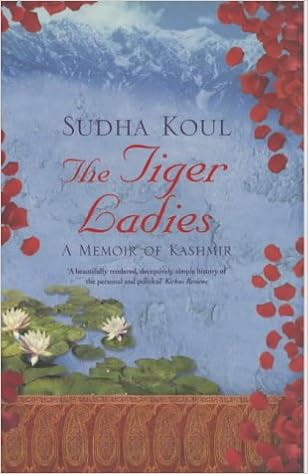
Koula, Sudha: 4.3, THE TIGER LADIES - this one is not crime fiction, but provides interesting historical detail about life in Kashmir.


Mukherjee, Abir: 4.4, A RISING MAN 
Calcutta, 1919. Captain Sam Wyndham, a former Scotland Yard detective new to India, is confronted with a highly charged case: a senior British official has been found murdered, in his mouth a note warning the British to quit India, or else...


Stoddart, Brian: 4.6, A MADRAS MIASMA
Madras in the 1920s. The British are slowly losing the grip on the subcontinent. The end of the colonial enterprise is in sight and the city on India's east coast is teeming with intrigue. A grisly murder takes place against the backdrop of political tension and Superintendent Le Fanu, a man of impeccable investigative methods, is called in to find out who killed a respectable young British girl and dumped her in a canal, her veins clogged with morphine. 

15 January 2017

Review: NO SHED OF EVIDENCE, Charles Todd ~ audio book

Synopsis (Audible.com)

In this absorbing new entry in the acclaimed New York Times best-selling series, Scotland Yard's Ian Rutledge is caught up in a twisted web of vengeance and murder.

On the north coast of Cornwall, an apparent act of mercy is repaid by an arrest for murder. Four young women have been accused of the crime. A shocked father calls in a favor at the Home Office. Scotland Yard is asked to review the case.

However, Inspector Ian Rutledge is not the first inspector to reach the village. Following in the shoes of a dead man, he is told the case is all but closed. Even as it takes an unexpected personal turn, Rutledge will require all his skill to deal with the incensed families of the accused, the grieving parents of the victim, and local police eager to see these four women sent to the infamous Bodmin Gaol. Then why hasn't the killing stopped?

With no shred of evidence to clear the accused, Rutledge must plunge deep into the darkest secrets of a wild, beautiful, and dangerous place if he is to find a killer who may - or may not - hold the key to their fate.

My Take

I have followed this series from the beginning, but have not read them all.

This story takes place in the early 1920s when 4 young women are accused of attempting to murder a young man in the river. Unfortunately he dies, and th charge become murder. Rutledge finds that he knows one of the accused, which does compromise him a little.

Memories of the war are still very raw, and some characters are physical reminders of what happened. 

Simon Prebble does a superb job of the reading.

In the second half of the book, the authors have decided to introduce a second plot. My guess is that they felt they didn't have enough leeway to bring the main plot to a satisfactory ending, but it does have the effect of diverting attention a bit, at the same time as providing explanation for some unresolved earlier events.

Hamish makes fewer "appearances", perhaps a sign that mentally Rutledge is mending.

My rating: 4.7

I've also read
A TEST OF WILLS -#1
SEARCH THE DARK -#3
4.8, A FEARSOME DOUBT -#6
A PALE HORSE -#10
4.5, A DUTY TO THE DEAD - Bess Crawford series
4.7, A LONELY DEATH -#13
4.6, THE CONFESSION - #14
4.7, HUNTING SHADOWS - #16

LinkWithin

Blog Widget by LinkWithin