Showing posts with label Scandinavian author. Show all posts

22 December 2010

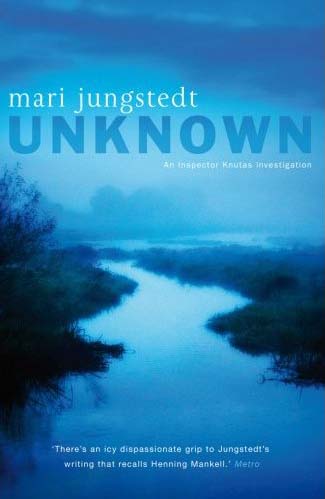
Review: UNKNOWN, Mari Jungstedt

This edition published by Corgi 2010
English translation by Tiina Nunnally 2010
ISBN 978-0-552-15889-3
430 pages
Originally published as THE INNER CIRCLE: A MYSTERY  (2008)
Originally written in Swedish.
Source: local library

Publisher's Blurb
It’s summer on Gotland and an international group of archaeology students are excavating an ancient Viking site. The camaraderie and holiday spirits of the group are shattered when one of their number, a Dutch student called Martina, disappears. Rumours abound about a secret relationship she was having with someone on the island, but is her disappearance simply a lover’s intrigue? When the body of a horse is discovered in a local farmer’s field, other rumours begin to circulate. The horse had been decapitated and the head has vanished. Why would someone take a dead horse’s head? As Inspector Knutas begins his investigation, echoes from Gotland’s Viking past begin to trouble his search. When Martina’s naked body is found hanging from a tree, with what look like ritualistic markings on her skin, there can be little further question. Someone is calling to the old Gods of Gotland. Martina has been killed according to the Viking ritual of the three-fold death, and the one thing the ritual points to is that more deaths will follow.

My take:
Note to self: put Gotland on my list of dangerous places never to be visited! (My list includes St. Mary Mead, and Midsomer and neighbouring villages - what does yours include?)

For a summer vacation spot, the small island of Gotland is very perilous. In this, the third in Mari Jungstedt's Anders Knutas series set on this island, the author continues strands begun in the earlier novels. For example, the story of journalist Johan Berg and Emma who have now progressed to having a baby.

The main story was well told and the elements came together quite well. The interaction between the police investigation led by Knutas and the press, represented by Berg, is a bit formulaic and predictable, with Berg releasing details ahead of when the police want to. I didn't come away feeling that I knew Knutas much better
though. There was a little humour with someone from Knutas's past joining the investigation team and insisting on calling him "Knutie". You could feel the thunder in the air!

Another aspect I found interesting is that when some of the interviews need to be conducted in English, Knutas has to use another team member to conduct the questioning, because his own English is inadequate. This adds to his level of frustration with the lack of progress in the investigation. As his own family go off to the mainland for their summer holidays and he has to stay behind Knutas becomes even more frustrated.

So, this is a good read, but make sure you read the earlier novels first to get the best out of the continuing stories.

My rating: 4.5

Other reviews:

My reviews of earlier novels:
UNSEEN
UNSPOKEN

Another novel in the series was published in English in 2010: THE KILLER'S ART.
See reviews at Crime Scraps, DJ'sKrimiblog, and International Noir Fiction

17 September 2010

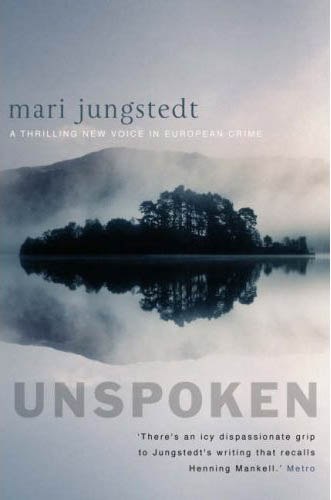
Review: UNSPOKEN, Mari Jungstedt

Corgi Books
Translated from the Swedish by Tiina Nunnally 2007
(completed in Swedish 2004)
ISBN 978-0-552-15613-4
366 pages

Publishers Blurb:
It is winter on Gotland, and fourteen-year-old Fanny is missing. She had no friends to speak of other than the horses she took care of at the local racing stable, and seems to have been an unhappy and isolated teenager, the daughter of an absent Jamaican musician and an instable Swedish mother. Is her disappearance somehow connected to the recent brutal murder of alcoholic photographer Henry Dahlström, who had won a large sum of money at the racetrack right before his death? Inspector Anders Knutas and his team investigate under pressure from the media.

#2 in Jungstedt's Anders Knutas series is at once a Swedish police procedural set on the island of Gotland, as was the first in the series UNSEEN, and at the same time an exploration of how little people often know about each other, even in situations when they should. It is a book I've had on my mental list for some time.

UNSPOKEN is a clever interweaving of three stories: firstly the disappearance of Henry Dahlstrom whose friends know almost nothing about him, and whose wife and daughter have long rejected.  As is often the case it seems in modern murder mysteries Dahlstrom has sources of income that those closest to him knew nothing about.
Fanny Jannsom was not yet fifteen and yet already her mother was assuming that she could be left alone overnight or even for weekends. Again, here is a person with no real friends, and with a secret life well hidden from view. but it is a life that Fanny really wanted to be rescued from.

The third element was one that I had not expected. Reporter Johan Berg had a significant role in UNSEEN, and he became entangled with Emma, a friend of one of the victims. The continuing relationship between the two provides an interesting backdrop to the police investigation in UNSPOKEN, while Johan is constantly prompting Knutas for results.

Jungstedt's is a lighter, almost uncomplicated style when you compare it to other Swedish writers like Henning Mankell and Nesbo, whose novels seem much darker. That isn't to say that Jungstedt isn't dealing with dark situations. I am tempted to compare it with Helene Tursten's particularly in the treatment of the domestic life of the central police character.

My rating: 4.5

Other Reviews to check:
  • Maxine Clarke thought it was a great read. Her review is on Euro Crime.
  • UNSPOKEN sent Crime Scraps off on a search for the 3rd in the series: UNKNOWN
  • Scandinavian Books:  "a book with crisp prose, steady suspense, and flesh-and-blood characters".
Mari Jungstedt (1952 - ) is a Swedish journalist and popular crime fiction author.

Jungstedt worked as a reporter on Swedish national public radio and television, and is still an occasional presenter on TV4's daily talk show Förkväll.

Her first three novels are set on the island of Gotland and feature Detective Superintendant Anders Knutas and the journalist Johan Berg. Two of her novels were filmed for Swedish TV, and her work has been translated into English by Tiina Nunnally.

Mari Jungstedt lives in Nacka, near Stockholm. Her husband comes from Visby, Gotland, and during the summer they stay on Gotland. 

    30 May 2009

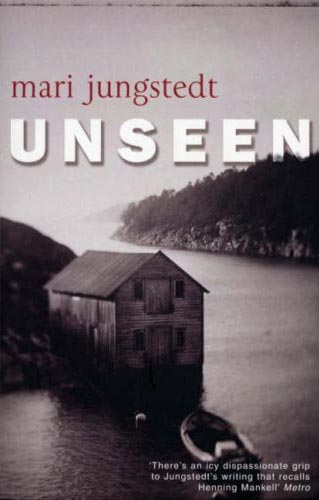
    Review: UNSEEN, Mari Jungstedt

    translated from the Swedish by Tiina Nunnally 2005, Doubleday Press 2007, originally published 2003, ISBN 978-0-61119-0, 244 pages.

    Gotland is an island off the coast of Sweden that blooms with summer visitors. It is a sought-after holiday destination with cabins, holiday shacks, and a few permanent residents. Visitors come by ferry from Stockholm for weekend getaways and short holidays. It is the sort of place the young generally leave to find work.

    Summer is just beginning when Helena, Per and their friends gather in the limestone cottage for a Whitsun weekend holiday. Helena has brought together people they haven't seen for a while, but unfortunately Per's jealousy destroys the evening. Within a matter of hours Helena is dead, killed in the nearby sand dunes by an axe wielding murderer.

    At first Per is the obvious suspect, but there are a couple of other possibilities among the guests. Within days there is a second murder, a woman of similar age, same "calling card."

    The investigation is handled by Inspector Anders Knutas and his team fromVisby, while an investigative journalist, Johan Berg, from Stockholm conducts a parallel inquiry, which seems at times more successful than the police one. Knutas is a methodical investigator, but there are tensions in his team, and he is under pressure to find the murderer before it impacts on Gotland's fragile tourist industry. On the other hand, Berg's mind is not always on the job as he falls in love with a woman linked to the case, but he seems to be able to get people to open up to him in a way that the police can't.

    It is Emma, Helena's best friend, one of the guests at the Whitsun weekend, who eventually realises what connects the murders, by then numbering 3, and then the tension really builds.

    This was an excellent read. Apart from the murder mystery aspect, it is really a story about relationships on a number of levels, and a tale that points out how our actions from our days of innocence can reach out into the present.

    My rating: 4.7

    Read the first chapter online

    Other reviews:
    UNSEEN was Mari Jungstedt's debut novel, and the first in a series set on the island of Gotland.
    Euro Crime lists 3 books in the series
    Unseen20061
    Unspoken20072
    The Inner Circle (apa Unknown)20083
    and I look forward to tracking the other two down.

    17 March 2009

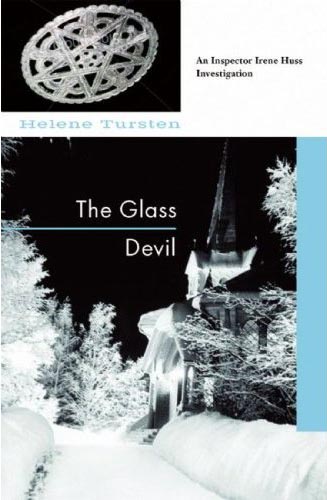
    Review: THE GLASS DEVIL, Helene Tursten

    Soho Press, ISBN 978-1-56947-489-1, 2003
    Translated from Swedish in 2009 by Katarina E. Tucker, 2007, 311 pages.

    Pillars of the community in a remote Swedish village, a pastor and his wife and their son, a teacher, are shot dead one night. The pastor has recently been investigating Satanism in his village, and all the signs are indicating that this may be a cult killing. It seems likely that the remaining member of the pastor's family, a daughter in London, may be in some danger and so the investigation takes Detective Inspector Irene Huss from Goteborg to England. When interviewing the daughter becomes difficult Irene feels that the Satanist clues are not really pointing to the answer. There are also suspects in the village, even amongst those who will take over from the pastor.

    This is the third of Helene Tursten's Swedish police procedurals to be translated into English, and it will be a great pity if there are no more, which I believe at present may be the case. I believe there are another 5 Irene Huss novels not yet translated into English.

    I don't think THE GLASS DEVIL is the strongest of the three we have seen so far. I'm not sure either about the opening Prologue and just how some of that fits in with the main story. There are patches that read a bit like a travelogue when Irene goes to London, but Irene Huss is such a strong, likeable character, that I do want to meet her again. However I do like the way Tursten weaves elements of 'ordinary' policing and family life into the plot. I also like the gruff and down to earth character of her boss Criminal Superintendent Sven Andersson.

    My rating: 4.1
    See review by Maxine Clarke for EuroCrime

    My other reviews of Tursten novels:

    THE TORSO
    Translated from Swedish in 2006. The story begins with the gruesome discovery of part of a human torso in a black plastic bag on a shoreline near Goteborg. Detective Inspector Irene Huss, whose superintendent suspects she is a magnet for killings, is one of the team called in to investigate. When they learn of a similar torso turning up 2 years earlier in Copenhagen, Irene is sent to liaise with the Copenhagen police. Her investigations reveal strong connections between communities in Sweden and Denmark. As people she visits seem to die shortly afterwards, it certainly appears her superintendent's joke has at least a grain of truth. Irene herself is targetted by someone who does not want the connections fully revealed. Some detailed descriptions will not suit the squeamish. Irene Huss is strong, level-headed, intuitive, highly principled, but sometimes fallible.

    My rating 4.6

    DETECTIVE INSPECTOR HUSS
    The first in the Irene Huss series. Originally titled in Swedish "The Broken Tang Horse". The Vicious Crimes Unit that Irene Huss is part of are investigating the death of a wealthy businessman who fell over 20 metres from the balcony of this apartment to the footpath below just as his wife and son arrived home and were getting out of their car.
    The business man, Richard von Knecht, has recently celebrated his 60th birthday, and he and his wife Sylvia their 30th wedding anniversary. The building they live in is a fortress with their apartment on the top two floors and old friends living in apartments on other floors. Is it suicide? The day after his death, the building where his office was housed burns down, the result of an incendiary bomb, and Irene's Vicious Crimes Unit is investigating the connections. The book 'establishes' the character of Irene Huss: her physical endurance, her martial arts prowess, her family life, her chef/cook husband, teenage daughters, intuitive powers etc. There is an exploration of what it is that makes their 'team' work - the diversity of personalities and talents.
    Translated into English by Steven T. Murray 2003. I read this after I had read a later book THE TORSO. I would recommend reading them in order.

    My rating: 4.4

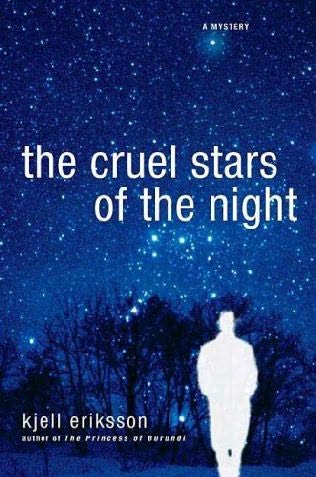
    Review: THE CRUEL STARS OF THE NIGHT, kjell eriksson

    ST. MARTIN'S MINOTAUR, 2008, ISBN 979-0-312-36668-1, 312 pages
    Translated from Swedish by Ebba Segerberg

    An elderly professor has disappeared without trace from his home in Uppsala. And then two other seventy year olds are found dead. The first appears to have been planning suicide but some one beat him to it. Three missing or dead seventy year old men just feels a little too coincidental to Ann Lindell working with the Violent Crimes Squad of the Uppsala Police. As the team begin to look for a serial killer, they try to work out who the next victim will be. Will it be Queen Silvia due to visit the town in just a few days?

    Interwoven in the investigation is the arrival of a new member in the team, and Ann Lindell's own struggle to prove that she can manage to be both a vital member of the team, and also a single mother. The problem is that Ann Lindell is not always a team player, she doesn't keep everyone informed of what she is doing or where she is, and often turns her phone off when she needs thinking time.

    THE CRUEL STARS OF THE NIGHT has a couple of intriguing sub-plots that add dimension to the main characters and intensify the main action. A good solid read.

    My rating: 4.0

    There are 3 books in the Ann Lindell series:
    1. The Princess of Burundi (2006)
    2. The Cruel Stars of the Night (2007)
    3. The Demon from Dakar (2008)

    Review on EuroCrime of The Princess of Burundi by Maxine Clarke
    Review on EuroCrime of The Cruel Stars of the Night by Karen Meek

    29 October 2008

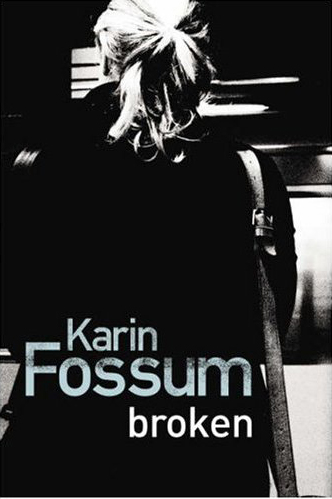
    Review: BROKEN, Karin Fossum

    Harvill Secker, 2008, ISBN 978-1-846-55061-4, 264 pages.
    Translated from the Norwegian by Charlotte Barslund.
    Published in Norwegian in 2006

    The author sits at her desk staring out at the long queue of people waiting on the drive outside her house. They stand there in the shadows, waiting to become characters in her book, for their stories to be told. That night, while she sleeps, one of the characters jumps the queue, enters her house, and sits in the chair by her bed.

    The author agrees to tell his story next. She gives him a name, and begins to tell his story. But the reader knows Alvar has no story until the author creates it. Alvar Eide is forty-two years old, a bachelor, who works in an art gallery. His father had lived to only fifty-three and Alvar imagines that he himself has only eleven years to live. Alvar is a little old-fashioned both in his attitudes and his appearance about which he is fastidious. He doesn't relate to people very well, which is why he doesn't know how to handle the young girl, a homeless drug addict who works out how to get him to give her money. She steals a door key from him so she can let herself in and out of his house whenever she wants to.

    The novel is told on two levels. Alvar visits the author whenever he feels that he isn't coping, or when he doesn't feel she is carrying out her part of their relationship properly. Ultimately the author is the one who has control over what happens to Alvar. She says early on that she is not god, but in terms of Alvar's life she is. Alvar knows that the author's computer is full of drafts, of stories lying incomplete and he is frightened that she will forget about him. She on the other hand creates situations that will test Alvar and some of these tests he fails miserably.

    In BROKEN Karin Fossum plays with the reader's mind. We wonder how much free will Alvar really has. The idea that he is a fiction of the author's creation is a challenging one, even though we know it to be true. Fossum dabbles in metaphysics, with the very nature of Alvar's existence. We know that authors create their characters, but how real are they to the author who created them? The author and Alvar even discuss the methods by which he might die. We see some of the dilemmas that an author faces in bringing a novel to publication, how she lives and breathes through the characters that she creates, how they take on a life of their own.

    For those who have enjoyed Fossum's Inspector Sejer series, this stand-alone is very different. Although someone does die, some would not label it crime fiction. For that reason some Sejer fans will be disappointed. For my part, I prefer the Sejer series. BROKEN made me feel as if I was performing mental gymnastics.

    My rating: 4.3

    The Inspector Sejer novels from the Norwegian "Queen of Crime" are
    1. Don't Look Back (2002)
    2. He Who Fears the Wolf (2003)
    3. When the Devil Holds the Candle (2004)
    4. Calling Out For You (2005)
    aka The Indian Bride
    5. Black Seconds (2007)

    Probably because of the connection established between the author and the characters of the story, BROKEN reminded me of a book I read years ago: THE ATHENIAN MURDERS by Jose Carlos Somoza.
    The synopsis below is courtesy of Fantastic Fiction.
    In ancient Athens, one of the pupils of Plato's Academy is found dead. His idealistic teacher Diagoras is convinced the pupil's death is not as accidental as it appears, and asks the famous Heracles Pontor, the "Decipherer of Enigmas," to investigate. As the death toll rises, the two men find themselves drawn into the dangerous underworld of the Athenian aristocracy, risking their own lives to solve the riddle of these young men's deaths. Simultaneously, a second plot unfolds: that of the modern-day translator of the ancient text, who, as he proceeds with his work, becomes convinced that the original author has hidden a second meaning in the text, one that can be interpreted through certain repeated words and images. As the story advances, however, the translator is alarmed to discover references to himself, which seem to address him personally in an increasingly menacing fashion.

    LinkWithin

    Blog Widget by LinkWithin