Showing posts with label Georges Simenon. Show all posts

29 May 2026

Review: MAIGRET IN VICHY, Georges Simenon

  • this edition from my local library
  • first published 1968,
  • this edition published by Penguin Random House UK Classics 2025
  • translated by Ros Schwartz 2019 
  • ISBN 978-0-241-78818-9
  • 171 pages

Synopsis (publisher)

Inspector Maigret and his wife take a much-needed rest cure in the spa town of Vichy, where they quickly become used to the leisurely pace of life. But when a woman who they regularly pass by on their daily strolls is murdered, Maigret can't help but offer his assistance to the local investigation – no matter where it leads.

My Take

Maigret and his wife have slipped into a quiet routine in Vichy, taking the waters and walking for hours every day.  Maigret isn't really ill, just tired. On the recommendation of his doctor, they will be in Vichy for 3 weeks, taking the cure. They take delight in observing others who are doing the same.

And then a woman they see regularly is murdered. The detective in charge of the investigation is someone Maigret trained and he jumps at the chance to participate although he delights in not being in charge. He wants to know the woman's background and is even more curious when he meets her sister. The tale he eventually uncovers is a sordid one indeed: one of great duplicity. 

My rating: 4.5

I've also read

  • 4.4, MAIGRET & the MAN on the BOULEVARD
  • 4.5, MAIGRET & THE HEADLESS CORPSE
  • 4.3, PIETR THE LATVIAN
  • THE LATE MONSIEUR GALLET
  • 4.4, THE RULES OF THE GAME
  • 4.2, THE MAN WHO WATCHED THE TRAINS GO BY
  • 4.3, THE CARTER OF LA PROVIDENCE
  • 4.3, LOCK NO 1. Maigret #18
  • 4.0, MAIGRET IN NEW YORK
  • 4.2, A MAN'S HEAD 
  • 4.4, THE CAT 
  • 4.4, THE TRAIN 
  • 4.5, THE LITTLE MAN FROM ARCHANGEL 
  • 23 May 2026

    Review: THE LITTLE MAN FROM ARCHANGEL, Georges Simenon

    • this edition from my local library
    • first published 1956
    • translated from French 2021 by Sian Reynolds
    • ISBN 978-0-241-48706-8
    • 186 pages

    Synopsis (publisher)

    The poignant story of an outsider falsely accused of murder from the celebrated author of the Maigret series

    She was beautiful, full of vitality, and he was sixteen years older, a dusty, lonely bookseller whose only passion in life was collecting stamps.

    Jonas is used to his young wife disappearing. Everyone in the town knows that she goes off with other men. This time, however, he tells a small lie to protect her, saying she is visiting a school friend. It is a lie, however, that eats into him like an illness, provoking hostility and resentment against this timid little Russian-Jewish bookseller, who always thought he had been accepted. As suspicion mounts, his true, terrifying isolation is revealed. 

    My Take

    Jonas had always thought of them as friends, but this time when his young wife disappears, the villagers turn on him. His background is that he is a Russian-Jew, whose family fled the Revolution, and he had almost forgotten that and thought they had too. But when young Gina leaves him they remember everything that makes him different and he becomes an outsider.

    This is a sad story for there is no way back for Jonas as Simenon explores his final path. 

    I read this to discuss with my U3A Crime Fiction Reading Group. Our focus this month is Georges Simenon. 

    My rating: 4.5 

    I've also read

  • 4.4, MAIGRET & the MAN on the BOULEVARD
  • 4.5, MAIGRET & THE HEADLESS CORPSE
  • 4.3, PIETR THE LATVIAN
  • THE LATE MONSIEUR GALLET
  • 4.4, THE RULES OF THE GAME
  • 4.2, THE MAN WHO WATCHED THE TRAINS GO BY
  • 4.3, THE CARTER OF LA PROVIDENCE
  • 4.3, LOCK NO 1. Maigret #18
  • 4.0, MAIGRET IN NEW YORK
  • 4.2, A MAN'S HEAD 
  • 4.4, THE CAT 
  • 4.4, THE TRAIN 
  • 21 May 2026

    Review: THE TRAIN, Georges Simenon

    • Read as an e-book on Libby per my local library
    • first published in 1961
    • e-Publisher ‏ : ‎ Melville House Publishing, Publication date ‏ : ‎ 6 October 2011
    • Print length ‏ : ‎ 154 pages
    • ISBN-10 ‏ : ‎ 1935554468
    • ISBN-13 ‏ : ‎ 978-1935554462

    Synopsis (AmazonAU)

    Against all expectations Marcel Féron has made a “normal” life in a bucolic French suburb in the Ardennes. But on May 10, 1940, as Nazi tanks approach, this timid, happy man must abandon his home and confront the “Fate” that he has secretly awaited. 

    Separated from his pregnant wife and young daughter in the chaos of flight, he joins a freight car of refugees hurtling southward ahead of the pursuing invaders. There, he meets Anna, a sad-looking, dark- haired girl, whose accent is “neither Belgian nor German,” and who “seemed foreign to everything around her.” As the mystery of Anna’s identity is gradually revealed, Marcel leaps from the heights of an exhilarating freedom to the depths of a terrifying responsibility—one that will lead him to a blood-chilling choice. 

    My Take

    Marcel Feron has poor eyesight, and has had tuberculosis, so he is not required for war service. He is married, his wife is heavily pregnant and they have a 5 year old daughter. As the German tanks approach the French village where he lives, he and his neighbours flee to the local railway station with no idea where the evacuation trains will take them or what the future holds for them.  When they board a train the women and children are put at the front in the first class carriages and the men are allocated to the rear carriages, which are mainly cattle trucks. The train meanders through France and Belgium and eventually is separated into two sections and Marcel has no idea where his wife and daughter have gone.

    However a young woman and he pair up in the rear carriages and become an "item" in ways that Marcel could not have envisaged when his journey began.  

    This is really a novella although the story is "complete". It explores what happened during the evacuations at the beginning of World War II, the uncertainty that civilians felt, and the way people behaved once they were "released" from their normal lives. At one stage German planes strafe the railway lines and stations and some civilians are killed. Marcel will survive this episode of his life, and indeed locate his wife and child, and resume his life in the Ardennes. For those of us who have only ever read about the impact of war, this is a rare glimpse of "there but for the Grace of God ...."

    I have read this for my U3A Crime Fiction Reading group where our author this month is Georges Simenon. 

    My rating: 4.4

    I have also read

  • 4.4, MAIGRET & the MAN on the BOULEVARD
  • 4.5, MAIGRET & THE HEADLESS CORPSE
  • 4.3, PIETR THE LATVIAN
  • THE LATE MONSIEUR GALLET
  • 4.4, THE RULES OF THE GAME
  • 4.2, THE MAN WHO WATCHED THE TRAINS GO BY
  • 4.3, THE CARTER OF LA PROVIDENCE
  • 4.3, LOCK NO 1. Maigret #18
  • 4.0, MAIGRET IN NEW YORK
  • 4.2, A MAN'S HEAD
  •  4.4, THE CAT 
  • 2 January 2026

    Review: THE CAT, Georges Simenon

    • This edition read as an e-book on Kindle (Amazon)
    • ASIN ‏ : ‎ B0F1R19JDK
    • Publisher ‏ : ‎ Penguin, Publication date ‏ : ‎ November 6, 2025 
    • Originally published 1967
    • Print length ‏ : ‎ 154 pages
    • ISBN-13 ‏ : ‎ 978-1802068962 
    • translated by Ros Schwartz 

    Synopsis (Amazon)

    An acerbic tale of marital warfare and emotional estrangement, in a brilliant new translation

    In the oppressive silence of the sitting room, the woman finally smoothed out the paper and, without putting on her glasses, read the two words her husband had written:

    The cat.

    Amidst the din of their Parisian neighbourhood, Émile and Marguerite live in total silence. After a hasty marriage in their sixties, their uneasy peace was shattered when Émile’s beloved cat mysteriously disappeared and was later found dead. Branding his wife the culprit, Émile’s retaliation against Marguerite’s cherished parrot sparked a silent battle of wills. Now they live parallel lives, communicating only through spiteful notes, mocking glances and mute accusations. As their suspicion and resentment mount, this bitter game of psychological warfare becomes a twisted necessity, binding them together in a relentless cycle of torment from which there can only be one escape.

    First published in 1967, The Cat is a masterful exploration of marital discord, loneliness and the absurdity of human relationships, painting a vivid portrait of two souls trapped in quiet desperation. 

    My Take

    A novella or a long short story rather than a full length novel, this explores loneliness and incompatibility within a marriage that both partners have come to too late. The marriage appears to come to grief over the poisoning of Émile’s beloved cat but in fact it was doomed long before that. Simenon makes the reader feel how loveless the marriage is. There are just too many other obstacles. 

    I've read this as Simenon is one of the authors our U3A Crime Fiction Reading group is exploring in 2026. 

    My rating: 4.4

    I've also read

    18 December 2017

    Review: A MAIGRET CHRISTMAS, Georges Simeon

    • format: Kindle (Amazon)
    • File Size: 4021 KB
    • Print Length: 214 pages
    • Publisher: Penguin; 01 edition (November 2, 2017)
    • Publication Date: November 2, 2017
    • Sold by: PEN UK
    • Language: English
    • ASIN: B073XXGDJ3

    Synopsis (Amazon)

    It is Christmas in Paris, but beneath the sparkling lights and glittering decorations lie sinister deeds and dark secrets...

    This collection brings together three of Simenon's most enjoyable Christmas tales, newly translated, featuring Inspector Maigret and other characters from the Maigret novels. In 'A Maigret Christmas', the Inspector receives two unexpected visitors on Christmas Day, who lead him on the trail of a mysterious intruder dressed in red and white.

    In 'Seven Small Crosses in a Notebook', the sound of alarms over Paris send the police on a cat and mouse chase across the city.

    And 'The Little Restaurant in Les Ternes (A Christmas Story for Grown-Ups)' tells of a cynical woman who is moved to an unexpected act of festive charity in a nightclub - one that surprises even her...

    My Take

    Maigret and Madame Maigret become very aware of the fact that they don't have children every Christmas. Maigret tries to avoid reminding her of the fact by following a ritual on Christmas morning. However in the first story Madame Maigret becomes very involved in the case of a bedridden child who lives near them and wakes to find Father Christmas in her bedroom early on Christmas morning, seemingly making a hole in her bedroom floor.

    Seven Small Crosses is set on Christmas Eve in a police control room that monitors events occurring in the various arrondissements. In particular they are waiting for a murder to strike for the 9th time. This story does not feature Maigret himself, but a couple of his colleagues.

    The third story does not feature Maigret either. A man walks into a bar on Christmas Eve and shoots himself dead without warning.

    This e-book contains a bonus short story in which Maigret is taking an enforced three week holiday and decides to spend it at home.  The discovery of a body at a nearby doctor’s surgery provides interest in what he sees as an interminable stretch of boredom.

    These stories have apparently been extracted from a longer collection of nine stories, and the first three are quite long.
    They are carefully written, characterised by Simenon’s usual economy of expression, and very enjoyable to read.

    My rating: 4.4

    I've also read
    4.4, MAIGRET & the MAN on the BOULEVARD
    4.5, MAIGRET & THE HEADLESS CORPSE
    4.3, PIETR THE LATVIAN
    THE LATE MONSIEUR GALLET
    4.4, THE RULES OF THE GAME
    4.2, THE MAN WHO WATCHED THE TRAINS GO BY
    4.3, THE CARTER OF LA PROVIDENCE
    4.3, LOCK NO 1. Maigret #18
    4.0, MAIGRET IN NEW YORK
    4.2, A MAN'S HEAD 

    26 November 2017

    Review: A MAN'S HEAD, Georges Simenon - audio book

    • source: audible.com
    • Maigret #5
    • translated by , Frank Wynne
    • Narrated by: Gareth Armstrong
    • Length: 3 hrs and 43 mins
    • Unabridged
    • Release date: 07-25-14
    • Language: English 
    • originally published 1931
    Synopsis (audible.com)


    Slowly the Czech was becoming animated, but in a muted way, so typical of the man. Maigret now noticed his hands, which were long, surprisingly white, and dotted with freckles. They seemed to reach out and take part in the conversation. 'Let's be clear that it's not your professionalism which I question. If you understand nothing, and I mean absolutely nothing, it's because from the very start you've been working with facts which had been falsified.'
     
    Set in the in the atmospheric and squalid streets of Paris, Maigret sets out to prove the innocence of a man condemned to death for a brutal murder. In another one of Maigret's unconventional and audacious plans, he arranges the escape of the condemned man in an attempt to prove his theory. The presumed murderer goes on the run across Paris and its suburbs, dropping misleading clues along the way and leading Maigret into the labyrinthine twists of the mystery. Maigret is in for more than he bargained for, as he encounters rich American expatriates, dangerous foreigners and their hidden motives. 

    My Take

    Maigret puts his career on the line when he arranges the escape from prison of a convicted murderer on the night before his execution. The prisoner has been not able to tell the authorities anything other than protest his innocence. Maigret is hoping he will lead them to the real murderer.

    But it is one thing finding the possible murderer and quite another to get him to confess, or to discover why the murder was committed.

    My rating: 4.2


    I've also reviewed
    4.4, MAIGRET & the MAN on the BOULEVARD
    4.5, MAIGRET & THE HEADLESS CORPSE
    4.3, PIETR THE LATVIAN
    THE LATE MONSIEUR GALLET
    4.4, THE RULES OF THE GAME
    4.2, THE MAN WHO WATCHED THE TRAINS GO BY
    4.3, THE CARTER OF LA PROVIDENCE
    4.3, LOCK NO 1. Maigret #18
    4.0, MAIGRET IN NEW YORK

    24 March 2016

    Review: MAIGRET IN NEW YORK, Georges Simenon

    • format: Kindle (Amazon)
    • File Size: 756 KB
    • Print Length: 192 pages
    • Publisher: Penguin; Reprint edition (January 7, 2016)
      Originally published 1947
    • Publication Date: January 7, 2016
    • Sold by: Amazon Digital Services LLC
    • Language: English
    • ASIN: B015X4XSAG
    • alternative title: MAIGRET GETS ANGRY
    • This edition translated by Linda Coverdale
    Synopsis (Amazon)

    Maigret's first impressions of the USA colour this sparkling new translation, book twenty-seven of the new Penguin Maigret series.

    What was it about him that had struck Maigret so forcefully? . . . Little John had cold eyes! . . . Four or five times in his life, he had met people with cold eyes, those eyes that can stare at you without establishing any human contact.

    Persuaded to sail to New York by a fearful young law student, Maigret finds himself drawn into the city's underworld, and a wealthy businessman's closely guarded past.
    Penguin is publishing the entire series of Maigret novels in new translations.

    My Take

    Maigret has retired to the Loire Valley but his services are still in demand. A young man is brought to see him by an elderly lawyer. Jean Maura is a law student whose father John Maura is an American millionaire living in New York.  Jean has become concerned that his father's life is in danger and he wants Maigret to accompany him to New York. They embark 10 days later.

    What follows is a strange investigation, made stranger by Jean Maura's disappearance from  the boat when they arrive in New York. Maigret is frustrated in attempts to find him but arrival formalities and continues to the hotel without him. He has some difficulty in getting to see John Maura and is amazed at the father's seeming lack of concern at his son's disappearance.

    Maigret finds that his English is not really adequate for the simplest of tasks and he calls up a French-speaking NYPD detective whom he met years before through an investigation in Paris. O'Brien provides his assistance and Maigret manages to piece together John Maura's history and eventually works out what is happening.

    Simenon obviously wanted to write a novel about New York - he had recently arrived in 1947 - incorporating his own experiences and impressions, but also including comment on the influence of the Sicilian Mafia in economic affairs. There are some very strange characters in this novel, and from this distance some not-quite-believable plot lines.

    I read this book for my participation in Crimes of the Century, on Rich Westwood’s Past Offences for 1947.  Make a stop over at Past Offences to read the suggestions of other participants.

    My rating: 4.0

    See a review at A Crime is Afoot.

    I've also read
    4.4, MAIGRET & the MAN on the BOULEVARD
    4.5, MAIGRET & THE HEADLESS CORPSE
    4.3, PIETR THE LATVIAN
    THE LATE MONSIEUR GALLET
    4.4, THE RULES OF THE GAME
    4.2, THE MAN WHO WATCHED THE TRAINS GO BY
    4.3, THE CARTER OF LA PROVIDENCE
    4.3, LOCK NO 1. Maigret #18

    11 February 2016

    Review: LOCK NO. 1: Inspector Maigret #18

    • Vformat: Kindle (Amazon)
    • File Size: 646 KB
    • Print Length: 176 pages
    • Publisher: Penguin; Tra edition (April 2, 2015)
    • Publication Date: April 2, 2015
      originally published 1933
    • Sold by: Amazon Digital Services LLC
    • Language: English
    • ASIN: B00OZ4XGGM
    • #18 in the Maigret series
    Synopsis (Amazon)

    A new translation of Georges Simenon's novel set in claustraphobic provincial town, book eighteen in the new Penguin Maigret series.

    Cars drove past along with the trucks and trams, but by now Maigret had realised that they were not important. Whatever roared by like this along the road was not part of the landscape. ... What really counted was the lock, the hooting of the tugs, the stone crusher, the barges and the cranes, the two pilots' bars and especially the tall house where he could make out Ducrau's red chair framed by a window.

    Penguin is publishing the entire series of Maigret novels in new translations. This novel has been published in a previous translation as The Lock at Charenton.

    My take

    Maigret is called to investigate what has happened in this small provincial town on the outskirts of Paris. Somebody has apparently attempted to murder Ducrau, a local businessman whose business concerns are the basis of the town's economy. He has been stabbed in the back and then tossed into the canal. By chance he is rescued and seems little the worse for wear but Maigret senses that events have not run their course, so he hangs around.

    Indeed Ducrau's son then commits suicide and a lock keeper is murdered, so there is a case to sort out.

    Maigret has applied for and been granted early retirement (that came as a surprise to me as this is relatively early on in the series), so this will very likely be his last case. He doesn't particularly want to return home as Mrs Maigret has been packing up the house, even the bed, and they are moving to a cottage on the River Loire. Ducrau thinks he sees a kindred spirit in Maigret and offers him a job on his retirement, more or less as a security officer. But Ducrau is not a nice man and Maigret can't see himself working for him. In fact he is looking forward to his retirement, he thinks.

    This is quite a heavy, dark feeling, novel. While Ducrau runs his businesses in a very hands-on way, and is well known, he is far from popular. His family and servants live in fear of him, and many people have reason to wish him harm. This is a fairly "typical" Maigret novel, with lots of psychological overtones.

    My rating: 4.3

    I've also read
    4.4, MAIGRET & the MAN on the BOULEVARD
    4.5, MAIGRET & THE HEADLESS CORPSE
    4.3, PIETR THE LATVIAN
    THE LATE MONSIEUR GALLET
    4.4, THE RULES OF THE GAME
    4.2, THE MAN WHO WATCHED THE TRAINS GO BY
    4.3, THE CARTER OF LA PROVIDENCE

    16 March 2015

    Review: THE CARTER OF LA PROVIDENCE, Georges Simenon

    • File Size: 406 KB
    • Print Length: 160 pages
    • Publisher: Penguin (February 6, 2014)
      Originally published 1931
    • Sold by: Amazon Digital Services, Inc.
    • Language: English
    • ISBN-10: 0141393467
    • ISBN-13: 978-0141393469
    • ASIN: B00GPBQTBC
    • #4 in the Maigret series 
    • Translated by David Coward
    • Also published as LOCK 14
    Synopsis (Amazon)

    What was the woman doing here? In a stable, wearing pearl earrings, her stylish bracelet and white buckskin shoes! She must have been alive when she got there because the crime had been committed after ten in the evening.

    But how? And why? And no one had heard a thing! She had not screamed. The two carters had not woken up.

    Inspector Maigret is standing in the pouring rain by a canal. A well-dressed woman, Mary Lampson, has been found strangled in a stable nearby. Why did her glamorous, hedonistic life come to such a brutal end here? Surely her taciturn husband Sir Walter knows - or maybe the answers lie with the crew of the barge La Providence.

    My Take

    This novel was one of a number that Simenon wrote after spending 6 months on French canals in 1928.
    In the setting he captures a life style now long gone, when the canal boats and barges played an important role in transporting goods to the major ports in France.

    It also captures the rural isolation of many of the towns that the canals connected: the first murder scene is along a tow path, several kilometres from the nearest major town. Maigret has to walk there, and then manages to acquire a bicycle which he uses to travel up to 70 kilometres a day. Most of the boats are horsedrawn, with the horses stabled on the boats themselves. The days are long, beginning well before dawn, and finishing only at sunset. At one lock there are more than 60 barges waiting to go through. There's a glimpse too of the future, with motorised pleasure boats, taking preference over working boats at the locks.

    The murderer in this story was convicted nearly thirty years before, of the murder of his aunt, and paid the penalty with transportation to French Guiana. There he shook off his former identity, and returned to France to a new life as a labourer. A chance meeting at a junction of canals leads to another murder. Maigret's intuition puts scattered bits of evidence together.

    My rating: 4.3

    I've also reviewed
    4.4, MAIGRET & the MAN on the BOULEVARD
    4.5, MAIGRET & THE HEADLESS CORPSE
    4.3, PIETR THE LATVIAN
    THE LATE MONSIEUR GALLET
    4.4, THE RULES OF THE GAME
    4.2, THE MAN WHO WATCHED THE TRAINS GO BY

    9 January 2015

    Review: THE MAN WHO WATCHED THE TRAINS GO BY, Georges Simenon

    • first published in French 1938
    • this edition published by Penguin as a Red Classic 2006
    • translated by Stuart Gilbert with revisions by David Watson
    • ISBN 0-141-02587-5
    • 211 pages
    • source: my local library
    • #7 from Simenon
    Synopsis (Amazon)

    Of Simenon's many novels, certain titles stand out as classics. This terrifying reconstruction of a madman's mind is one of them.

    Known in the little Dutch town of Groningen as a respectable family man, Kees Popinga is the managing clerk of a reputed shipping firm. But when the company collapses under dubious circumstances just before Christmas, taking all his money with it, something snaps in Popinga's mind. From the shell of this model citizen emerges a calculating paranoiac, capable of random acts of violence - even murder. The fugitive Popinga makes his way to Paris, playing a bizarre game of cat and mouse with the police - determined to force a hostile world to recognize his newfound criminal genius ...


    In The Man Who Watched the Trains Go By, Simenon created a compelling portrait of a man pushed too far, vividly reconstructing the effect on a mind in the spiralling grip of madness.

    My Take

    THE MAN WHO WATCHED THE TRAINS GO BY is one of Simenon's "psychological novels". At first Kees Popinga seems absolutely normal but something snaps when he finds out that his boss is going to fake suicide and that the company he works for is going under, taking his life savings with it. It now seems that he has worked all his life for nothing and he feels released to explore his "other self". There have been signs of mental inbalance that have emerged before, but they have been kept tightly reined in by other people's expectations, and Popinga's own concepts of right and wrong.

    Now the inhibitions have gone and he deserts his family and takes himself to Amsterdam to visit a woman of ill-repute, Pamela, who dies as a result of his visit. From there Popinga goes to Paris where he becomes involved in a car heist and is constantly preoccupied with reports about himself in the newspapers.

    This is not a Maigret novel although the policeman in charge of looking for Popinga is Superintendent Lucas who of course in the Maigret novels is Maigret's lieutenant. Popinga wants newspaper readers to have an accurate version of his achievements and so he writes to newspaper editors and then to Lucas himself to correct details that he thinks have been inaccurately reported. He is insulted when a French professor of psychiatry says he is paranoic, although he is not quite sure what that means.

    As the plot progresses Popinga becomes increasingly detached from normality, not really understanding the hole he is digging for himself.

    My Rating: 4.2

    About the film:
    The Man Who Watched Trains Go By (1952) is a crime drama film, released in the United Kingdom with an all-European cast, including Claude Rains in the lead role. Rains plays the role of Kees Popinga, who is infatuated with Michele Rozier (Märta Torén). The film was released in the United States in 1953 under the title The Paris Express. It was directed by Harold French and based on the novel by Georges Simenon.

    I've also reviewed
    4.4, MAIGRET & the MAN on the BOULEVARD
    4.5, MAIGRET & THE HEADLESS CORPSE
    4.3, PIETR THE LATVIAN
    THE LATE MONSIEUR GALLET
    4.4, THE RULES OF THE GAME

    13 December 2014

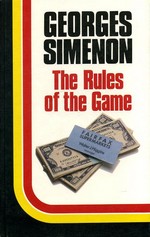
    Review: THE RULES OF THE GAME, Georges Simenon

    • originally published in 1955 as BOULE NOIR (my trans. Black Ball)
    • English translation published 1988
    • this large print edition published 1991 by Hamish Hamilton London
    • 212 pages
    • ISBN 1-85957-869-9
    • on loan from my local library
    Synopsis (Amazon)

    This title is set in suburban Connecticut. (After World War II, for reasons related to accusations that he was sympathetic to the occupying forces and the Vichy Regime, Simenon moved to the United States and spent a few years in Connecticut.)

    Walter Higgins is a supermarket manager. He is a stolid, predictable, married father of four living in a house that stretches his economic resources to the fullest. He is also enormously (and understandably) proud of the fact that he has lifted himself through diligence and hard work from a less than happy and economically depressed childhood. He plays by the rules. He goes to church and volunteers in any number of community organizations. He seeks affirmation of his status by applying for membership in the local country club. He is told his membership is a sure-thing and is devastated when he is told that he has been blackballed, denied entry by means of a secret vote of the club's membership committee. Each member of that committee was known to Higgins and he thought of each as a friend and colleague in the community.

    The rejection turns Higgins's life upside down and the rest of the story takes us on the journey Higgins takes as the trauma of rejection hits him.

    My Take

    Walter Higgins thinks he knows what life in suburban America is all about. He works for his community, attends church every Sunday, and tries to be a good role model. But his dreams are about to be shattered. His application to join the town's prestigious country club is blackballed for the second time and it seems all the town knows. This precipitates Walter into a mid-life crisis, where he thinks everyone must be laughing at him. And then, when his mother dies, he has to go back to the New York area where he grew up, and the effect is soul-shattering.

    This novel is a reminder of the years that Simenon spent living in North America (1945-55). During this time he learnt to speak English with relative ease.  see Wikipedia entry.

    It is also not a murder mystery, no Maigret, but a chance for Simenon to show his understanding of what makes ordinary people tick, whatever their nationality. It is also reminded me that I should make more effort to read more Simenon novels. Several have been re-printed as e-books this year and last by Penguin.

    Another one for the Vintage Mystery Bingo 2014.

    My rating: 4.4

    See another review.

    I've also reviewed
    4.4, MAIGRET & the MAN on the BOULEVARD
    4.5, MAIGRET & THE HEADLESS CORPSE
    4.3, PIETR THE LATVIAN
    THE LATE MONSIEUR GALLET

    18 January 2014

    Review: THE LATE MONSIEUR GALLET, Georges Simenon

    • Format Kindle: Amazon
    • File Size: 340 KB
    • Print Length: 176 pages
    • Publisher: Penguin (December 5, 2013)
      Originally published 1931
      Published as MAIGRET STONEWALLED 1963
    • Sold by: Amazon Digital Services, Inc.
    • Language: English
    • ASIN: B00GCVSOLS
    Synopsis (Bloody Murder)


    During a very hot Summer, the body is found of a commercial traveler in his hotel room in Sancerre. Shot in the face and then stabbed in the heart, the gunman seems to have got clean away after inflicting the fatal stabbing with the victim’s own knife as the poor man tried to fend off his attacker.

    The victim was a regular visitor known as Clement but it quickly emerges that he was actually Émile Gallet. An outwardly conventional petit bourgeois living on the outskirts of Paris, he had in fact constructed an elaborate double life, which he had been leading for the best part of 18 years. He arranged for pre-written postcards to be sent to his haughty wife (of noble birth) from the various stops on his old route, faked letters from his old employer and even kept a false ledger of sales to make his wife believe that he really was still doing his old job. But perhaps all was well with his scheme as he had also started secretly receiving mail from a ‘Mr Jacob’, apparently demanding money.

    My take

    This is part of the Penguin Classics, a project to reprint the novels of Simenon in order of publication. THE LATE MONSIEUR GALLET is #2 in the series and I was surprised to find that Maigret is already 45 years old. He has spent half his life in various branches of the police and is now in the Paris Flying Squad.

    Monsieur Gallet it seems has been leading a double life for the best part of twenty years, living under two names, with a wife and son under the name of Gallet. However he no longer has the job that Madame Gallet thinks he has, so how does he earn his money? In addition it seems that his death is somehow related to the hotel room he has been allocated.

    If Monsieur Gallet has been murdered, then who committed the deed? There are plenty of suspects but none quite fits the bill. Gallet it seems may have been a crook.

    The plot is convoluted as one expects of Simenon, and Maigret spends quite an amount of time away from home on this case.  He would prefer what he considers a "real murder", where motives and details are clearer.

    I found the plot a little tangled and disappointing. I don't think Simenon needed to make it quite as complex as he did, although he made it so to accommodate a range of characters like Gallet's reprehensible son and his girlfriend.

    My rating: 4.3

    See also plot summary at  Trussel

    I've also reviewed
    4.4, MAIGRET & the MAN on the BOULEVARD
    4.5, MAIGRET & THE HEADLESS CORPSE
    4.3, PIETR THE LATVIAN

    The recent decision by Penguin to republish fresh translations of all of Simenon's Maigret novels, in the original order of publication, provides a real opportunity for readers to catch up on titles that have been out of print for some time. Apparently the 75 novels will be published at the rate of one a month. There is even an accompanying 24 page brochure available giving biographical details about Simenon and the characters he created.

    18 November 2013

    Review: PIETR THE LATVIAN, Georges Simenon


    • Format: Kindle (Amazon) - read an extract at this site
    • File Size: 537 KB
    • Print Length: 176 pages
    • Publisher: Penguin (November 7, 2013) - originally published in 1931
    • translation into English by David Bellos.
    • Sold by: Amazon Digital Services, Inc.
    • Language: English
    • ASIN: B00EZEC0TG

    My Take

    The recent decision by Penguin to republish fresh translations of all of Simenon's Maigret novels, in the original order of publication, provides a real opportunity for readers to catch up on titles that have been out of print for some time. Apparently the 75 novels will be published at the rate of one a month. There is even an accompanying 24 page brochure available giving biographical details about Simenon and the characters he created.

    I've been a Simenon reader for decades and could not pass up the opportunity to read, on my Kindle, the very first of the Maigret titles.

    Maigret comes over as a mountain of a man, with enormous energy, and the ability to push himself to the limits of human endurance.
      Inevitably Maigret was a hostile presence in the Majestic. He constituted a kind of foreign body that the hotel's atmosphere could not assimilate.

      Not that he looked like a cartoon policeman. He didn't have a moustache and he didn't wear heavy boots. His clothes were well cut and made of fairly light worsted. He shaved every day and looked after his hands.


      But his frame was proletarian. He was a big, bony man. His firm muscles filled out his jacket and quickly pulled all his trousers out of shape.


      He had a way of imposing himself just by standing there. His assertive presence had often irked many of his own colleagues.
    In many ways PIETR THE LATVIAN gave a good idea of the style that readers could expect in future novels, as well a structure that makes the reader work hard to follow the plot lines.It introduces both Maigret and the long suffering Madame Maigret who at one stage cooks meals for three days without knowing whether her husband will be home to eat them, indeed not knowing what he is up to.

    In his exploration of international crime rings that manipulate world-wide economies Simenon shared similar concerns to his contemporary Agatha Christie who was also convinced of the control of world economies and politics by evil forces.

    My rating: 4.3

    Another review to check:
    Mrs Peabody Investigates

    18 October 2013

    Forgotten Book: GIRL IN WAITING, Georges Simenon

    My plan this year for my contributions to Friday's Forgotten Books hosted by Pattinase is to feature books I read 20 years ago - in 1993- from the records I have in my "little green book", which I started in 1975.
    In 1993 I read 111 books and was pretty well addicted to crime fiction by then.

    This week Friday's Forgotten Books is being hosted by George Kelley. 

    My choice is Georges Simenon's GIRL IN WAITING aka CHIT OF A GIRL, originally published in 1938?. An English version (cover to the right) was published in Pan paperback in 1957. I read this book in October 1993.

    A problem I have struck before with the early Simenon novels is that it is so hard to find a synopsis. The books are often out of print and have been for some time. It seems from what I have found that the publication may have contained two stories.

    How is your French? Check a listing here.

    The following synopsis (gleaned from Trove) actually comes from a review in Australia's Sydney Morning Herald in 1949.

    Synopsis

    CHIT OF A GIRL, by Georges Simenon. Trans, by Geoffrey Sainsbury.

    The title story is Richardson's "Pamela, or Virtue Re- warded," in a modern French setting. Its companion piece, "Justice," is a crime story with a satiric flavour. Both are-very satisfying examples of Simenon's peculiar talent.

    The Chit is Marie Le Flem, waitress in the cafe at the fishing village of Port-eñ-Bessin. Chateard, once a fisherman, now cafe and cinema owner at Cherbourg, first saw her when he drove her elder sister, Odile, his mistress, to her father's funeral. He was strongly attracted by her

    Odile "was plump, pink and tender, with a delicate skin, decile and easy-going." - Marie was "hardly formed ... lean haunches .and hardly any bust She did not bother about other people .. . . looked at them sideways, and what she thought of them she kept to herself."

    Chatelard's ardour and exasperation increase as Marie's apparent aversion grows. His brusque technique, successful with other women, fails here and the snaring of Don Juan is achieved amid the smiles and admiration' of the Port.

    "Justice" Petit Louis, swindler and souteneur helped Gene and the Marseilles gang in a post-office job, but offended them by blabbing to Constance Ropiquet, on whom he was living in Nice. Returning after two- days' precautionary absence from her flat he found her murdered.


    18 February 2011

    Review: MAIGRET AND THE HEADLESS CORPSE, Georges Simenon

    First published in France 1955
    Translated from French by Eileen Ellenbogen
    This edition: Chivers Press Large Print 1990
    238 pages
    ISBN 0-7451-1079-7

    Blurb from back cover
    Two brothers find a grisly package clinging to the propeller of their barge in the Canal de Saint Martins, and by the time Maigret arrives most of a mysterious corpse has been assembled, except the head. The search shifts from finding the missing piece to finding a motive, as the Inspector's keen mind gathers clues from the torso which lead to a trio of suspects. A flash of intuition linking the principal suspect's sordid life to the whereabouts of the victim on his last day alive brings the case near its end but starts Maigret thinking about the reason for the crime.

    My take:
    This is one of the Maigret novels that demonstrates quite clearly how timeless an author Simenon was.
    The discovery of body pieces without a head, thus making identification very difficult, is a scenario explored by a number of crime fiction authors since. In fact I have some books reviewed here in MiP:
      PRIME CUT, Alan Carter And then they are called to a murder scene, at HopeToun: a headless torso in the shallows on the beach. The local policewoman is Senior Sergeant Tess Maguire, recovering from sick leave after being beaten up. ... 
      SKELETON HILL, Peter Lovesey The bone discovered during the battle is re-discovered by three rescue dogs, and is found to belong to a headless corpse. Forensics tells Peter Diamond, Head of Bath CID, that not only are the bones not old, but the skeleton is female,
      THE SIMIAN CURVE, Mark Lalbeharry First of all when young Hattie Locke becomes stuck in a narrow walkway between two lockup garages in London, a headless corpse is discovered. Hundreds of kilometres away in a Frankfurt court, the charges against small time villain ...
    It is a case just made for Maigret who worries tenaciously at identifying the corpse, and once he thinks he has that nailed, takes the focus to who killed him and why.
    Another theme that emerges, that we tend to see frequently in more modern novels, is how the case takes over Maigret's thinking, and indeed his whole life. It serves to illustrate what a special person Madame Maigret is, in that this doesn't cause a marriage breakdown, but instead evokes a sort of sympathy from her, as she realises he is even eating without tasting.

    THE HEADLESS CORPSE illustrates how, like Sherlock Holmes in many ways, Maigret can assemble minute observations and then make an intuitive leap that generates a bigger question.

    My rating: 4.5

    I am listing this book in my 2011 Vintage Mystery Reading Challenge and of course among my "translated" books.

    6 January 2011

    Forgotten Books: MAIGRET titles, Georges Simenon

    This week's contribution to Pattinase's Friday's Forgotten Books 

    I've written before about how when I was acquiring my current taste for crime fiction, Maigret titles in Penguin paperbacks were such an important part of my diet.
    MAIGRET TAKES THE WATERS
    MAIGRET and THE ENIGMATIC LETT
    MAIGRET and THE MADWOMAN

    And yet these days they are relatively scarce in our book shops and even our local libraries don't carry many. My local library, usually so well equipped for my crime fiction tastes, carries only 9 titles, and one of those is in French, one in Italian and one in Spanish.

    A poor showing really when you consider how many titles Simenon wrote, Maigret and stand-alone.
    Just recently I read MAIGRET & the MAN on the BOULEVARD and really felt that it had not dated much.

    But one of the items my library does carry is the set of DVDs for the television series starring Michael Gambon, and just recently we worked our way through the lot with great relish.


    ~~~~~~~~~~~~~~~~~~~~~~~~~~~~~


    This wonderful cartoon is on the front page of Swedish Crime Writers' Academy (Svenska Deckarakademin).
    You have probably recognised all of these famous sleuths.
    Back row from the left: Lord Peter Wimsey, Gideon Fell, Jules Maigret, Sherlock Holmes, Charlie Chan, Ellery Queen
    Front row from the left: Jane Marple, Father Brown, Auguste Dupin (= Edgar Allan Poe), Hercule Poirot, Nero Wolfe
    Konstnär: Henry Lauritzen.

    1 January 2011

    Review: MAIGRET & the MAN on the BOULEVARD, Georges Simenon

    Originally published in 1953 as Maigret et l'homme du banc
    English titles:
    Maigret and the Man on the Boulevard
    Maigret and the Man on the Bench
    The Man on the Boulevard 
    This edition, DALES Large Print Books, 2002
    ISBN 1-84262-096-7
    263 pages

    Product description (Amazon)
    Simenon's tenacious detective pieces together the life of a man who for three years lived a secret life-until he is found stabbed to death in an alleyway.

    My take:

    The concept of a murder victim having a secret life that his family knew nothing of is one that plenty of writers since Simenon have explored. But once Louis Thouret's wife states that her dead husband is wearing shoes and a tie that she has never seen, and then Maigret discovers that the firm that he supposedly works for has been out of business for three years, then there are other questions that Maigret absolutely must have answers to. What does Louis Thouret do during the day? Where does he keep the clothes he wears during the day, because he certainly doesn't leave home in them in the morning. Does he have another job? Where is his income coming from? Why was he in the dead-end alley where he was murdered? And finally - who murdered Louis Thouret and why?

    By today's standards MAIGRET & the MAN on the BOULEVARD is a relatively short novel, and thus a quick read. Maigret is chafing a bit at the idea that as the Chief he should be giving the orders, and planning the investigation, rather than doing the spade work which he loves to do.

    MAIGRET & the MAN on the BOULEVARD comes roughly in the middle of Simenon's publishing career, and for me epitomised what he was well known for - an economy of style, at the same time as masterful written dialogue.

    It didn't feel dated either. My rating: 4.4

    Other reviews:
    Books to the Ceiling

    I'll be using MAIGRET & the MAN on the BOULEVARD in the Vintage Mystery Reading Challenge and other challenges.

    22 October 2009

    Forgotten Books: MAIGRET and THE MADWOMAN, Georges Simenon

    This week's contribution to Pattinase's Friday's Forgotten Books.

    There was a time when Maigret books were part of my staple diet, and I have included a couple before in previous contributions to Friday's Forgotten Books. I guess it was almost my first experience of translated crime fiction, and I read them avidly not realising they were (translated that is).
    MAIGRET AND THE MADWOMAN was one of Simenon's later novels published in 1970.

    Clicking on the cover image to the right will let you read the first chapter online.

    One of the Amazon reviews says
    Imagine drinking a glass of Calvados. The title is ambiguous. She was a tiny woman insisting upon seeing Chief Inspector Maigret personally. Madame Antoine, aged, having lived in her apartment for a long time, reported that her things had been moved. There is only the key she keeps in her bag. A niece and her son are her only relatives. She is pefectly aware that a young person might consider her mad. The concierge says she is very much like any other old person living by herself. Her clear gray eyes make an impression on Maigret. Then she is murdered, suffocated, and an investigation ensues. The police search and question, after all this is a police procedural. Maigret discovers that the victim had practiced twenty five years of thrift. A character named Le Grand Marcel is brought into the picture.

    The fineness of the writing (translated?) transcends the genre. Picking up a Maigret novel is a matter of dealing in a brand name consumer good. One is never disappointed. The storytelling is simple, classical, felicitous. Simenon used masterful economy in his art. The short bursts of information create an almost Raymond Carverish style. One is transported to Paris in the Spring. Time spent in the company of Maigret and his gifted inspectors Lapointe, Lucas, and Janvier is a pleasure.

    Various people have played Maigret, but I thought you might enjoy this opening from the 1992 television series with Michael Gambon.


    Furthermore, if you are looking for more information there is an "official" Maigret website. Click on the image below to be taken there.


    Interestingly, it is a Chorion company site, the same that owns Agatha Christie, and other "literary estates" such as Enid Blyton.

    24 September 2009

    Forgotten Books: a Christmas triptych

    This week's contribution to Pattinase's Friday's Forgotten Books.

    I have a clutch of forgotten books for this week.
    The last week of September reminds me that Christmas is only 3 months away, so why not hunt these Golden Age titles down? (What a lovely Christmas present for someone!)

    First of all MAIGRET'S CHRISTMAS by George Simenon (1951)

    Synopsis from Amazon:
    Nine short stories make up this delightful holiday-themed collection, each featuring Georges Simenon's famous
    detective, Jules Maigret. Christmas mysteries abound: an otherwise sensible little girl insists that she has seen Father Christmas, a statement alarming to her neighbors, Monsieur and Madame Maigret. Then, a choirboy helps the inspector solve a crime while he lies in bed with a cold; another boy, pursued by a criminal, ingeniously leaves a trail to help Maigret track him. Many of these stories feature observant and resourceful children, frightened yet resolute, who bring out a paternal streak in the childless Maigret. The rapport between the inspector and these youthful heroes imparts a delightful freshness to this holiday collection-
    a cornucopia for fans of Maigret and mysteries.
    If you'd like to read a few pages go here.

    Then TIED UP IN TINSEL, Ngaio Marsh (1972)

    Christmas time in an isolated country house and, following a flaming row in the kitchen, there's murder inside. When a much disliked visiting servant disappears without trace after playing Santa Claus, foul play is at once suspected -- and foul play it proves to be.
    Only suspicion falls not on the staff but on the guests, all so unimpeachably respectable that the very thought of murder in connection with any of them seems almost heresy. When Superintendent Roderick Alleyn returns unexpectedly from a trip to Australia, it is to find his beloved wife in the thick of an intriguing mystery...

    Once again you can read a few pages - just click on the image.

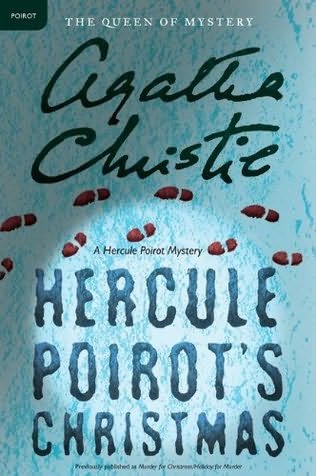
    Then there is HERCULE POIROT'S CHRISTMAS, Agatha Christie (1938)

    It is Christmas Eve. The Lee family reunion is shattered by a deafening crash of furniture, followed by a high-pitched wailing scream. Upstairs, the tyrannical Simeon Lee lies dead in a pool of blood, his throat slashed. But when Hercule Poirot, who is staying in the village with a friend for Christmas, offers to assist, he finds an atmosphere not of mourning but of mutual suspicion. It seems everyone had their own reason to hate the old man.

    What is your favourite Christmas novel?

    24 April 2009

    Forgotten Book: MAIGRET and THE ENIGMATIC LETT, Georges Simenon

    A contribution to a special edition of Pattinase's Friday's Forgotten Books

    First published in 1931, my copy was published in 1963, and judging by my handwritten name in the front, I read it soon after that.

    Original title: PIETR-IE-LETTON. Also published as The Strange Case of Peter the Lett , and The Case of Peter the Lett.

    This was the first of the Maigret novels, one of a dozen(!) published in 1931.

    Synopsis from the back of the book:
      PIETR-IE-LETTON was among the very earliest Simenons. It must be the most tortuous puzzle of indentities ever handled by Maigret.

      Pietr the Lett had for many years been clocked across the frontiers by Interpol: he had the personality of a chameleon. Apart from his extraordinary resemblance to the twisted corpse they found in the toilet of the Pole Star express when she drew into the Gare du Nord, he passed as Mr Oswald Oppenheim, immaculate friend of the Mortimer-Levingstons, multi-millionaires; he seemed to be Olaf Swaan, the Norwegian merchant officer of Fecamp; and he was Fedor Yurovich, a down-and-out Russian drunk from the Paris ghetto, to the life. Maigret needed the obstinate nose of a basset-hound to run down this dangerous international crook. He nearly lost his life once and, when they killed his old friend Inspector Torrence, nearly lost his head as well. But he was in at the kill.
    I've paid tribute to Simenon before. This novel pre-dates that novel in my reading by at least a decade.
    Perhaps what I should pay tribute to is the role of Penguin books in making Simenon novels available to Australian readers. According to the cover, I paid 2/6 for this copy. Now, for the young ones, that was the equivalent of 25 cents. Unreal isn't it?
    I remember haunting, of all places, the bookshelves in David Jones, looking for the new green Penguins, and the Fontana paperbacks (Agatha Christies)

    There is an interesting list of Penguin Maigrets here.

    By the way, can you identify the sleuths in the cartoon below? Answers here.

    LinkWithin

    Blog Widget by LinkWithin