

May 2022 be a lot better for all of us.
Happy Reading too.
Synopsis (publisher)
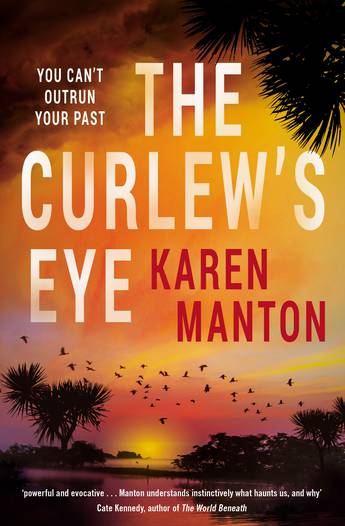
A richly atmospheric Gothic mystery set around a ruined homestead in the NT's Top End.
'It struck her that in all these years, every highway and meandering track they'd taken together had been heading towards this destination. A shack perched halfway up a hill in an other-world of bizarre shadow plants and dark sentinel trees . . . Every road had been leading here, to this place.'
Greta's partner Joel grew up with five brothers and a sister in a feisty household on an isolated NT property. But he doesn't talk about those days - not the deaths of his sister and mother, nor the origin of the scars that snake around his body.
Now, many years later, he returns with Greta and their three young boys to prepare the place for sale. The boys are quick to settle in, and Joel seems preoccupied with work, but Greta has a growing sense of unease, struggling in the build-up's oppressive heat and living in the shadow of the old, burned-out family home. She knows she's a stranger in this uncanny place, with its eerie and alluring landscape, hostile neighbour, and a toxic dam whose clear waters belie its poison. And then there's the mysterious girl living rough whom Greta tries to befriend.
Determined to make sense of it all, Greta is drawn into Joel's unspoken past and confronted by her own. Before long the curlew's haunting cry will call her to face the secrets she and Joel can no longer outrun.
My Take
The Northern Territory, the tough lifestyle, and the isolation are elements that Greta has never known. Like her husband Joel, Greta is an orphan, although she still has family down South. But there is so much about his past that Joel has never told her. She knows that Joel's parents came from Europe at the end of the Second World War, that they were determined to start a new life. She knows that he is from a large family of five sons and one daughter, and that they grew up on this homestead; that his sister died young in a car accident, but there is so much Joel will not talk about.
Setting up home for her 3 boys, herself and Joel at the ruined homestead is tough, as is the time when Joel goes away to work to bring in some extra money.
Greta is lucky that she makes friends with a couple of local women, mainly through her children, and they help her hold things together. She finds remnants of the past, photos and other things in the burnt out homestead which give her puzzles to solve, and gradually she is able to piece together what happened to Joel's parents and his sister.
Apart from the main narrative, the author has used to ploys to add to the story: the Gothic element of the past intruding into the present, and between chapters, small snippets of narrative in different voices which supply more clues for the reader.
An interesting read, and certainly an accomplishment for a debut novel
My rating: 4.4
Author bio:
Karen Manton lives in Darwin and Batchelor in the Northern Territory. Her short stories have won five NT Literary Awards and are published in various anthologies, including Best Australian Stories, Award Winning Australian Writing, Review Australian Fiction and Landmarks. She has been awarded the Eleanor Dark Flagship Fellowship Varuna Writers' House, the NT Writers Centre Hachette Mentorship and the Arts NT Varuna Residential Fellowship. The Curlew's Eye is her first novel.
Synopsis (Publisher)
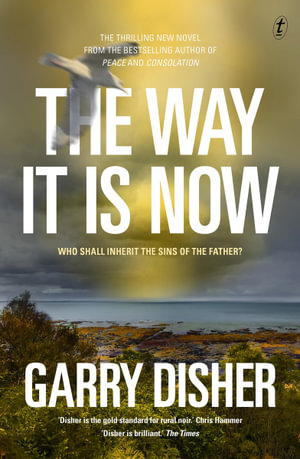
A stunning new standalone crime novel from one of Australia's most revered writers.My Take
Things became a bit of a mess for Charlie when his mother disappeared twenty years earlier. His mother and father had already separated then, and his father, a senior policeman at the time, was investigated, but his mother was never found. His brother has always believed his father was responsible for their mother's disappearance, and hasn't spoken to his father since. His father has re-married since then, and Charlie has also married, but his marriage has broken up.
Most recently Charlie struck a senior officer and is currently suspended on pay. There are those who'd like to see Charlie given his marching orders. Charlie's father has retired and his second marriage appears to have been a success.
And now the past rears it's ugly head again with the discovery of skeletal remains which may be his mother. There are some ex-policemen in the area who seem to be keeping an eye on Charlie too,
This is a typical Disher stand-alone with sub-plots to keep the mind alert, and a range of interesting characters, including Charlie Deravin himself. The setting of a coastal surfing town is strong and gives the novel a substantial Australian flavour.
A welcome read.
My rating: 4.8
I've also read
4.7, WYATT
4.8, WHISPERING DEATH
4.7, BLOOD MOON
4.2, THE HEAT
4.5, SIGNAL LOSS
4.7, HER
4.9, UNDER THE COLD BRIGHT LIGHTS
4.7, KILL SHOT
5.0, BITTER WASH ROAD - Hirsch #1 - aka HELL TO PAY
5.0, PEACE- Hirsch #2
5.0, CONSOLATION - Hirsch #3

Synopsis (Amazon)
Mr. Bowling never used to read the newspaper. But since his second murder, he has found it convenient to discover whether the law has finally cottoned on to his activities. Because Mr. Bowling is an unusual kind of murderer - the kind that desperately wants to be found out. As the list of victims slowly grows, however, Bowling starts to wonder whether you really can get away with murder after all...
Originally published in 1943, this classic thriller, laced with jet black humour, was one of Raymond Chandler's favourite books.
My Take
As Mr Bowling's murders escape police detection, he begins to wonder why God seems to be rejecting his advances. As he commits more murders he buys swathes of daily newspapers to see if anybody has picked up on his activities. The problem is that his murders seem to be covered over by "natural" events, like the Blitz of London, a heart attack, a fall down the stairs, and a catastrophic fire. Nobody asks the questions that Mr Bowling thinks should be asked. He is sure he has left evidence that a discerning detective should "see", or even be alerted by the fact that his name keeps turning up in connection with dead people.
Mr Bowling has no real motives for most of his murders apart from the fact that his victims are essentially boring people, or that they don't particularly like him. Originally Mr Bowling was working for an insurance company and he benefited from a policy that he had taken out on his wife. He had thought about making himself the beneficiary of policies taken out by some of his clients but then that seemed a little greedy.
It is unusual to read a murder mystery from the point of view of the murderer, and I thought at times they pontificated a little too much. In the end Mr Bowling seems to have found the woman of his dreams, but has he? For he has told her everything about his murderous activities. Does she believe him, or is she blinded with love?
My rating: 3.9
About the author
Donald Landels Henderson was born in 1905; he later said, `I
cannot pretend to have enjoyed anything very much about my childhood or
adolescence.' Henderson was an actor and combined writing with his
acting career. He died at only 42, in 1947, just three years after the
publication of Mr Bowling Buys a Newspaper

Synopsis (publisher)
He did kill. Kill and kill and kill.’
Tess’s number one priority has always been her three-year-old daughter Poppy. But splitting up with Poppy’s father Jason means that she cannot always be there to keep her daughter safe.
When she finds a disturbing drawing, dark and menacing, among her daughter’s brightly coloured paintings, Tess is convinced that Poppy has witnessed something terrible. Something that her young mind is struggling to put into words.
But no one will listen. It’s only a child’s drawing, isn’t it?
Tess will protect Poppy, whatever the price. But when she doesn’t know what, or who, she is protecting her from, how can she possibly know who to trust . . . ?
My Take
Three year old Poppy can't always tell her mother what she means. But Tess becomes alarmed when she finds a disturbing drawing which Poppy tells her is a woman being killed. Poppy increases her sense of anxiety by asking her mother if she is dead. Tess at first thinks Poppy is telling her about something her father Jason, whom Poppy stays with a couple of times a week, has done. Until now both she and Jason think they have been handling their separation, and his new marriage, pretty well. Now Tess is anxious about who Poppy has been having contact with when she is not with Tess.
Poppy is showing clear signs of anxiety: wetting the bed, biting other children and so on. Now Tess does not know who she can trust, and she doesn't know who she should tell. She stalks Poppy's father and his new wife, and does not like what she finds out, things that were happening when they were together.
She tries to report things to the police, but, as they point out, there is no body, no evidence of a crime. By her 11th report they are threatening to take action, against her.
Nicci French has come up with a very believable scenario.
My rating: 4.6
I've also read
4.3, BLUE MONDAY
4.5, TUESDAY'S GONE
4.7, WAITING FOR WEDNESDAY
4.7, FRIDAY ON MY MIND
4.7, THE LYING ROOM
4.5, DAY OF THE DEAD

Synopsis (Amazon)
Winter, snow, murder—and a centuries-dead suspect.
In the chilly depths of a Yorkshire winter, a well-liked rector is found bludgeoned to death in her own church. With no sign of a murder weapon, local superstition quickly pins the blame on the ghost of a medieval monk believed to haunt the building…
Well accustomed to unusual murder investigations, DCI Jim Oldroyd takes on the case, along with his assistant, Sergeant Andy Carter, but they are hampered at every turn by the deepening snow and the threat of the supernatural. Even as possible motives and opportunities begin to reveal themselves, Oldroyd struggles to find a better suspect than the hooded phantom.
Has Oldroyd really found himself in the midst of a Gothic ghost story or is there a very real killer at large? Spectre or otherwise, it soon becomes apparent that the murderer is not yet finished. And, for Oldroyd, it’s about to become personal…
My take
Another reader wrote "Murder at St Anne’s is the seventh book in the Yorkshire Murder Mysteries series featuring DCI Jim Oldroyd and his loyal DS Andy Carter. These are gentle old-fashioned detective stories, usually with some form of locked-room puzzle, set in and around the small towns of Yorkshire."
I'm inclined to agree with the "gentle, old-fashioned" descriptor, but that doesn't mean that I enjoyed it any less. There are really a number of modern aspects to the plots too - pressures from administrators to work more efficiently, to solve crimes faster, but at the same time Oldroyd and Carter try to present the face of personalised policing.
The plot is full of red herrings, a number of locals come under the spotlight and their alibis and possible motives are tested. Back at headquarters members of the investigative team search newspapers and websites for background to the list of suspects, and eventually this strategy is what makes the break through.
I've found that I have actually skipped 3 books in the series, and I am re-assured by readers commenting that it is possible to read these as stand-alones, although obviously there must be character development from one book to the next.
My rating: 4.6
I've also read
4.3, THE BODY IN THE DALES - #1
4.3, THE QUARTET MURDERS - #2
4.4, THE MURDER AT REDMIRE HALL - #3
About the Author
John R. Ellis has lived in Yorkshire for most of his life and has spent many years exploring Yorkshire’s diverse landscapes, history, language and communities. He recently retired after a career in teaching, mostly in further education in the Leeds area. In addition to the Yorkshire Murder Mystery series, he writes poetry, ghost stories and biography. He has completed a screenplay about the last years of the poet Edward Thomas and a work of faction about the extraordinary life of his Irish mother-in-law. He is currently working on his memoirs of growing up in a working-class area of Huddersfield in the 1950s and 1960s.
Synopsis (publisher)
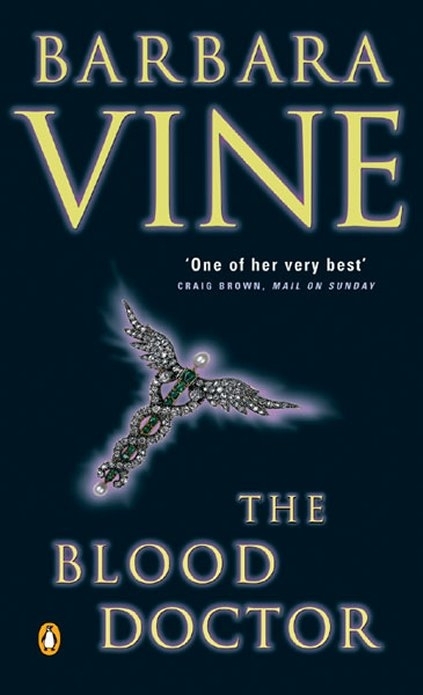
Barbara Vine's new novel is about blood - blood in its metaphysical sense as the conductor of an inherited title and blood in its physical sense as the transmitter of disease.
The current Lord Nanther, experiencing the reform of the House of Lords, embarks on a biography of his great-grandfather, the first Lord Nanther, favoured physician to Queen Victoria, expert on blood diseases and particularly the royal disease of haemophilia. What he uncovers begins to horrify him as he realizes that Nanther died a guilty man - carrying a horrific secret to the grave.
The Blood Doctor weaves effortlessly between past and present, public life and private life. The result is a superbly satisfying novel about ambition, obsession and bad blood.
My Take
As she often did, Barbara Vine (Ruth Rendell) took circumstances that were prompted by her position and work in the House of Lords as a springboard for this stand-lone novel. She was appointed a Commander of the Order of the British Empire (CBE) in the 1996 Birthday Honours and a life peer as Baroness Rendell of Babergh, of Aldeburgh in the County of Suffolk, on 24 October 1997. She sat in the House of Lords for the Labour Party. In 1998 Rendell was named in a list of the party's biggest private financial donors.
The reform of the House of Lords took place in 1998 just after she had been made a life peer so what is happening to Martin Nanther is essentially what was happening there, although of course she was a life peer, not an hereditary one like Nanther.
By the time of the reform, the House of Lords was being overwhelmed by an excess of hereditary peers and had become unsustainable and unwieldy in its present form. The idea that the blood of the hereditary peers was somehow "special" had lost favour. They wouldn't lose their titles or their estates, simply their right to sit in the House of Lords.
Martin Nanther has begun amassing memorabilia about his great grandfather Henry Nanther, given a hereditary peerage at the end of the nineteenth century by Queen Victoria for his work on diseases of the blood, particularly of haemophilia of which she was a carrier (which she refused to recognise), and which her own sons and grandsons were afflicted by.
Martin is transfixed by a letter written by one of his great-aunts in which she says Henry Nanther had done terrible things. Martin aims to eventually write a biography of his great-grandfather, and his research takes him to meet cousins and distant relatives whom he has never met, and to become aware of the presence of "tainted" blood in his own family.
Running alongside the main plot is the sub-plot of Martin and his second wife Jude attempting to have a baby, and the revelation that it is a genetic problem that is causing her frequent miscarriages.
This wasn't a book I could read quickly. There was quite a lot of history to absorb, and though I read it in large print, or perhaps because I did, it was also quite weighty.
However, a fascinating read.
My rating: 4.7
I've also read
Vine, Barbara:
THE BIRTHDAY PRESENT
4.8, A DARK ADAPTED EYE
4.3, THE CHILD'S CHILD
Rendell, Ruth:
FROM DOON WITH DEATH - Wexford #1
4.5, A NEW LEASE OF DEATH- Wexford #2
4.6, THE BEST MAN TO DIE - Wexford #4
4.3, A SLEEPING LIFE, Ruth Rendell - Wexford #10
4.7, PUT ON BY CUNNING - Wexford #11
4.6, THE VAULT- Wexford #23
4.5, NO MAN'S NIGHTINGALE- Wexford #24
PORTOBELLO
4.7, THE MONSTER IN THE BOX
4.5, A SIGHT FOR SORE EYES
4.5, THE SAINT ZITA SOCIETY
4.6, THE MASTER OF THE MOOR
4.4, DARK CORNERS
4.6, A SPOT OF FOLLY


